Get Full Government Meeting Transcripts, Videos, & Alerts Forever!
Get email alerts on the Comprehensive Plan Update topic
No spam. Unsubscribe anytime.
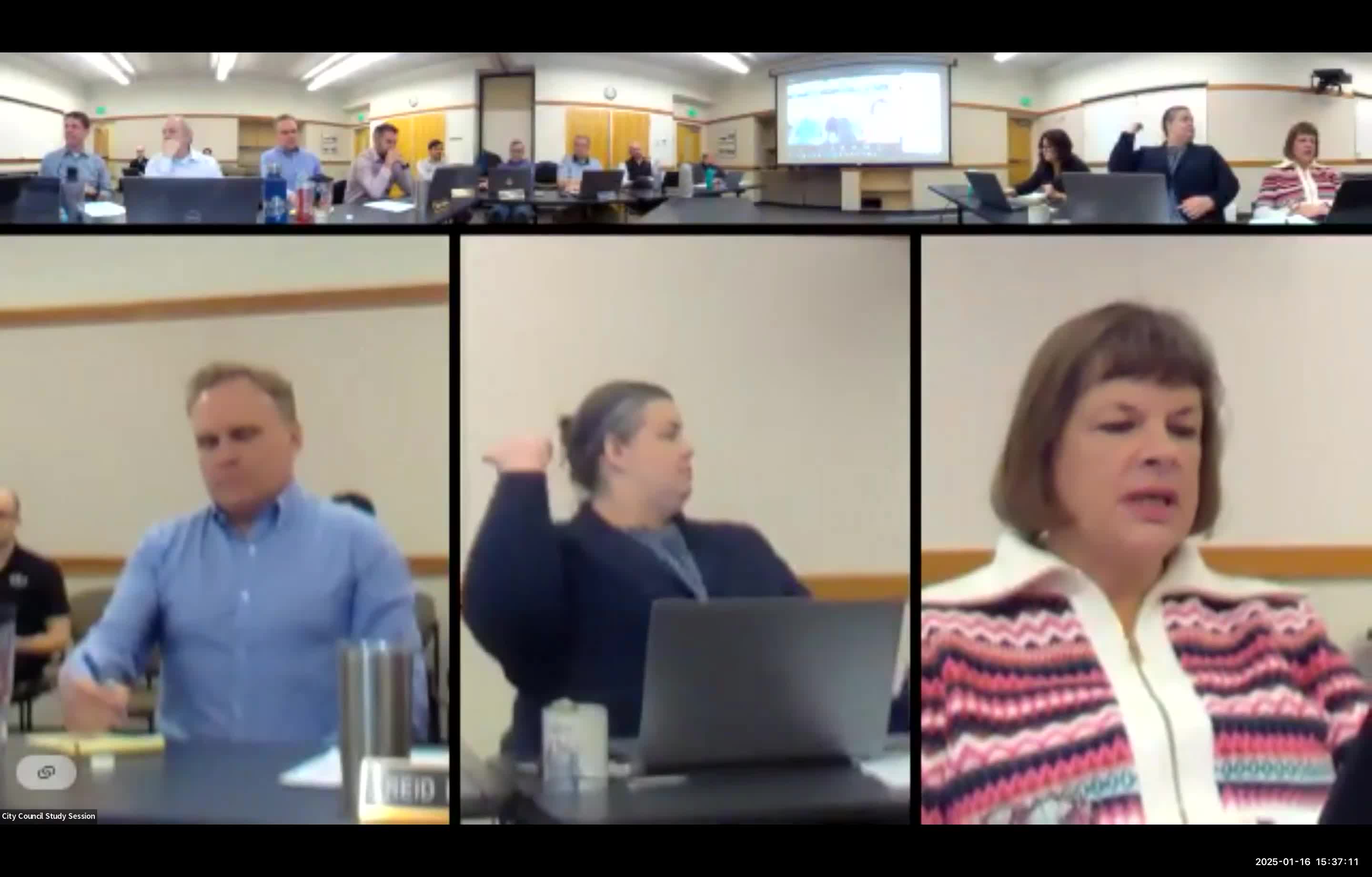
Council debates language on historic downtown, density and incentives in 2024 comp plan update
Summary
Councilmembers debated proposed changes to the 2024 comprehensive plan update, including downtown protections, whether to remove the qualifier “significantly” from neighborhood‑protection policies, transit and equity language, and how to structure PCD densities and incentives.
Gig Harbor City Council held an extensive review of the 2024 comprehensive plan periodic update matrix, focusing on several contested policy edits including how the plan describes protection of downtown character, whether the word “significantly” should be removed from neighborhood-protection language, transit references, equity language about “overburdened communities,” planned-community development (PCD) provisions and a menu of incentives/density bonuses.
Interim Community Development Director Jeff Wilson and consultants Inez and Andrew (from the consultant team) walked council through line-by-line comments received from the public and internal reviewers. On the proposed change to Land Use policy LU 2.3 (language to "maintain the historic development pattern in the downtown area and integrate the downtown with newer development outside of downtown"), several councilmembers supported keeping the policy focused on the downtown core. Councilmember Wood and others asked whether “established neighborhoods” should be added; staff and multiple councilmembers said adding that phrase would broaden the policy and could impede future land-use flexibility across the entire city. Council consensus was to keep the downtown-focused wording and not add the broad “established neighborhoods” phrase.
The council spent notable time on the proposed deletion of the word “significantly” from several policies intended to protect residential character. Staff and multiple councilmembers warned that removing “significantly” would set an extremely low bar that could preclude incremental changes (for example accessory dwelling units) the city is required to allow under state law. Councilmembers argued that leaving “significantly” provides a workable policy level and that the development code must define objective thresholds for analysis. Several members also noted state-level direction and pending legislative activity that emphasize accommodating housing and measurable outcomes.
On shoreline and waterfront wording, staff reminded the council that the Shoreline Management Act prioritizes water-dependent uses; a comment to prioritize resident use could conflict with state shoreline priorities and would require careful alignment with the shoreline element.
Council discussed transit and greenhouse-gas reduction goals. Staff recommended addressing mass- or public-transit priorities in the transportation and climate elements where they can be implemented with partners such as Pierce Transit, noting the city cannot unilaterally compel transit service but can create conditions that encourage it.
The discussion also covered draft policy language on “overburdened communities” and whether policy should “prohibit” negative impacts; staff recommended retaining language to “minimize” negative impacts rather than create an absolute prohibition, which could be infeasible in practice and inconsistent with SEPA standard thresholds (the state’s significant-adverse-impact tests allow mitigation). Councilmembers expressed support for preventing disproportionate impacts but agreed the policy language must be implementable.
Planned Community Development (PCD) language drew questions about whether to keep “regional amenities” (staff said regional amenities can include facilities that serve beyond city limits, such as schools) and whether to retain flexibility language about compatibility, density ranges and whether to ‘‘provide’’ or ‘‘accommodate’’ regulatory flexibility. Council repeatedly emphasized that broader policy language must preserve room for development regulations to implement details later. Several councilmembers cautioned against downzoning PCD areas, saying reductions in density ranges could unintentionally make existing properties nonconforming and hinder accessory dwelling units or redevelopment.
On incentives and density bonuses, staff and consultants said the policy as drafted is enabling language to allow the city to create a program in development regulations that trades defined public amenities (for example affordable units, daycare, public space) for additional density or other concessions. Some councilmembers advocated for stronger baseline code requirements and worried incentives could be perceived as ad hoc bargaining; others said incentives can secure amenities that would not otherwise be provided. Consultants noted past bonus programs had mixed outcomes and that future incentive programs must be calibrated to avoid over‑allocating population beyond the plan’s capacity assumptions.
Staff flagged several items for follow-up: a staff memo and analysis about a pending basin‑boundary developer request (related to the wastewater discussion), additional outreach to the tribe on specific language, and a plan to return with development‑code language and implementation details. Interim Director Wilson said staff would return with clarifying language and recommended code approaches; he also said he would bring some items back for formal council consideration by resolution on Jan. 26 or at a later study session if more time is needed.
No final policy votes were taken during the study session; council members provided direction and several points of consensus about preserving flexibility at the policy level while resolving precise thresholds and implementation in upcoming development‑regulation work.