Get Full Government Meeting Transcripts, Videos, & Alerts Forever!
Get email alerts on the Housing Development topic
No spam. Unsubscribe anytime.
Centralia staff report surge in housing projects: more than 300 units built or underway; council warned about state bills
Summary
City planners told council the city has seen a recent surge in housing development with roughly 306 units built or under construction and several larger subdivisions in the pipeline; staff and the mayor also flagged several pending state bills that could affect local parking and zoning rules.
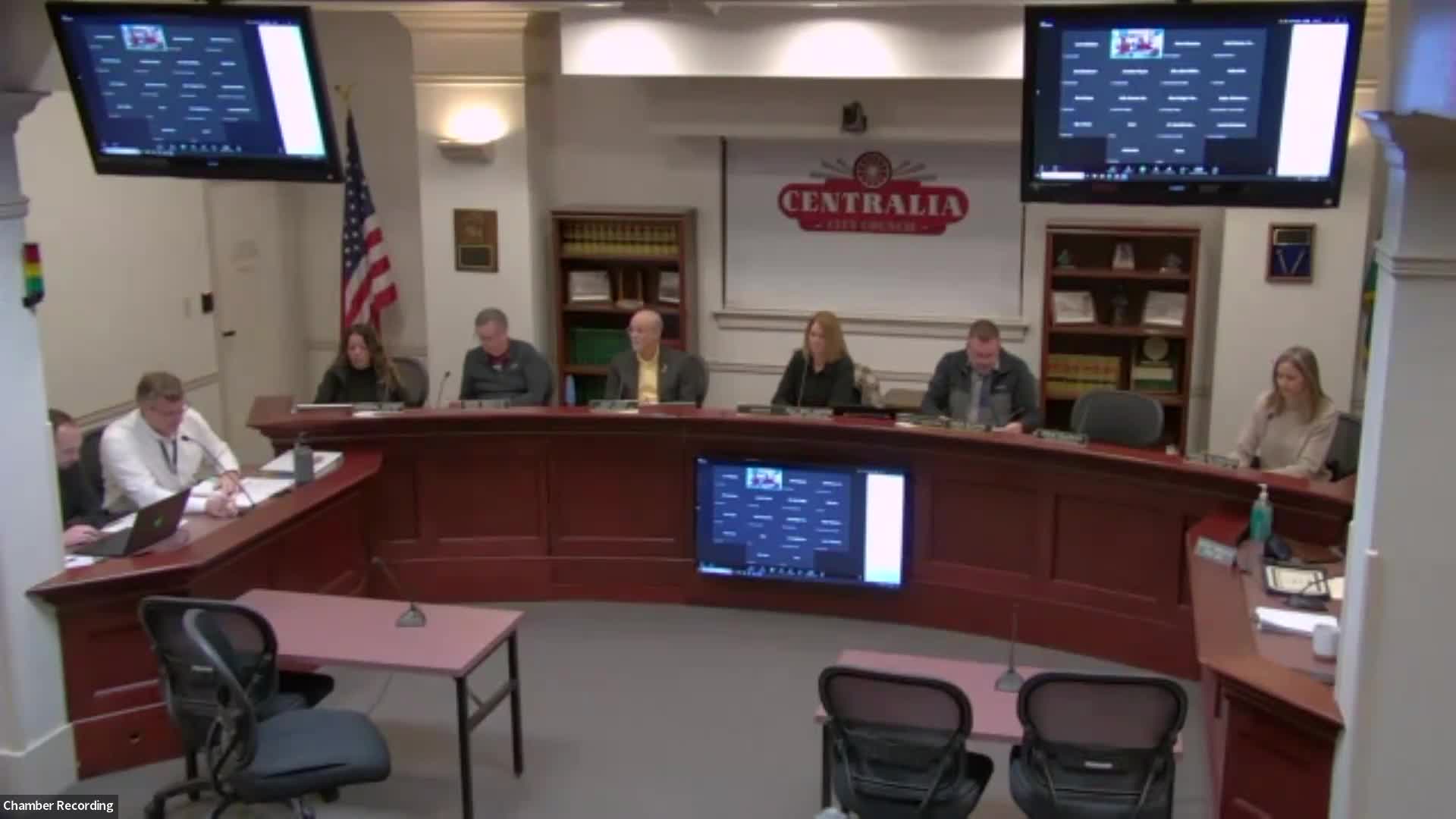
City planning staff told the Centralia City Council on Jan. 28 that the city is seeing a notable increase in housing development after several years of relatively flat production.
Veil Pearson, speaking as a city planner, presented charts showing housing activity from 2017 through 2024 and summarized current projects. Pearson said about 306 housing units are either under construction or recently completed; staff also counted roughly 106 single-family lots that have started selling, and a larger pipeline that includes 226 additional single-family lots, townhomes, duplexes and multifamily units in various preconstruction stages.
Pearson highlighted multiple types of housing coming online: single-family homes, townhomes, duplexes, ADUs (accessory dwelling units), transitional and permanent supportive housing and a Centralia College housing project. She noted the city adopted a housing plan in 2023 and that many of the projects reflect actions taken under that plan, including an ordinance allowing up to two ADUs per lot — a change she said is beginning to generate more ADUs.
Pearson also flagged legislative issues being monitored at the state level. She described bills that could limit local parking requirements and said the legislature extended the deadline for the comprehensive plan update under House Bill 5173 (comp plan deadline moved from June to December). Pearson urged council to follow legislation that could affect local zoning and subdivision requirements.
Councilor Norm Chapman asked whether staff tracked the split between rental units and homes for sale. Pearson said staff maintains those records and that the project list offers a reasonable proxy: single-family homes tend to be owner-occupied while townhomes, ADUs and transitional housing are more commonly rentals. She offered to provide more precise counts after the meeting.
Mayor Smith Johnson and other council members praised the planning team’s work and noted the growth represents significant change in a city of about 18,000 people. In the council reports later in the meeting the mayor and other council members warned of pending state legislation — including a referenced bill (House Bill 1195) that some officials described as potentially punitive if the Department of Commerce adjudicated local compliance and could affect local permitting authority if enacted — and urged participation in Association of Washington Cities briefings during the legislative session.
Why it matters: the projects represent a rapid increase in housing supply for a small city; decisions at the state level could alter local permitting requirements, parking rules and other land-use controls that affect how (and where) this housing is built.
What staff will do next: staff said it will continue tracking permit types, share a breakdown of rental vs. for-sale units on request and return items (final plats, zoning changes) to council for approval as projects proceed.
Direct quotations from the presentation
"We have 306 units under construction or that were recently built," Veil Pearson said, describing the city’s current active developments. "We're seeing an uptick in ADUs since the council changed the ordinance to allow two ADUs per lot."