Get Full Government Meeting Transcripts, Videos, & Alerts Forever!
Get email alerts on the Housing Step Housing topic
No spam. Unsubscribe anytime.
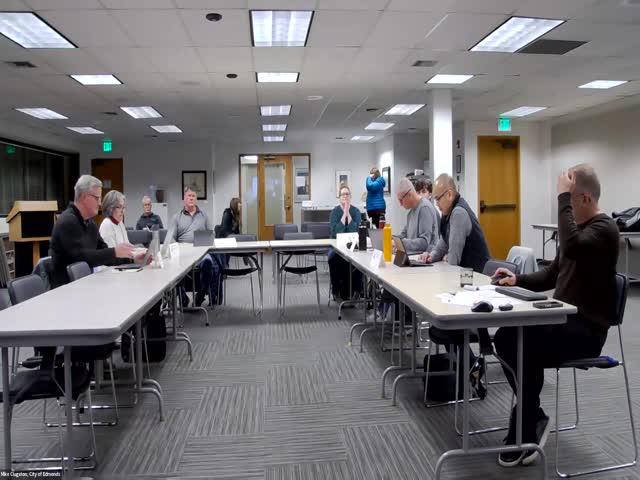
Edmonds staff outline interim 'step housing' code to meet state requirements; planners discuss incentives and timelines
Summary
City staff presented an interim ordinance to allow indoor emergency shelters, transitional housing and permanent supportive housing where state law requires. Planning Board members asked for clarity on definitions, incentives and community engagement; staff said a council hearing and a longer code process are planned.
City planning staff presented an interim ordinance intended to ensure Edmonds complies with state requirements for "step housing" — the set of uses covering emergency shelter, transitional housing and permanent supportive housing — and described next steps for outreach and a permanent code.
Brad (staff) and Shane Hope (planning staff) explained that state law requires local governments to allow certain shelter and housing types in specified zones and that the interim ordinance aims to remove local regulatory barriers that would prevent those uses. "The emergency ones ... have to be allowed anywhere hotels are allowed," Shane Hope said, summarizing state guidance for indoor emergency shelters. He added that transitional and permanent supportive housing must also be allowed where residential uses are permitted.
The interim ordinance provides definitions for emergency shelter (temporary indoor accommodation), transitional housing and permanent supportive housing, and states where each is permitted consistent with state directions. It does not address outdoor encampments, which remain in a separate chapter of city code. Staff said the ordinance is a short‑term measure effective for up to six months unless extended by council and that a public hearing will be scheduled per statutory timing; staff cited a target City Council public hearing date in mid‑February (staff noted Feb. 11 as a possible date) and said the council goal for a decision on a longer‑term code is in April.
Planning Board members discussed practical barriers to building step housing, financing constraints and appropriate local incentives. Member Jeremy Mitchell emphasized the long lead times for projects and warned that even with code changes, projects typically take many years to move from concept to construction. "The average step housing development ... the fastest one I've been involved with ... took about 10 years," Mitchell said, offering real‑world context for board members.
Board members asked whether incentives — grants, land provision or regulatory incentives such as height or density bonuses — should be added to encourage nonprofit and affordable‑housing providers to pursue projects. Staff said the interim ordinance echoes state requirements and does not itself create incentive programs but that existing incentives (multifamily tax exemption in some districts) and additional incentives could be considered as the longer‑term code is developed.
No formal board action was taken on the interim ordinance; staff indicated the ordinance is intended to provide short‑term compliance while a broader code update will undergo more extensive public engagement and Planning Board review.