
Council unanimously rejects proposed property-maintenance amendment on grass and weeds
Get AI-powered insights, summaries, and transcripts
Subscribe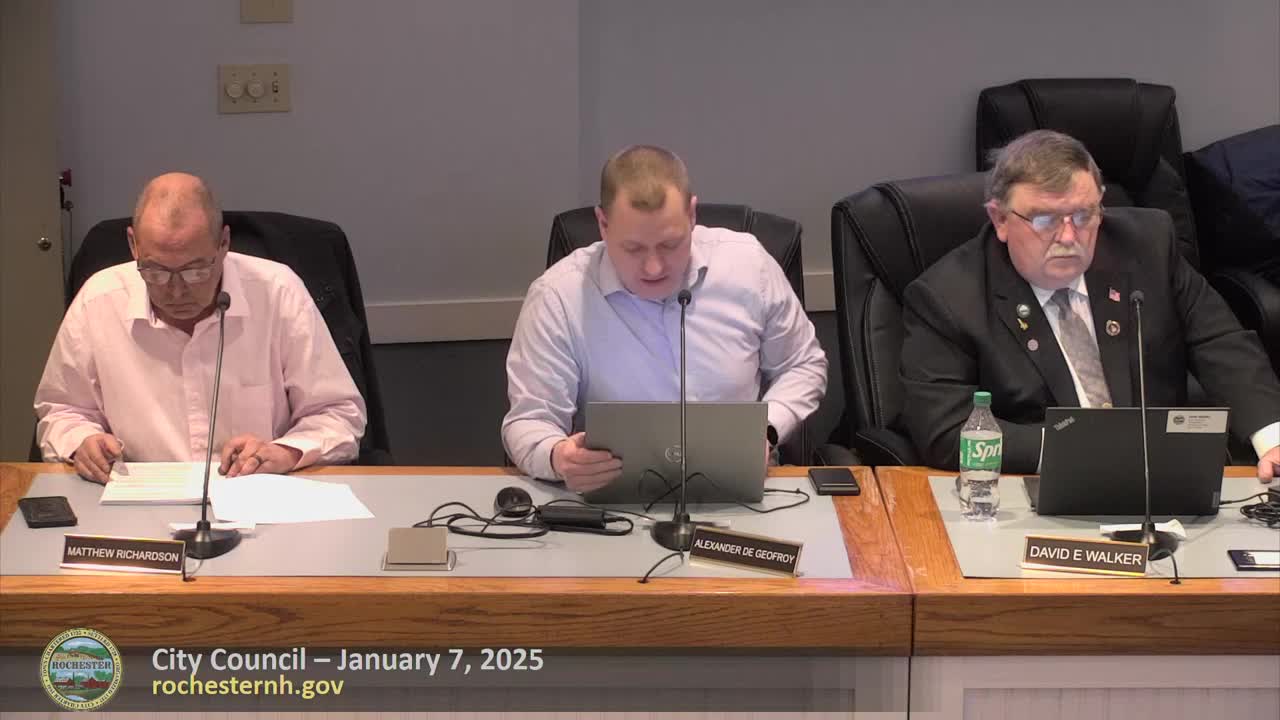
Summary
Rochester City Council rejected a proposed amendment to Chapter 40 (International Property Maintenance Code) after widespread council concern that the measure would be difficult to enforce and could pit neighbors against one another.
Rochester City Council voted unanimously against a first-reading amendment to Chapter 40 of the city’s general ordinances, which would have incorporated provisions from the International Property Maintenance Code to regulate grass height and weeds.
The proposal, presented as a first reading and consideration for adoption, was intended to reduce rodent and overgrown-vegetation problems by setting clearer limits on grass and weed height and by giving code enforcement additional authority to act proactively.
Councilors across multiple wards voiced objections, saying the measure risked over-enforcement, could unintentionally target residents practicing pollinator-friendly landscaping, and would impose burdensome measurements for routine complaints. Councilor Walker said he opposed making the city “the weed police,” and Councilor Sullivan called the proposal “a solution in search of a problem.” Councilor Deja Bois and others also questioned whether the code changes would actually reduce rodents compared with existing health-code levers. Several councilors recommended further clarification or that the issue be revisited with more public input.
Councilors who spoke for the measure said the language followed international model codes and that code enforcement and the codes committee had sought a balanced approach; still, several said they were not convinced the draft as written addressed the practical enforcement issues raised by residents.
At roll call the council recorded unanimous opposition to adoption at this meeting; the chair declared “Unanimous. There’ll be no grass ordinance.”
The vote effectively leaves the current local property maintenance rules unchanged. The proposed ordinance was listed on the agenda as "Amendment to Chapter 40 of the General Ordinances of the City of Rochester regarding the International Property Maintenance Code — First reading and consideration for adoption." Council discussion indicated the item will not move forward in its present form.
Councilors and staff said they welcome continued public feedback and that the codes department will continue to evaluate complaints under the existing property-maintenance framework.
The matter was not referred to a public hearing because the council voted against adoption at this meeting; proponents and opponents indicated they expect continued discussion before any future reintroduction.