Get Full Government Meeting Transcripts, Videos, & Alerts Forever!
Get email alerts on the Transit Sound Transit Tdle topic
No spam. Unsubscribe anytime.
Sound Transit presents DEIS for Tacoma Dome Link Extension; Fife station and three alignment options under review
Summary
Sound Transit officials told the Fife City Council the draft environmental impact statement for the Tacoma Dome Link Extension (TDLE) is open for public comment through Feb. 10, 2025; the agency is studying station sites in Fife and three elevated alignment options with differing business, visual and floodplain impacts.
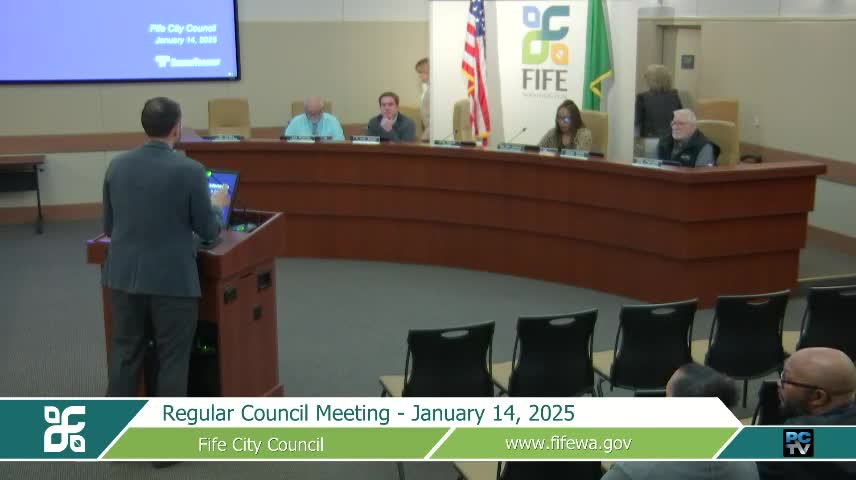
Sound Transit officials presented the Tacoma Dome Link Extension (TDLE) draft environmental impact statement to the Fife City Council on Jan. 14, saying the document and an extended public-comment period are intended to help the Sound Transit Board confirm a preferred alternative later this year.
The DEIS covers a 10-mile extension from Federal Way to the Tacoma Dome and includes four new stations, one of which is proposed for Fife. Austin Nielsen, Sound Transit’s government and community relations lead for Pierce County, said the agency projects 24,000–36,000 daily riders on the corridor and currently estimates a 2035 opening for full service, with parking at the Fife and South Federal Way stations opening later under the agency’s realignment schedule.
Why it matters: The draft EIS identifies tradeoffs among three elevated alignment alternatives through Fife — a median alignment along Pacific Highway (SR 99), an I‑5 alignment and a Fife median alignment — and shows the preferred Fife station location is most consistent with the city’s Fife City Center plan. Council members pressed Sound Transit staff about business displacements, visual impacts to car dealerships if the guideway runs above I‑5, and floodplain constraints that prompted station-location alternatives just outside FEMA floodplain boundaries.
Sound Transit project staff described impacts and tradeoffs. Project manager Diane Weider said the Fife Median alternative would cause the most construction impacts and road closures but the fewest business displacements. The Pacific Highway alternative, north of SR 99, would produce the highest number of business displacements and has potential historic-property impacts; the I‑5 alternative would reduce roadway disruptions but increase visual impacts on residences and wetlands impacts in some locations. Weider told the council displacement estimates are ranges (for example, Pacific Highway 38–54 and median 12–28) because the DEIS is based on 10% design.
Council members asked for additional visualizations and renderings, particularly of I‑5 guideway views with and without trains, and pressed for detail on the project schedule, the height of the aerial guideway and impacts to car dealerships along Pacific Highway. Sound Transit said most guideway sections will be similar in elevation to portions of the regional system such as SeaTac and that exact heights will vary with topography; staff offered to provide typical elevation figures and photographs of key observation points.
The DEIS also flags two structures in Fife that consultation and the environmental review treat as potentially eligible for the National Register of Historic Places — a local diner known as the Pickwick and a vacant house to the east that is associated with Japanese American families removed during World War II. Council members asked whether those properties are listed (Sound Transit said they are eligible through the federal review, not currently listed on state or national registers) and emphasized the need for mitigation and continued coordination with the Puyallup Tribe of Indians regarding the river crossing design.
On the Puyallup River crossing, Sound Transit said it is studying two options: a long clear span to avoid in‑water piers (about 60 feet higher than the I‑5 crossings) and an in‑water pier option similar in height to the new I‑5 spans. The agency said tradeoffs include visual impacts and viewsheds (including Mount Rainier) versus impacts to fish migration and tribal fishing rights, and that it will continue tribal consultation.
Next steps: The draft EIS and supporting materials are on SoundTransit.org/tdlink-deis; the public comment period runs through Feb. 10, 2025. Sound Transit staff said they will present public‑comment themes to the Sound Transit Board in mid‑2025, and the Final EIS is expected in 2027, followed by final design and construction phases. Sound Transit also announced multiple in‑person and online public meetings for January and February, including an in‑person open house at the Fife Community Center on Jan. 30, 2025, at 5:30 p.m.
Council members and staff urged robust local outreach to businesses and residents, and Sound Transit offered printed mailers and to supply the city with outreach materials for distribution.