Get Full Government Meeting Transcripts, Videos, & Alerts Forever!
Get email alerts on the Homelessness Funding topic
No spam. Unsubscribe anytime.
City reviews options to use 14‑06 sales tax and county filing‑fee funds for housing
Summary
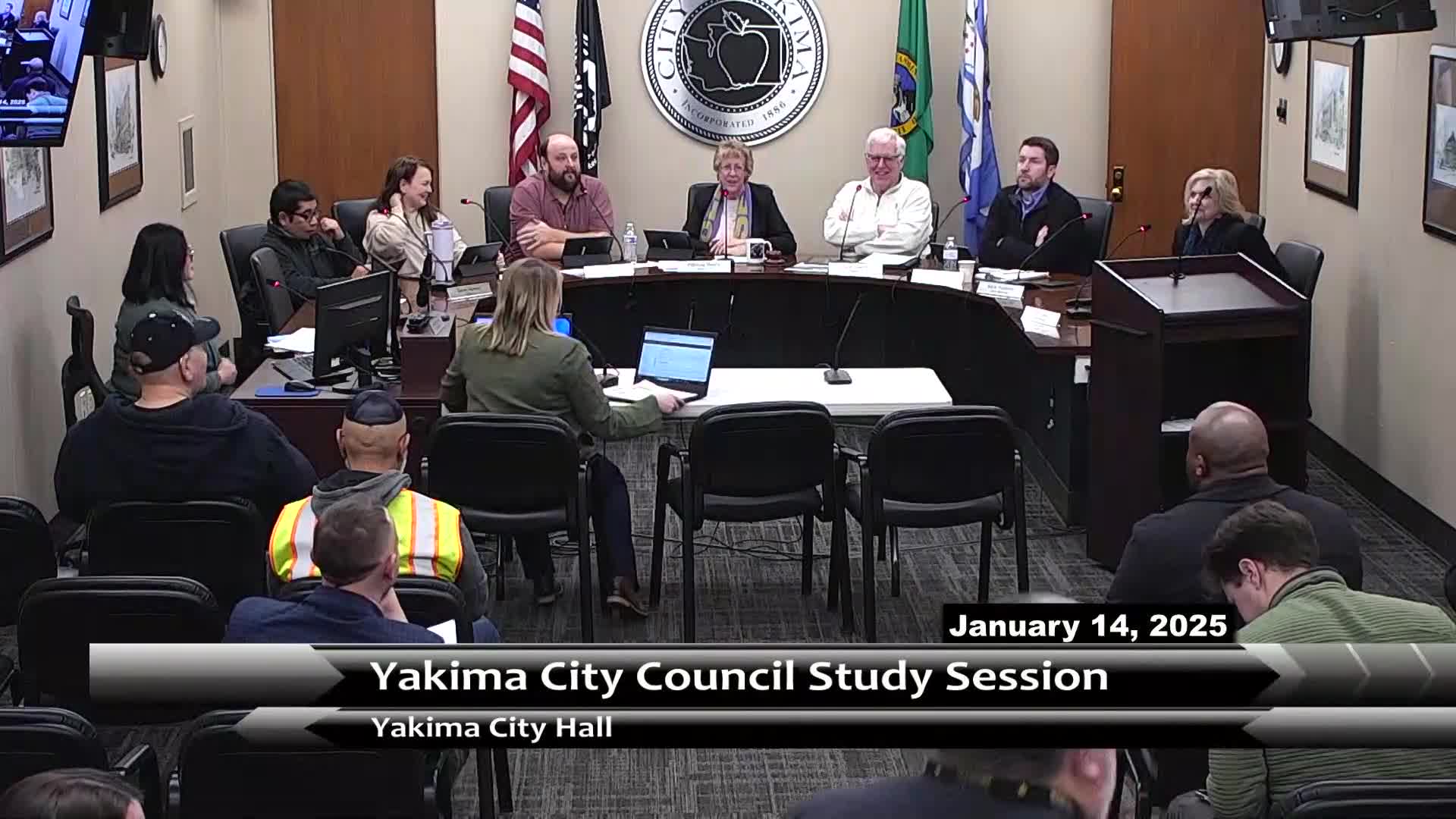
Yakima City staff on Jan. 14 briefed council on options to use the city’s 14‑06 sales tax retention and on retaining a portion of county real‑estate filing‑fee funds to support affordable and supportive housing.
Yakima City staff on Jan. 14 briefed council on two funding options for affordable and supportive housing: (1) using the city’s retained portion of the “14‑06” sales tax already authorized by state law for affordable housing and (2) how the city could retain and administer a portion of the county real‑estate filing fee commonly discussed in Yakima as the “$21.63” filing fee.
City Attorney Sarah Watkins summarized the 14‑06 program and the city’s existing municipal ordinance (YMC 7.92) that currently allows the city to use retained sales tax proceeds to connect multifamily affordable housing projects (10 units or more) to city utilities. Watkins said the state permits retained 14‑06 funds only for three broad categories: construction of housing, supportive housing, or rental assistance. She also noted the city’s 14‑06 proceeds are limited in scale — the city’s total revenue from the program since 2020 is about $806,000 and the typical annual intake is roughly $160,000.
“The $14.00 6 sales tax, that is, as a reminder, that is not a tax that you added to the sales tax when it was adopted. It allowed the city to retain a portion of its sales tax point 0073% of the sales tax could be retained that the city was already collecting and it can be used for affordable housing,” Watkins told council. She explained the statute limits eligible uses and noted funds cannot be used for emergency or temporary shelter but can be applied to construction, operation and maintenance of permanent supportive housing consistent with state rules.
Watkins also described the county real‑estate filing‑fee program (often called the filing‑fee or recording‑fee money) and told council the city could assert responsibility for homeless housing within city limits and receive the city’s share of filing‑fee distributions. She reported county estimates through November 2024 indicate about $484,076 would pass through to the city based on the city’s percentage of filings. She cautioned that if the city took direct responsibility it would need to meet state reporting and program requirements, adopt or designate a five‑year homeless housing strategic plan, and administer competitive funding processes and contract monitoring similar to the county’s existing practice.
“We would be able to retain it for administrative costs and that would cover, you know, things like our RFP, the monitoring, the reporting to commerce, things like that,” Watkins said, but she noted the statute limits administrative retention to 10% (she added that 10% would not likely fund a full‑time staff position).
County Commissioner Kyle Curtis spoke during public comment and urged coordination with the county’s five‑year homeless housing strategic plan, noting the county currently supplies roughly 73% of homeless program funding in the county and that filing‑fee funds are a meaningful local flexible revenue source for capital investments such as Camp Hope laundry and shower facilities.
Options and next steps cited by staff included: leaving funds with the county and participating in the county’s RFP process; the city designating the county plan as its own 5‑year plan and receiving the city share as a pass‑through; or the city developing and adopting its own five‑year plan and administering the filing‑fee funds directly. Watkins said the council could also consider other local revenue options, including a separate affordable‑housing sales tax (a one‑tenth of 1% tax) that the council previously evaluated in 2021 but did not adopt.
No final council decision was made; staff will continue coordination with the county, the homeless coalition and service providers as the city evaluates the options.
Why it matters: retaining and administering filing‑fee revenue or expanding local affordable‑housing taxes could give the city more direct control over funding priorities for affordable and supportive housing but would add administrative and reporting responsibilities and require statutory compliance.