Get Full Government Meeting Transcripts, Videos, & Alerts Forever!
Get email alerts on the Code Compliance And Police Calls topic
No spam. Unsubscribe anytime.
Police, code staff present data on high call volumes at hotels and supportive‑housing sites
Summary
The Yakima Police Department and Code Administration presented compiled call‑for‑service data and code‑compliance findings for hotels and supportive housing; staff said nuisance property procedures are being prepared to address repeat problem sites, and one property will receive a draft corrective letter next week.
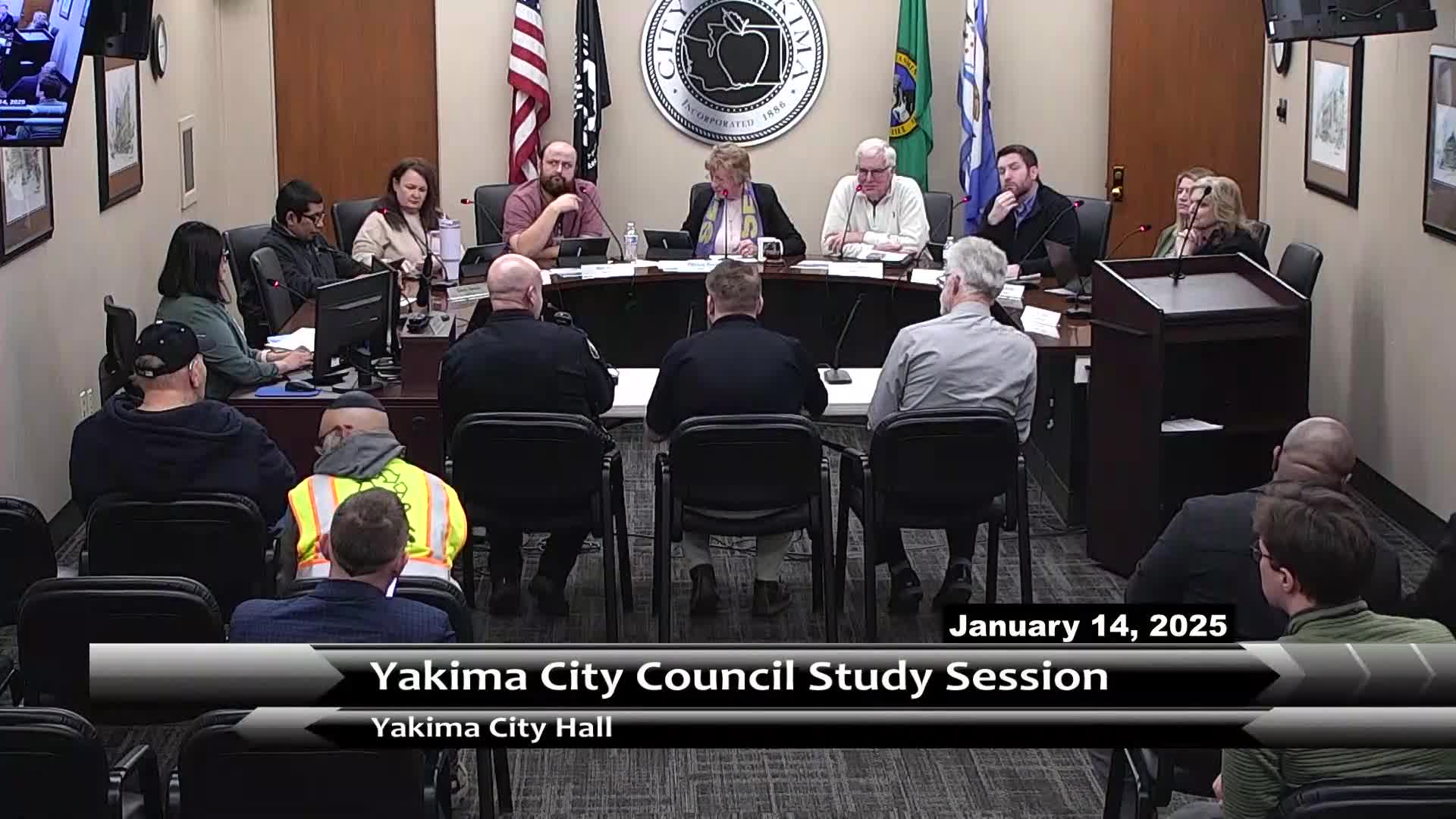
City police and code administration staff on Jan. 14 presented a data review of calls for service at hotels, inns and supportive‑housing facilities and discussed use of the city’s chronic nuisance property ordinance to address repeat problem locations.
Brandon Lin, crime analytics supervisor for the Yakima Police Department, said the team compiled addresses from open sources and the department’s records to produce a 21‑page dataset showing calls for service, officer‑initiated contacts and calls per unit for a roster of properties. Lin cautioned some supportive living facilities may be missing, depending on how facility types are defined.
“All of the addresses that you see, all of these were sourced, using open source data, you know, Google searches,” Lin said. He noted the dataset separates officer‑initiated activity (officers actively engaged with people) from radio calls for service (calls from the public or businesses), and said the breakdown will likely prompt follow‑up questions about which calls truly qualify as nuisances.
Glenn Dedmon, code administration manager, said the city’s code database showed six code cases in 2024 tied to the list of addresses the police provided; four were clean‑city public‑way cleanups and two were location‑specific cases (a plugged sewer line and a general complaint). Dedmon said staff are preparing a draft notice and expectations for at least one property and will meet with the city attorney to finalize the letter; property owners have 10 days to respond and then 30 days to meet a correction agreement before further enforcement steps are considered.
“We’ve had a letter draft that we have a meeting next. I think it’s Tuesday morning ... we identify the property, we identify the behavior, and then we serve the, the owner of the property with [the notice],” Dedmon said. He described the goal as changing owner behavior so chronic calls decrease and police time is freed for other duties.
Council discussion focused on how the data are compiled, what qualifies as a chronic nuisance activity and how frequently the city has used the nuisance ordinance. Staff said nuisance actions are time‑consuming and require documented incidents within statutory timeframes but noted the city has had success previously where settlements and correction agreements have led owners to change practices.
No formal action was taken. Staff said they are working with City Legal on a corrective letter for a property on the dataset and will pursue the nuisance process if the owner does not enter an acceptable correction agreement.