Get Full Government Meeting Transcripts, Videos, & Alerts Forever!
Get email alerts on the Zoning Ordinance Rewrite topic
No spam. Unsubscribe anytime.
City presents zoning ordinance rewrite engagement results: 1,499 surveys and 1,013 meeting participants
Summary
Planning staff and University of New Hampshire partners reported results from a months-long public engagement campaign on a proposed rewrite of Manchester's zoning ordinance: 1,499 survey responses and 1,013 attendees at 12 ward meetings. The planning department will use the feedback to produce a second draft with a proposed 60-day public review.
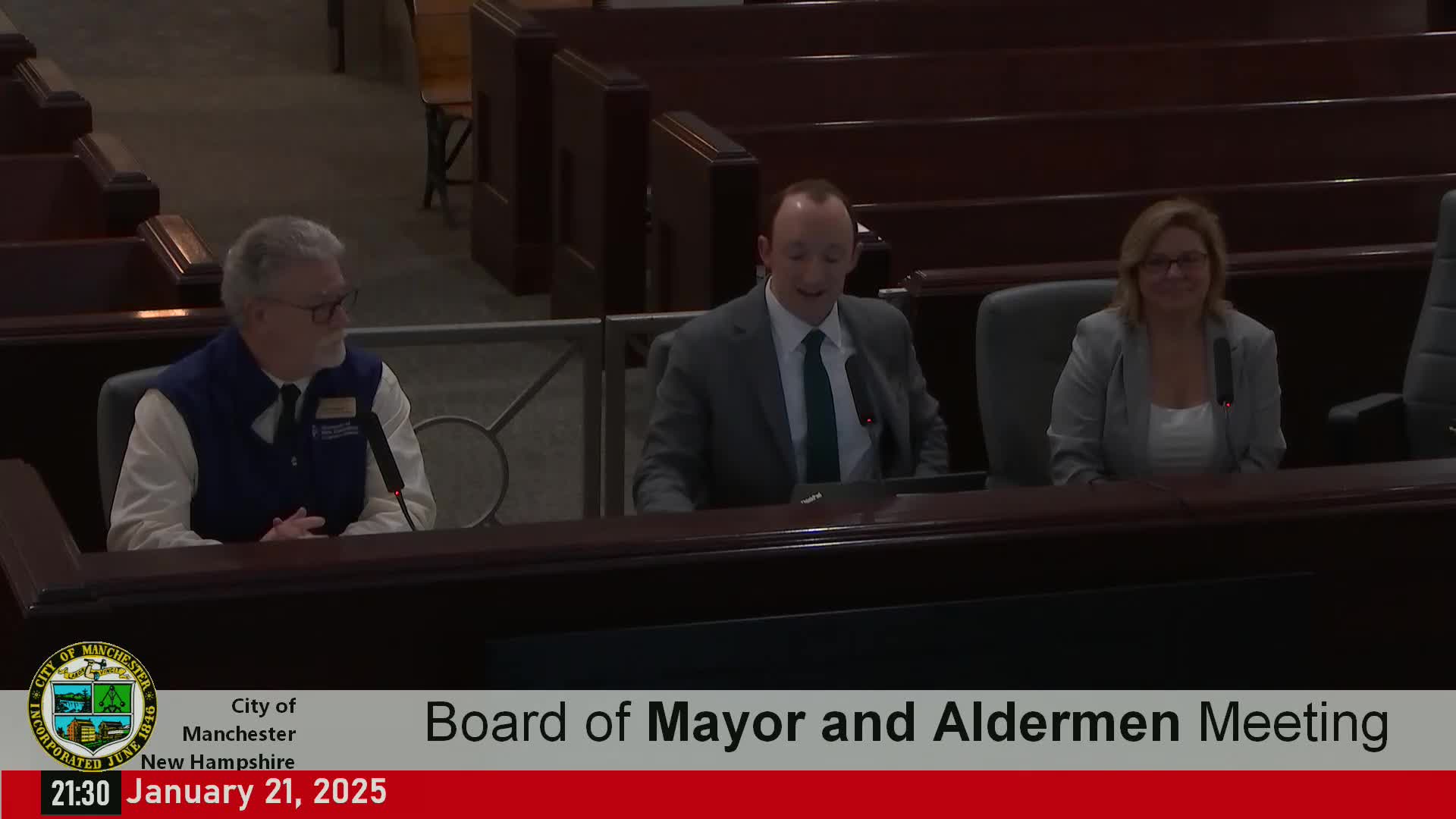
City planning staff and University of New Hampshire partners presented the public engagement results for a proposed rewrite of Manchester’s zoning ordinance, reporting nearly 1,500 survey responses and more than 1,000 participants at 12 ward-level community meetings.
The outreach, led by the planning department with UNH’s Survey Center and Cooperative Extension, produced quantitative and qualitative information the city said it will use to revise the first draft of the ordinance. “We published the first draft on June 21 and then asked people to weigh in,” Jeff Belanger, planning staff lead, said. “Now we have a lot of data to guide edits.”
Why it matters: the rewrite would update decades-old land-use rules and could change what types of housing and commercial development are permitted across city neighborhoods. Planning staff said the effort is intended to align zoning with the city’s 2021 master plan and to respond to public priorities identified during engagement.
Key findings: the UNH survey reported 1,499 valid responses; the community meeting series drew 1,013 attendees. Survey highlights included strong public concern about housing cost—three-quarters of respondents said housing prices in Manchester are “not very” or “not at all reasonable”—and broad support for more varied housing types. Respondents most frequently said they would welcome small retail, small residential buildings, restaurants and mixed-use development; there was less appetite for large hotel or auto-oriented projects.
Neighborhood breakdown: UNH reported that duplexes and small multifamily forms were broadly seen as fitting in many neighborhoods; views on mixed-use buildings varied by ward, with some wards more open to greater density. Parking remained a recurring concern citywide, with downtown and mill-yard areas showing more parking difficulty than many residential wards.
Process and next steps: planning staff and the steering committee will analyze comments and publish a second draft of the ordinance. The department proposed 60 days of public review for the second draft—far longer than the 10-day legal minimum—and additional meetings and presentations to the Board of Mayor and Aldermen. The planning director said staff will offer one-on-one briefings for aldermen on ward-specific feedback as the second draft is developed.
What stakeholders said: UNH’s Tracy Kearns (Survey Center) and Scott Slattery (Cooperative Extension) emphasized the breadth of input and that many comments favored “streamlining” the permitting process, promoting reuse of vacant properties, and concentrating higher-density housing near the central business district while protecting neighborhood character.
Ending note: Planning staff described the effort as a “generational” opportunity to modernize zoning to address housing affordability, walkability and reuse of vacant commercial properties. The timeline for publication of a second draft will depend on staff analysis and steering-committee deliberations; staff estimated several months for edits and a formal 60-day public comment period once the second draft is posted.