Get Full Government Meeting Transcripts, Videos, & Alerts Forever!
Get email alerts on the Judicial Appeals Court Oral Arguments topic
No spam. Unsubscribe anytime.
Appeals court hears family‑court collateral‑attack and unjust‑enrichment claim after long post‑judgment litigation
Summary
The panel considered whether a post‑divorce unjust‑enrichment suit was barred by prior probate judgments and settlements, and counsel for the former spouse asked the court to reject collateral attacks and award fees for repeated litigation deemed frivolous by the defending party.
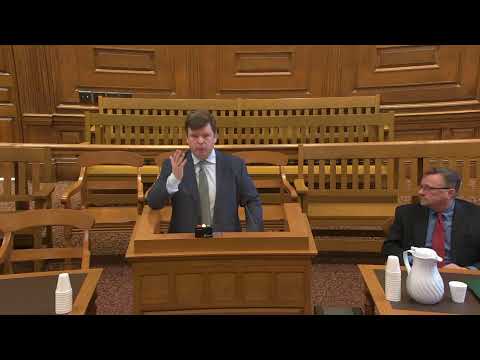
In Thomas B. Cunningham (docket 24P320), argued Feb. 6, the Appeals Court heard disputes stemming from a long family‑court record in which a property stake (home equity) and retirement‑account transfers were central. Appellant Robert Clark (representing Thomas Cunningham) advanced unjust enrichment and other claims, while appellee counsel argued the claims were claim‑ and issue‑precluded by prior divorce, modification and contempt rulings and urged sanctions for repeated collateral attacks.
Appellant argued the transfer of home equity and the family‑court modification and later judgment left him with a measurable benefit that should be the subject of unjust‑enrichment relief; counsel said the practical remedy sought was monetary equalization rather than unwinding the property transfer. The appellee’s counsel (attorney Loomis) urged that the claims were barred by earlier judgments, settlement terms and the appeals court’s prior decision, and asked for attorney’s fees on the ground that the present suit repeated collateral attacks litigated and rejected over many years.
The court pressed counsel on whether the stipulation that produced a partial judgment had been interwoven with subsequent modification proceedings and whether the original or later judgments were final for preclusion purposes. Appellate counsel for Cunningham acknowledged some factual and procedural complexity and said certain choices were strategic; appellee counsel described a long pattern of repetitive litigation and urged the court to find the appeal frivolous and award fees under prevailing precedent if it sustained that view.
Questioning ranged from whether there had been adequate consideration for the family‑court stipulation to whether the appellant had alternatives earlier in the case and whether fees could be awarded to pro bono counsel. The panel took the argument under advisement.