Get Full Government Meeting Transcripts, Videos, & Alerts Forever!
Get email alerts on the Criminal Appeals Evidence Jury topic
No spam. Unsubscribe anytime.
Appeals Court revisits trial errors raised in Goussey appeal: first-complaint evidence and juror concern
Summary
Defense argued that failures to apply first-complaint rules and to provide limiting instructions, plus a juror’s post-trial statement, together created a substantial risk of a miscarriage of justice; the Commonwealth defended the record and trial judge’s discretion.
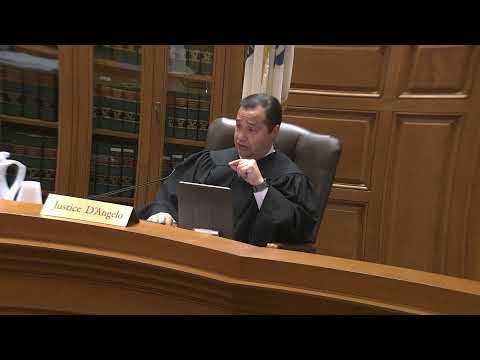
The Appeals Court heard arguments in Commonwealth v. Nicholas Goussey about whether multiple trial errors — admission of first-complaint and prior-bad-act evidence without limiting instructions and a juror who expressed religious-based concerns during deliberations — require reversal.
Genevieve Henry, counsel for Nicholas Goussey, told the panel the trial record showed repeated admission of prior statements and other testimony that should have been limited or excluded under the first-complaint doctrine and that the trial judge failed to properly inquire about a juror who raised concerns during deliberations. Henry said those errors, taken together, produced a substantial risk of a miscarriage of justice.
Steve Nado, representing the Commonwealth, acknowledged problems in how the record was created and said prosecutors have since addressed some of those issues through training. Nado argued that under existing precedent the defendant’s defense strategy (emphasizing recantation and investigation adequacy) significantly reduced the risk that the assorted testimony produced prejudice requiring reversal.
Justice questioning focused in part on the juror who expressed doubts rooted in personal faith and then returned a verdict minutes later. Counsel debated whether the trial judge should have suspended deliberations, polled or individually questioned that juror after the verdict, and whether the absence of a contemporaneous limiting instruction by the judge is reversible error by itself.
The panel also discussed whether the absence of a clear contemporaneous record — including handwritten docket notations and inconsistent entries — complicates appellate review. The court reserved decision after argument.