Get Full Government Meeting Transcripts, Videos, & Alerts Forever!
Get email alerts on the Criminal Appeals Immigration topic
No spam. Unsubscribe anytime.
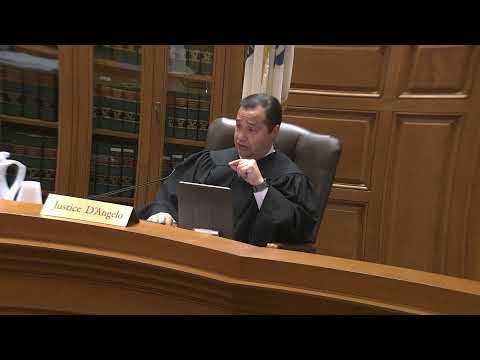
Appeals Court reviews denial of new probation hearing as lawyers dispute retroactivity of immigration-law guidance
Summary
Counsel for Farooq Sameja argued a superior-court denial of a motion for a new probation hearing should be reversed because defense counsel at sentencing could not have known altered immigration consequences; the Commonwealth urged deference to counsel’s conduct evaluated at the time it occurred.
The Appeals Court heard argument in Commonwealth v. Farooq Sameja about whether a conviction-related probation sanction and counsel’s actions at the time amounted to ineffective assistance when later changes in immigration law turned a brief custodial term into an aggravated-felony consequence.
Kathleen Hill, representing the defendant, told the panel that the district court initially would not allow her to file for the relief and that the record showed confusion at the trial level about whether a probationer could seek the relief in that forum. Hill argued trial counsel could not have known years ago that a 364-day sentence exposure could be treated as an aggravated federal felony that would trigger deportation, and she cited a line of decisions she described as changing the law after the fact.
Kristen Kelly, appearing for the Commonwealth, urged the court to assess counsel’s performance using the reasonableness standard as judged by contemporary practice and facts known to counsel at the time. Kelly said the probation judge did not abuse her discretion and that any retroactivity arguments depended on fine distinctions in Supreme Judicial Court and federal precedent; she also noted that the district attorney originally took no position and that probation had handled the matter at the trial level.
Justices questioned when and how retroactive holdings from cases attorneys referenced — discussion included Padilla, Marino and other SJC decisions — should alter the analysis of whether counsel performed deficiently at the time of sentencing. Hill pointed to an affidavit from the trial attorney asserting he was not aware the sentence could have the claimed immigration consequence; Kelly responded that the “snapshot in time” of counsel’s knowledge remains the governing Strickland inquiry.
The court also discussed procedural irregularities in the district court record, including handwritten docket notations and whether the probation department had procedural standing to oppose the petitioner. The panel took the arguments under advisement.