Get Full Government Meeting Transcripts, Videos, & Alerts Forever!
Get email alerts on the Criminal Appeals Evidence topic
No spam. Unsubscribe anytime.
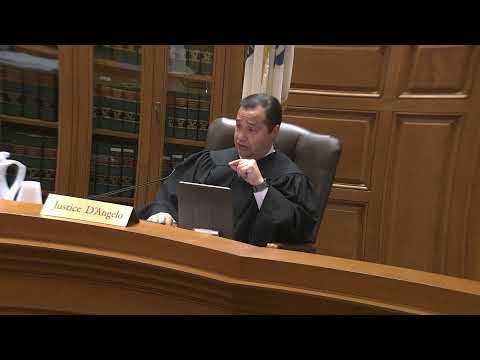
Appeals Court hears challenge to gun-possession conviction over ambiguous recorded interrogation
Summary
Lawyers for Alexander Benitez Morales told a three-judge panel the recorded interrogation and a language barrier left the Commonwealth’s constructive-possession case insufficient; prosecutors said the search, officer testimony and video together supported the jury’s verdict.
The Massachusetts Appeals Court heard arguments in Commonwealth v. Alexander Benitez Morales over whether evidence presented at trial was sufficient to prove Morales constructively possessed a firearm.
Appellate counsel Kevin DeMello argued the recorded interrogation used at trial was ambiguous, that a language barrier undermined any knowing Miranda waiver and that the Commonwealth failed to prove intent to exercise dominion and control over the weapon. “This recorded interrogation was highly problematic,” DeMello told the panel, citing the difficulty of understanding parts of the recording and arguing that the video and officer testimony did not establish the intent element required for constructive possession.
Assistant District Attorney Danielle Borges told the court the evidence, viewed in the light most favorable to the Commonwealth, supported the jury’s verdict. Borges said officers were given consent to search the apartment, the firearm was found under a ceiling tile, and the defendant’s statements and the officer’s testimony together permitted a rational juror to find Morales knew of the firearm and had ability and intent to control it.
The judges pressed both sides about how to treat the recorded interrogation. DeMello said the clip admitted at trial was only a few minutes of an approximately 50-minute interrogation, and that the video’s ambiguity meant jurors should not be permitted to rely on an officer’s interpretation of the tape if the tape itself does not clearly say what the officer testified. Borges responded that the jury had both the video and the officer’s testimony and that the trial judge reasonably declined to give a voluntariness instruction because voluntariness was not a live issue on the record.
The defense also raised procedural points: there was no motion to suppress the interrogation and no ineffective-assistance claim at the trial-court level alleging counsel failed to file one, forcing the court to consider whether the record before the panel suffices to address suppression and voluntariness arguments raised for the first time on appeal. DeMello cited a case he called “Harris” as support for the proposition that a judge can have a sua sponte duty to examine voluntariness.
Justices asked whether excluding the video would also require excluding or limiting the officer’s testimony about what he believed the defendant said; counsel disagreed on whether the officer’s testimony would then be admissible without creating substantial prejudice. Both sides agreed the video and officer testimony were the core evidentiary dispute the court must resolve on appeal.
The panel did not announce a decision at argument’s close and took the case under advisement.