Get Full Government Meeting Transcripts, Videos, & Alerts Forever!
Get email alerts on the Judicial Appeals Court Oral Arguments topic
No spam. Unsubscribe anytime.
Appeals court considers whether prior convictions allowed use of propensity evidence in fentanyl case
Summary
The panel heard argument over sufficiency of evidence for intent to distribute where 4 grams of fentanyl were found in a bedroom but much related drug evidence was in an inaccessible room; attorneys disputed whether two earlier drug convictions should have been admitted to prove intent.
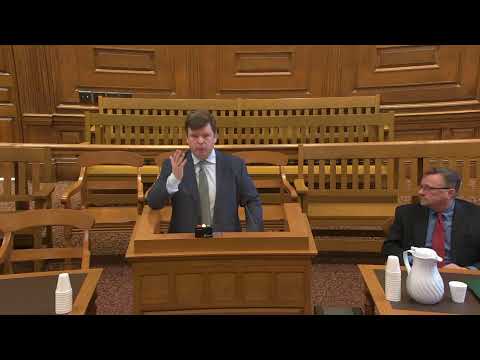
The Appeals Court on Feb. 6 heard argument in Commonwealth v. Julius Clemente, raising two core issues: whether evidence proved the defendant’s specific intent to distribute fentanyl found in his bedroom, and whether two prior convictions were wrongly admitted and prejudiced the jury.
Defense counsel Caroline Howe told the panel that four grams of fentanyl found in a bedroom labeled as Clemente’s could be consistent with personal use: the Commonwealth’s expert testified the amount could be consumed in hours or days and that the baggie was not packaged for resale. Howe emphasized that much of the indicia of distribution (digital scales, sandwich baggies, a ledger) were found in a separate bedroom described at trial as the sister’s room behind a dead bolt; Howe said there was no evidence Clemente had access to that room. The defense also argued the two prior convictions were remote in time and dissimilar in fact pattern and that their admission injected impermissible propensity reasoning.
The Commonwealth, represented by Arne Hansen, said the totality of the evidence supported the convictions. Prosecutors pointed to testimony that one check payable to a corporate name appeared at the defendant’s listed residence and was deposited into the Jorobri (corporate) account the same day; they also noted a ledger, mail in the sister’s room that included the defendant’s mail, and the defendant’s own admission to selling marijuana. The Commonwealth argued those facts permitted reasonable inference of a nexus between the defendant and the distribution items.
A central dispute concerned the trial judge’s gatekeeping role on admissibility of prior convictions and whether the prior convictions, introduced by the Commonwealth through multiple means (testimony, plea colloquy, docket), were so prejudicial as to warrant reversal. Counsel debated how the court’s precedent treats similarly patterned prior offenses (the parties cited Commonwealth v. Goleman, Helfand and other decisions) and whether the jury’s mixed verdicts—acquittal on some counts and guilty on others—showed the case was close and therefore susceptible to prejudice from admission of the priors.
The panel asked detailed questions about accessibility of the sister’s room, why the jury might accept that the defendant did or did not exercise constructive possession, and whether the limiting instructions and the absence of testimony about keys mitigated potential prejudice. The Commonwealth urged the court to view the record as showing sufficient nexus to the home and room and to uphold the convictions; defense counsel urged reversal for insufficiency and erroneous admission of prior convictions. The court took the case under advisement.