Get Full Government Meeting Transcripts, Videos, & Alerts Forever!
Get email alerts on the Autism Blue Envelope topic
No spam. Unsubscribe anytime.
Senate committee advances 'blue envelope' program to help drivers with autism during traffic stops
Summary
The committee passed HB 1046 to create a standardized 'blue envelope' that drivers with autism can present during traffic stops containing identification and communication information; supporters said the nonverbal signal can reduce misunderstanding and de‑escalate encounters.
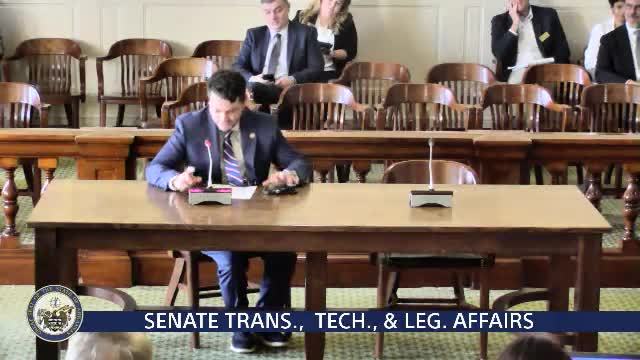
Representative Aaron Pilkington (District 45) told the Senate Transportation, Technology & Legislative Affairs Committee that HB 1046 would create a standardized process for an individual with autism to receive a "blue envelope" from the Department of Finance and Administration to carry during traffic stops. The envelope would contain the driver's license, insurance card and written notes to help officers understand how to communicate with a neurodiverse driver.
"This is a nonverbal communication, letting the police officer understand that this is a driver who has autism," Representative Pilkington said, describing the envelope as a means to reduce misunderstanding and anxiety during stops. Pilkington said six other states have similar programs in at least some jurisdictions.
Ludwig Lud Kosvalska Jr., who identified himself as a self‑advocate on the autism spectrum and a member of the Governor's Council on Developmental Disabilities, told the committee about a traffic incident that left him overwhelmed. "It was quite overwhelming," he said, describing being startled and then finding an encounter with a post officer that he felt did not fully believe his account.
Committee members asked clarifying questions about whether envelopes could be fabricated and whether documentation would be required to receive one. Cedric Deeds raised the concern that a person might attempt to produce a counterfeit envelope. Representative Pilkington said the Department of Finance and Administration would design and order the envelopes and that verification methods could be developed as the program is implemented. Senator Deese asked whether normal police procedures, including searches, would still apply; Pilkington said the envelope would not confer special privileges and a stop could proceed as usual.
The committee approved HB 1046 on a motion by Senator Bryant, seconded by Senator Deese, by voice vote. Representative Pilkington said he had received no opposition in committee and asked for a due pass. The transcript records no roll‑call vote totals. The measure's implementation details — including whether a medical note would be required to obtain an envelope and the specific envelope design — were left to DFA and further development.