Get Full Government Meeting Transcripts, Videos, & Alerts Forever!
Get email alerts on the Education School Facilities topic
No spam. Unsubscribe anytime.
Senate advances constitutional amendment to shift school construction funding back to local bond votes
Summary
Senate Joint Resolution 6, a proposed amendment to make school facilities a local responsibility funded by bond votes with state equalization, passed committee of the whole and will move forward for legislative consideration.
The Senate committee of the whole approved Senate Joint Resolution 6 on Feb. 6, 2025, advancing a proposed constitutional amendment to return primary responsibility for public school facility construction to local school districts while providing mandatory state equalization.
Sponsor Senator Scott described the measure as a response to rising capital spending the state has been financing since the Campbell decisions, noting that the state has spent billions on school capital construction since assuming responsibility. "The cost of paying bonds and interest shall be equalized," Scott said, summarizing a central provision that would require the state to equalize facility bond burdens so that required mill levies would not exceed a statewide per-capita assessed-valuation average.
Under the amendment, local voters would decide bond questions; the legislature would be authorized to adopt equalization and hardship provisions, and the measure contemplates state appropriations or dedicated revenue to support equalization. Scott told the Committee of the Whole that he believes the change would reduce overall statewide capital spending and put local voters in the deciding role.
Opponents raised equity and timing concerns. Senator Schueller and others said wealthier counties could benefit more than poorer ones and worried about local districts that cannot pass bonds. Senator Land noted that the current system has produced billions in state-funded school construction and warned any change would need careful design so small, rural communities are not left behind. Supporters countered that the current model is unsustainable and projected deficits in the school foundation program if current capital spending continues.
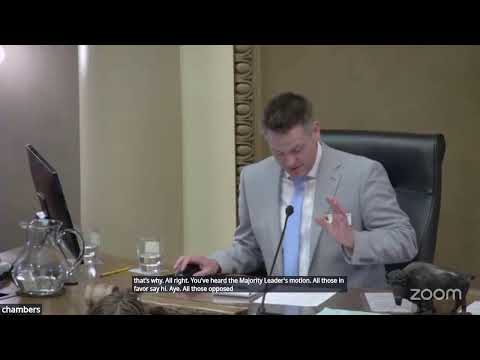
After discussion the committee recorded a division and a roll-call result showing 16 in favor and 13 opposed; the chair declared that Joint Resolution 6 had passed committee of the whole and would be reported favorably for floor consideration.