Get Full Government Meeting Transcripts, Videos, & Alerts Forever!
Get email alerts on the Elections topic
No spam. Unsubscribe anytime.
House narrows exceptions to paper‑ballot bill; funding, local‑control amendments fail
Summary
House debate on House Bill 245, which makes pen‑and‑paper ballots the default, included failed amendments to broaden access to voting machines and to provide state funding to replace machines in one county. A separate amendment to allow local clerks discretion was also defeated.
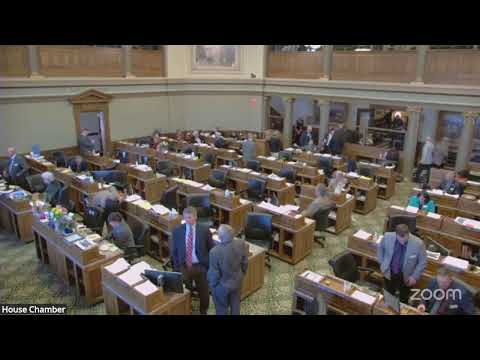
House Bill 245, which would set pen‑and‑paper ballots as the default method, drew sustained debate on Feb. 6 over exceptions and the financial costs of replacing voting machines.
Representative Sherwood offered an amendment to replace a disability‑only exception with language allowing "electors who choose" to use voting machines, arguing that voting method should be a broadly available option. Sponsor Representative Knapp opposed that change, saying the bill keeps touch‑screen machines only as an exception for voters who need them under HAVA — the federal Help America Vote Act — and stressed concerns about chain of custody and auditability of machine ballots.
That amendment did not pass on a voice/standing test. Later, Representative Yen moved an amendment to appropriate state funds to help the county facing the biggest equipment replacement cost; a roll‑call vote on that amendment failed 7 aye, 54 no, 1 excused. Representative Wiley later moved an amendment to give county clerks discretion to implement methods locally; that amendment was defeated by a recorded floor vote (36‑23). After additional floor action, the bill was ordered to third reading.
Key floor arguments: Supporters of keeping a narrow exception said paper ballots improve chain of custody and auditability and that touch‑screens should remain limited to voters with disabilities. Proponents of broader machine access argued voters should be able to choose their preferred method and that convenience should not be curtailed. The funding amendment proponents said the state should not burden one county alone with replacement costs.
What happens next: HB245 was scheduled for third reading; the transcript does not record a final passage vote in the provided excerpt.