Get Full Government Meeting Transcripts, Videos, & Alerts Forever!
Get email alerts on the Privacy Public Spaces topic
No spam. Unsubscribe anytime.
Wyoming House advances privacy bill with changes for local governments and jails
Summary
Lawmakers advanced House Bill 72, the "Protecting Women’s Privacy and Public Spaces Act," after a series of friendly amendments intended to clarify implementation for local governments and small jails. Several proposed amendments to broaden civil remedies and add restroom harassment language were rejected.
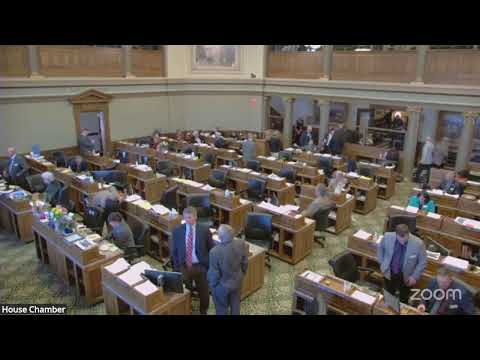
House sponsors and lawmakers on Feb. 6 advanced House Bill 72, the "Protecting Women’s Privacy and Public Spaces Act," to third reading after adopting two amendments aimed at clarifying how local governments and small detention facilities should implement the law.
The bill, sponsored on the floor by Representative Tom Lolli (sponsor), aims to set statewide standards for use of sex‑segregated facilities and related enforcement. Lolli said the bill has been "resoundingly" supported by local governments but required tweaks to make it workable.
Supporters said the first adopted amendment — offered by Representative Lawley — adds examples of reasonable steps for public facilities, including "posting appropriate signage and adopting policies for the enforcement of this provision of this act." Lawley told colleagues the change came from conversations with local governments that wanted clearer, practical language.
A second adopted amendment, introduced by Representative Williams, was described as addressing "staffing challenges" at rural jails and giving small facilities flexibility to make temporary assignments when populations shift. Lolli characterized that amendment as "friendly" and said it preserves the bill's intent while acknowledging operational realities in smaller counties.
Lawmakers debated, but rejected, an amendment from Representative Provenza that would have attached civil penalties specifically tied to conduct in restrooms and sleeping quarters and added harassment‑type language. Representative Lawley argued the measures Provenza proposed were redundant with existing law and risked "muddling" the bill’s purpose. Provenza said the language was aimed at preventing harassment and emotional distress for people using bathrooms and changing areas.
Representative Nicholas proposed an amendment to add an exception permitting temporary use of opposite‑sex changing areas for organized groups and teams; the floor defeated that change after the sponsor pointed out the bill already allows temporary reassignments in the education section.
Taken together, the adopted amendments focused on clearer signage/policy guidance for public facilities and operational flexibility for small detention centers; other proposed changes meant to expand civil remedies or clarify restroom conduct were rejected on the floor. After the votes, the House ordered the bill read a third time.
What happens next: The bill was carried forward to third reading on the House floor. The transcript does not record a final passage vote in this excerpt.