Get email alerts on the Urban Forest Management topic
No spam. Unsubscribe anytime.
Bothell starts urban forest management plan; consultant sought, canopy inventory planned
Summary
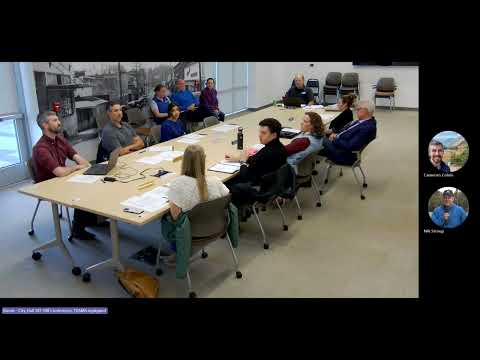
At the October 2024 meeting of the Bothell Parks and Recreation Board, long‑range planner Cameron Colvin outlined a yearlong urban forest management plan funded primarily by a Department of Commerce grant and supplemented with ARPA funds.
At the October 2024 meeting of the Bothell Parks and Recreation Board, long‑range planner Cameron Colvin outlined a yearlong urban forest management plan funded primarily by a Department of Commerce grant and supplemented with American Rescue Plan Act (ARPA) funds.
Colvin said the work will include a review of existing plans and regulations, updated tree‑canopy mapping using aerial and lidar data, and a street‑tree inventory limited initially to the public right‑of‑way. “We will be cleaning up that 2016 data so that we can have a better apples‑to‑apples comparison,” Colvin said, describing a 2016 baseline map the city plans to update.
The nut graph: City staff said the plan aims to give officials data and tactics to protect large trees, prioritize planting and maintenance, reduce conflicts between trees and infrastructure, and target outreach where tree cover and socio‑economic vulnerability overlap.
Colvin said the team has issued a request for proposals for a consultant, expects to award a contract early next month, and must deliver certain grant deliverables to the Department of Commerce by June 30 next year. The project will be coordinated across community development, public works, parks and recreation and GIS staff, and could follow models used by Shoreline, Kirkland, Bellevue and Seattle.
Planned technical tasks include: (1) a policy and program review that will consider the city’s critical areas ordinance, shoreline protections and zoning sections related to tree preservation; (2) updated canopy mapping and a street‑tree inventory that records species, size/age, condition and potential conflicts with sidewalks or utilities; and (3) an implementation plan that assigns department responsibilities, funding or staffing needs and monitoring metrics.
Staff described public engagement tools that will be used: the city’s Engage Bothell platform, in‑person workshops, neighborhood surveys and volunteer‑assisted data collection days. Colvin also noted the Tree Equity Score, an American Forests metric that overlays canopy and demographic data, as an early targeting tool.
Public comment tied the plan to local priorities. “Oh, I’m Sarah. I’m with Friends of North Creek Forest, a nonprofit organization that helps the city take care of that 54‑acre parcel of land North Creek Forest,” said Sarah, a representative of that group. She urged the city to accelerate master planning and accessibility work for North Creek Forest and to consider a permanent name review and coordination with the art board.
Board members and staff discussed scope limits: the initial street‑tree inventory will focus on trees in the right‑of‑way, while canopy mapping will measure citywide changes including private property loss from development. Colvin said later expansion to inventory all city‑owned trees is a likely future step.
Next steps: staff will complete consultant selection, provide periodic updates to the Parks and Recreation Board and planning commission, and begin outreach and data collection. The board and the public will be able to comment through Engage Bothell and upcoming workshops.
AI generated
The text on this page is AI generated. Summaries, highlights, analysis, and video transcripts are all produced from the original source material.
AI can make mistakes, so if you spot one, and we will fix it for everyone.
Note: the source content is unaltered by us. Any content source we link to, be it a video, an audio recording, or a document, is presented exactly as its publisher released it. That publisher is usually a government body, sometimes an individual official or another organisation.