Get Full Government Meeting Transcripts, Videos, & Alerts Forever!
Get email alerts on the Charter Accountability topic
No spam. Unsubscribe anytime.
Two low-performing charter schools present corrective action plans to Marion board; state rules set follow-up steps
Summary
Ocala Charter High and McIntosh Area School presented academic corrective action plans required under state rules. School leaders described staffing, classroom management and targeted interventions; district staff outlined monitoring obligations and possible state consequences for continued low grades.
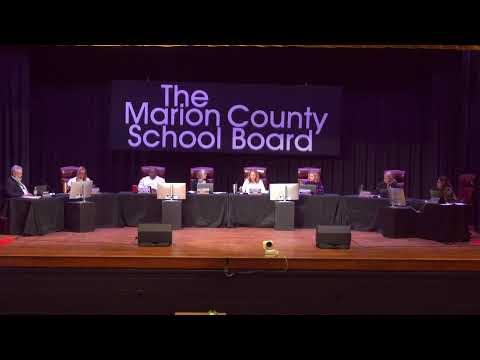
Two Marion County charter schools that earned low grades presented state-required corrective action plans at the board’s Feb. 6 work session, and district staff laid out the monitoring steps and statutory consequences that could follow continued underperformance.
Ocala Charter High (Clear Choice Academies) and McIntosh Area School each appeared before the district as required by Florida statutes and State Board of Education rules after receiving school grades that triggered corrective-action requirements. Mr. Ayers, the district’s sponsor representative, introduced both presentations and confirmed the plans had been uploaded to the board packet.
Ocala Charter High: focus on staffing, classroom management and student motivation
TC Matthews, executive director of Clear Choice Academies, told the board the high school’s corrective plan centers on three areas: strategic staffing and hiring to secure “highly qualified, highly impactful teachers,” consistent classroom management to protect instructional time, and increased student motivation and parent engagement tied to graduation and assessment stakes. Matthews said the school retained two highly effective teachers from the previous year and hired additional staff, that leaders had implemented targeted classroom-management strategies to limit behavior that erodes instruction, and that the school is working to increase student motivation around high-stakes tests that affect diploma completion and acceleration.
McIntosh Area School: small cohorts, enrollment shifts, targeted remediation
Principal David Friedlander and curriculum lead Miss Beals presented McIntosh Area School’s plan. Friedlander told the board the 2023–24 school year produced an F after a C the prior year and that small cohort sizes had a large effect on the school’s accountability calculation: the transcript reports the school had 46 students enrolled in 2023–24, and only 12 or 14 students in grades 3–5 were counted for the school-grade proficiency component under state rules. The presenters said 44 percent of the current (24–25) enrollment is new to the school and that around 25 percent of students have an IEP or a 504 plan. Friedlander said the school will continue tutoring, remediation, family engagement and enrichment activities (including clubs and a local Cub Scout pack) and that midyear assessment shows some promising PM1-to-PM2 gains.
Monitoring and consequences under state rules
District staff and the attorney clarified the oversight process: Florida statutes and State Board of Education rules require a governing-board representative and school director/principal to appear before the sponsor when a charter receives a D or F and to submit an academic corrective-action plan for sponsor approval. Mr. Ayers and Attorney Powers said the district will continue monitoring implementation and progress. Mr. Ayers summarized follow-up steps: schools with multiple consecutive low grades must continue to submit plans and be monitored; a school that receives three consecutive grades below a C is subject to further improvement planning and review; and a school receiving two consecutive F grades may face state-initiated charter termination under the statute cited in the meeting (referenced in the transcript as 1,002.3993).
Board reaction and next steps
Board members acknowledged the challenges facing small and alternative schools, including how small denominators can distort accountability metrics. Several board members praised the corrective plans’ emphasis on teacher quality, student motivation and family outreach and asked staff for continued monitoring updates. Attorney Powers and district staff described the timeline for state notification, appeals and the board’s oversight responsibilities.
Ending: Both charter-school presentations met the State Board of Education’s corrective-plan requirements, staff said. The district will continue to monitor progress and report back to the board as midyear and end-of-year assessment data become available.