Get Full Government Meeting Transcripts, Videos, & Alerts Forever!
Get email alerts on the School Transportation topic
No spam. Unsubscribe anytime.
Marion County board hears bus-fleet update: 341 vehicles, rising costs and a $1M navigation ask
Summary
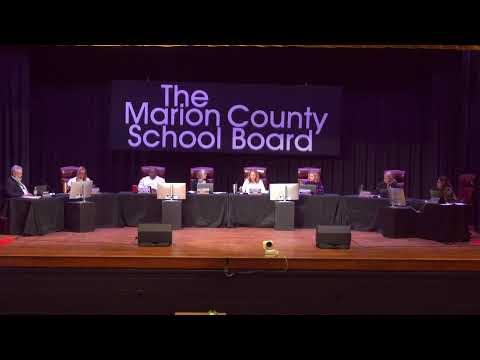
The Marion County School Board received a detailed bus-fleet and operations briefing Thursday that laid out fleet size, replacement needs, technology upgrades and estimated costs as the district enters capital-budget discussions.
The Marion County School Board received a detailed bus-fleet and operations briefing Thursday that laid out fleet size, replacement needs, technology upgrades and estimated costs as the district enters capital-budget discussions.
Transportation director Mister Osternik told the board the district’s fleet currently lists 341 buses — including 31 buses kept in a “boneyard” for parts — and about 293 buses available for regular assignment after excluding specialty vehicles. He said the industry recommendation is to replace buses every 10–12 years (or about 250,000 miles) and that an orderly turnover would be to purchase roughly 10 percent of the fleet each year — roughly 30 to 35 buses — to avoid having many vehicles older than the recommended life span.
The presentation highlighted several cost pressures and options: recent bus purchases have ranged from about $105,000 in 2020 to roughly $160,000 for the most recent order, and national quoted prices can be as low as $49,000 only in noncomparable scenarios. Osternik said the district has 33 buses still under warranty and 15 buses currently on order that were budgeted in the current year.
Why it matters: District staff said Marion’s scale — about 22,000 registered bus riders — and its large geographic footprint make mileage and maintenance roll quickly, shortening warranty periods and increasing replacement frequency. Board members framed replacement and technology purchases as core to safety and on-time service and pushed for clarity about budget impacts and funding sources.
Technology and recurring costs: Osternik described the district’s tablets and routing software situation. The district currently leases tablets and uses Synovia for some functionality, but the routing product in use does not provide integrated turn-by-turn directions. A proposed system (Tyler Drive) would require an estimated one-time implementation cost of about $1,022,000 and recurring fees of about $255,000 a year, compared with roughly $180,000 a year the district currently spends on tablet leases. Osternik said the new system would add features such as dynamic runs, electronic seating charts, pre-trip inspections and onboard access to student drop-off restrictions.
Stop-arm cameras and enforcement: Osternik said state statute requires stop-arm camera systems to capture both sides of the bus and that the district must have interlocal agreements with local law enforcement to process citations and assessments tied to recorded violations. He presented rough vendor pricing for 20 buses: a purchase option of about $113,000 and a lease option of about $6,500 per month for 20 buses. He also described vendor fees (an example $25 per citation processing fee) and the need to coordinate with sheriff and police offices for enforcement and citation processing.
Staffing and maintenance realities: The district’s main garage operates roughly 5 a.m. to 11 p.m. with additional zone garages. Osternik said the district currently has one technician who covers bus electronics (video systems, radios), and the department is cross-training mechanics to provide backup. He and board members noted that high annual mileage in Marion County often exhausts warranty coverage well before the nominal warranty period: “because our county is so big … that warranty is out in about two to two and a half years,” Osternik said.
Budget context and board questions: Chief financial and operations staff outlined capital-budget implications: the district budgeted slightly over $2 million in the current capital-outlay budget for 15 buses (ordered in 2024), but staff estimated that replacing 30 buses per year could require an annual capital allocation in the $4 million-plus range depending on bus price escalation. Board members asked for a clearer, board-level view of the transportation budget, the offset between capital and general-fund technology costs, and options for funding (impact fees, sales tax revenue, state appropriations and prior ESSER purchases were all mentioned as revenue sources used previously).
What the board asked staff to do: Board members pressed for (a) a clear line-item estimate of the budgetary impact of buying more buses and of onboarding the navigation system, (b) details on alternative vendors and the feasibility of migrating routing data across platforms, and (c) a pilot plan for stop-arm cameras focused on “hot-zone” routes rather than buying the system for the entire fleet. Board members also asked staff to return with more precise totals for replacement needs and funding options at the board’s capital-outlay work session.
Ending: Transportation staff said they will provide the board with detailed budget impacts and vendor comparisons as the district develops its five-year capital plan. Several board members signaled they consider turn-by-turn navigation and establishing a sustainable replacement cadence among the board’s highest near-term priorities.