Get Full Government Meeting Transcripts, Videos, & Alerts Forever!
Get email alerts on the Psilocybin Access topic
No spam. Unsubscribe anytime.
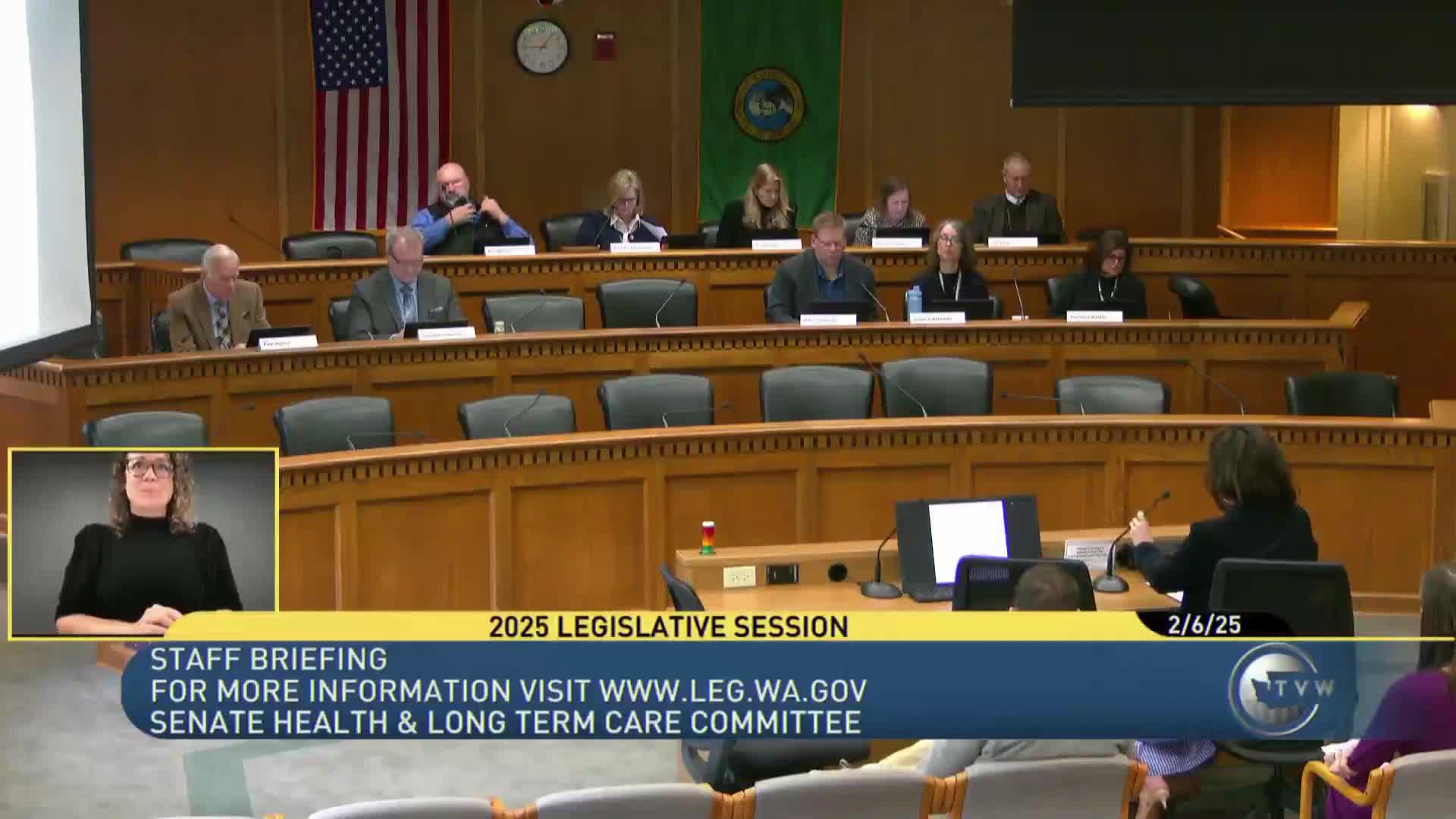
Committee hears competing views on proposed psilocybin access program; debate centers on regulation, equity and decriminalization
Summary
The Senate Health & Long Term Care Committee heard hours of testimony on a proposed substitute to Senate Bill 5,201 that would create a regulated clinical and supervised access program for psilocybin, licensing facilitators and service centers while assigning cultivation and testing oversight to the Liquor and Cannabis Board.
The Senate Health & Long Term Care Committee held an extended hearing on a proposed substitute for Senate Bill 5,201, titled the Clinical and Supervised Access of Psilocybin Act in committee materials. The substitute would create a regulated program for adult (21+) access to psilocybin under supervised, facilitated sessions, establish a Washington Psilocybin Board to advise the Department of Health (DOH), and assign licensing and cultivation/testing responsibilities to the Liquor and Cannabis Board (LCB) with support from the Department of Agriculture for cultivation oversight.
Julie Tran, committee staff, summarized the bill. Key provisions in the proposed substitute include: DOH rulemaking for group and individual administration sessions, facilitator training and guidelines, temporary location permits and service center operation standards; a licensing start date no earlier than Nov. 1, 2027 for facilitators and service centers; LCB licensing for cultivation and testing with packaging, labeling and transportation rules; and exemptions allowing limited home‑use or in‑home administration under specified circumstances. The bill names the program the Clinical and Supervised Access of Psilocybin Act.
Sponsor remarks and framing Senator Jesse Solomon, prime sponsor, framed the bill as a regulated, clinical access model rather than decriminalization. He emphasized the urgency of expanding treatment options for veterans and others with treatment‑resistant PTSD and mental health conditions and said the proposal balances safety and access by creating clinical and wellness tracks. “Let’s stop failing our veterans. Let’s be innovative. Please, let’s do something new,” Senator Solomon said.
Supporters’ arguments Proponents who testified in favor of a regulated service‑center model included researchers, facilitators and advocates who cited Oregon’s service‑center experience and clinical research. Tom Eckert, lead petitioner for Oregon Measure 109, said Oregon’s experience shows a low adverse‑event rate in structured service centers and urged Washington to adopt a similar model. Several veterans, first responders, facilitators and civic groups testified that barriers to legal access push people to travel or to underground markets and that a supervised model can provide safety and integration support. Advocates also stressed potential benefits for veterans, people with treatment‑resistant depression, PTSD and substance use disorders.
Opponents’ arguments and public health concerns Medical associations and clinical researchers urged caution or opposed the bill in its current form. The Washington State Medical Association and the Washington State Psychiatric Association testified in respectful opposition, arguing research gaps remain and that it is premature to create a broad regulated medical market while the University of Washington and other researchers continue study work. Dr. Rebecca Allen, a neuropsychiatrist conducting large multisite trials, called the substitute a “recreation bill” with a “quasi medical veneer,” saying clinical trials do not support the bill’s structure and that the current statutory framework omits standard medical safeguards (for example, routine labs, EKGs and physician medical oversight) used in clinical research.
Equity, decriminalization and regulatory assignment A dominant theme in public testimony was disagreement over whether the Legislature should first decriminalize personal possession, cultivation and sharing of naturally occurring psilocybin. Many testifiers urged full decriminalization (or amendments to preserve local decriminalization measures) arguing the proposed regulatory model would criminalize already protected personal use in some localities, create a two‑tiered system favoring those who can pay for regulated sessions, and exclude indigenous and community‑based practitioners. Opponents to the decriminalization approach argued that a supervised clinical model is necessary to ensure safety and integration and to prevent unregulated use that may harm vulnerable people.
Other technical/regulatory concerns raised - The Department of Health testified as “other” and asked for clarity on how DOH authority would interact with the new Psilocybin Board and how the Uniform Disciplinary Act would apply; DOH also questioned the bill’s short timelines given the scope of new responsibilities. - The Liquor and Cannabis Board (LCB) and several stakeholders raised concerns about assigning cultivation/testing oversight to LCB owing to differences between plant medicine regulation and existing alcohol/cannabis models; Caitlin Ryan of the Cannabis Alliance recommended different regulatory approaches and urged caution about overregulation and licensing burdens that affected the cannabis sector. - Cost and access: Several witnesses noted that Oregon’s service‑center model can be expensive for users; advocates asked the committee to consider insurance coverage, lower‑cost group models, and protections for home cultivation and gifting. - Public safety data: Amy Brackenberry and other public‑health witnesses cited calls to poison control in Colorado after that state’s initiative and urged caution while additional data are amassed.
Why it matters: The substitute would create a statewide regulatory framework for supervised psilocybin services with significant implications for clinical practice, criminal enforcement, equity and cultivation/testing oversight. The hearing drew broad turnout and divided public testimony, signaling the issue’s political and policy sensitivity.
Next steps: The committee heard extensive testimony but did not take final action on the substitute. Members requested additional information on regulatory fit, timelines, equity protections, and interaction with local decriminalization measures.