
Simsbury Volunteer Ambulance Association reports 2024 call volume up, signs three‑year MOU with town
Get AI-powered insights, summaries, and transcripts
Sign Up Free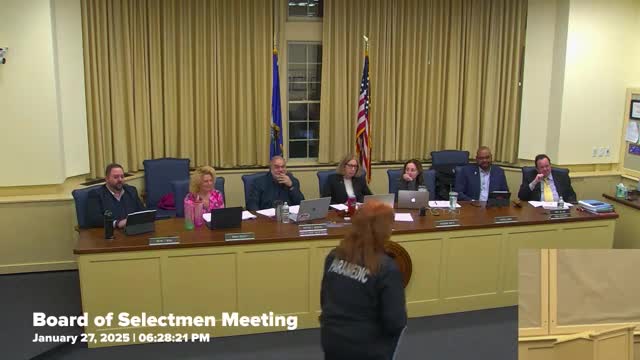
Summary
Simsbury Volunteer Ambulance Association (SVA) reported 2,688 dispatches in 2024, modest increases in transports, continued second‑unit coverage 7 a.m.–7 p.m., and a new three‑year memorandum of understanding with the town.
Norm Stewart gave the Simsbury Volunteer Ambulance Association’s 2024 report to the Board of Selectmen, saying total dispatches were 2,688 (a 4.8% increase) and transports rose 5.4%. The association said it is running a second response unit daily from 7 a.m. to 7 p.m. and that mutual‑aid requests fell by 27% in 2024 while staffing gaps were zero.
Stewart described average on‑scene time of about 21 minutes, an average response time for priority‑1 urgent calls of 6 minutes 21 seconds, and an average total call cycle of roughly one hour. He noted non‑transports (cancellations, refusals) — 874 in 2024 — are not billable.
Funding, equipment and MOU: Stewart said the SVA signed a three‑year MOU with the town that includes quarterly reporting requirements and that the town provided $100,000 to date under the MOU. He described the cost of a replacement ambulance at roughly $300,000–$400,000 plus about $81,000 in required medical equipment, and said the association planned fundraising and grant searches to fund IV pumps and a replacement plan for an ambulance and a fly car.
Awards and training: Stewart summarized awards and training achievements, including Mission Lifeline Silver recognition for stroke response and individual awards from the sponsor hospital and the American Heart Association. He said SVA continues to post board minutes and quarterly statistics online and will provide audited financials and its 2025 budget to the town manager once the audit is complete.
Questions raised at the meeting included turnaround times at area hospitals (noting long waits at Hartford Hospital and Saint Francis), ambulance downtime for maintenance, coordination of Narcan/overdose responses with police and trends in opioid calls (SVA said overdoses had declined from peak years), and options for vehicle choice and parts availability. The department said ambulance replacements will favor smaller, gasoline‑powered chassis to reduce costs and maintenance.