Lifetime Citizen Portal Access — AI Briefings, Alerts & Unlimited Follows
University of Washington to run prospective ibogaine study; committee hears update on psilocybin safety work
Loading...
Summary
University of Washington researchers reported progress on state‑funded studies of psilocybin and ibogaine. The committee heard staff briefings on Senate Bill 5,204 (an Ibogaine‑assisted therapy study) and a status update from UW’s Center for Novel Therapeutics and Addiction Psychiatry.
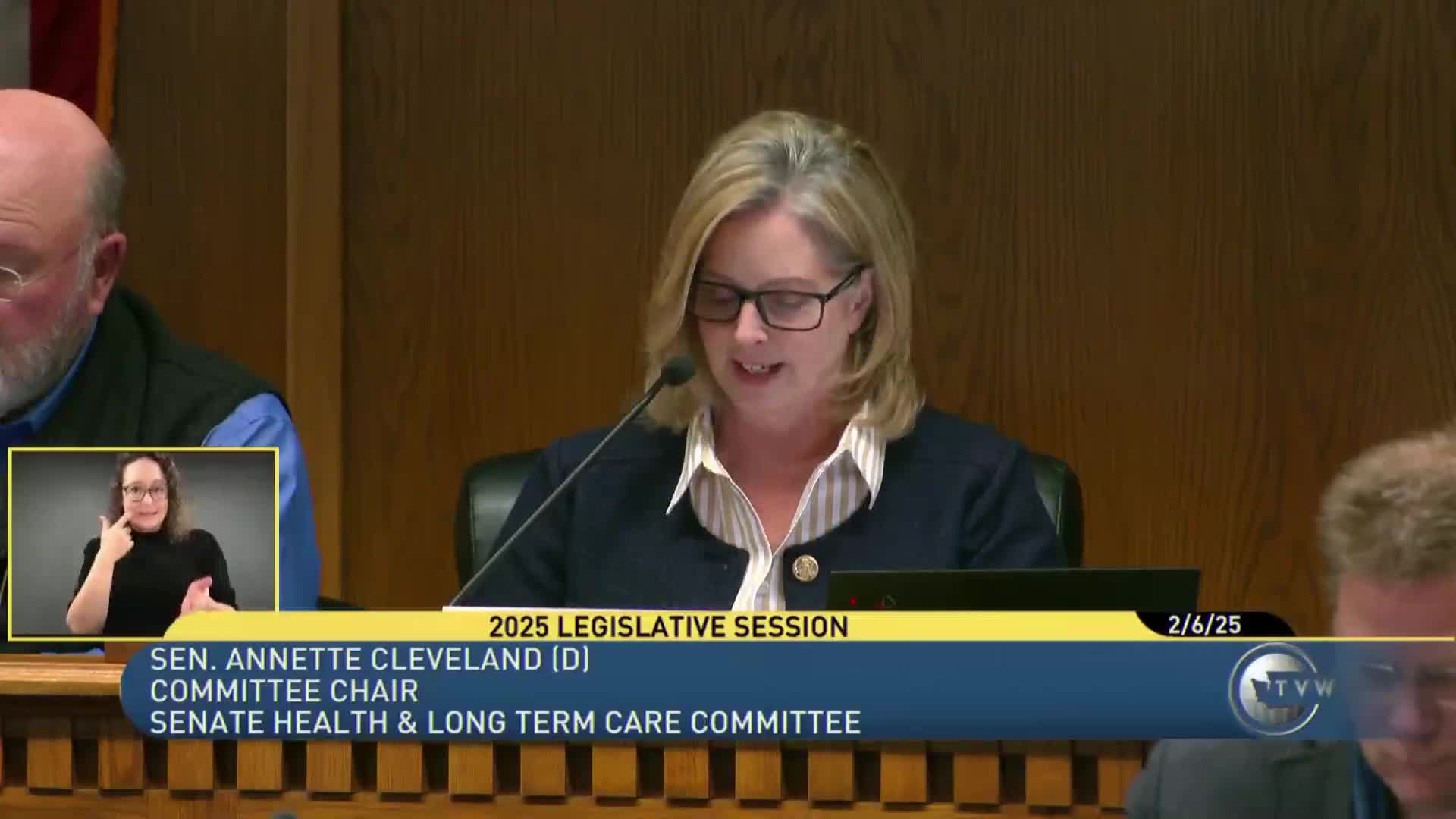
Committee members received a work‑session update from Dr. Nathan Sackett, director of the University of Washington Center for Novel Therapeutics and Addiction Psychiatry (NTAP), on two state‑funded research projects and then heard a staff briefing on Senate Bill 5,204, which would require a prospective randomized cohort study of ibogaine‑assisted therapy for opioid use disorder.
Dr. Sackett said NTAP’s federally approved psilocybin ‘‘high risk’’ safety study is at its midpoint. The study targets veterans and first responders with co‑occurring post‑traumatic stress disorder and alcohol use disorder and will enroll about 40 participants; Dr. Sackett reported Institutional Review Board (IRB) and FDA approvals, completed therapist training, a psychotherapeutic manual, and planned recruitment in February with publication targeted in mid‑2026. He said the study’s purpose is both to assess safety in a population often excluded from trials and to evaluate whether such treatments can be integrated into outpatient clinical settings.
Dr. Sackett also described initial work on ibogaine. NTAP analyzed data from a clinical site in Mexico that administered ibogaine with continuous cardiac monitoring; his team reported preliminary analyses that, in that cohort, showed close monitoring could manage known cardiac effects and that no adverse events were observed in the provided dataset. He said the next step is to pursue efficacy trials targeting opioid use disorder.
Committee staff briefed on SB 5,204, sponsored by Senator Solomon. The bill would require the University of Washington to conduct a prospective randomized cohort study over three years comparing ibogaine‑assisted therapy against usual care for adults with opioid use disorder; the study is to be conducted at a licensed clinic in Mexico followed by structured therapeutic support. The staff summary said the study’s aim is to measure specified outcomes and to pave the way for larger trials.
During the hearing, some testifiers supported the research approach and urged scientific evaluation. Others raised ethical and equity questions about conducting research in Mexico. Jennifer Gordon, a registered nurse testifying as an individual, asked how people in Mexico would benefit from the research and whether protections would be included for local participants; she urged the committee to include provisions that address benefit sharing with Mexican participants and communities.
Why it matters: The bills and state funding direct academic research into novel or less‑studied psychedelics that advocates say could offer new treatments for treatment‑resistant addiction and PTSD. The committee’s action would shape whether the state’s research agenda and any resulting recommendations move forward.
Meeting context: The committee received detailed operational updates from UW researchers and a staff briefing on the bill; no final committee action on SB 5,204 was recorded at the hearing.