Get Full Government Meeting Transcripts, Videos, & Alerts Forever!
Get email alerts on the Employee Benefits topic
No spam. Unsubscribe anytime.
Committee hears bill to align Public Employees Benefits Board authority with SEBB’s voluntary benefit offerings
Summary
Senate Bill 5,478 would expand and modernize the Public Employees Benefits Board’s authority so it may study and, if appropriate, offer a range of employee‑paid voluntary benefits similar to the School Employees Benefits Board.
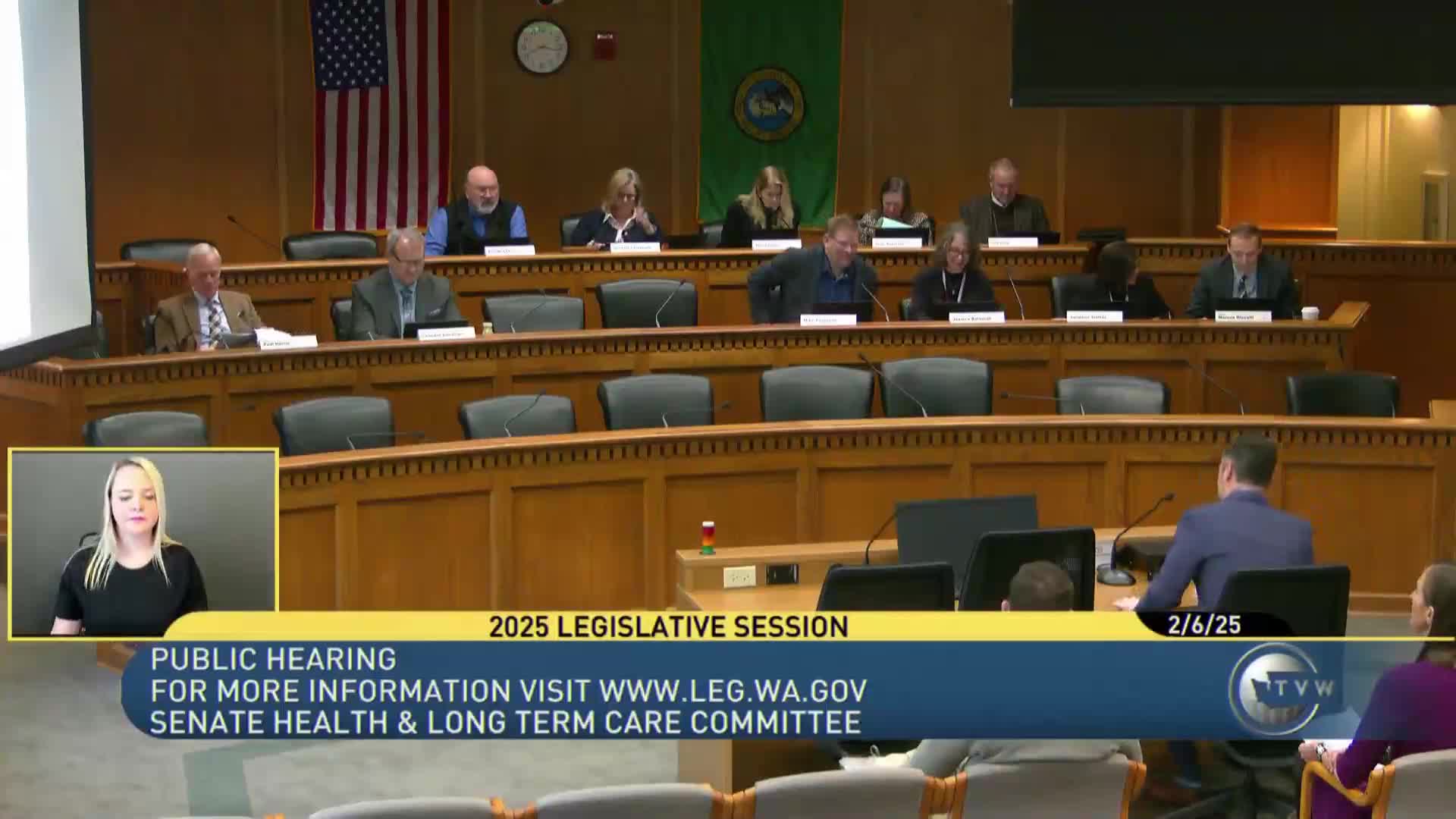
Senate Bill 5,478, sponsored by Senator Bateman, came before the Senate Health & Long Term Care Committee for a staff briefing and public testimony. The bill is an agency request from the Health Care Authority and focuses on the benefit‑offering authority of the Public Employees Benefits Board (PEB).
Greg Attenaccio, committee staff, explained that the bill would remove outdated statutory language that requires the PEB to offer a long‑term care product and would instead mirror the School Employees Benefits Board (SEBB) authority by allowing the PEB to study and, subject to funding and procurement outcomes, potentially offer a range of employee‑paid voluntary benefits (for example, emergency transportation, identity protection, legal aid, long‑term care insurance, and other lines listed in SEBB statute).
Senator Bateman, the bill’s prime sponsor, described it as an agency request designed to bring parity between the PEB and SEBB benefit authorities and characterized it as a noncontroversial housekeeping bill intended to allow future voluntary benefit offerings to be available to both employee groups.
Dave Eisbinger, director of the PEB and related programs at the Health Care Authority, testified in support, saying the bill “does not require or appropriate any funds. It merely allows the PEP board to consider offering the same types of benefits to employees in PEP.” He explained the bill would retire an antiquated mandate to offer a large group long‑term care plan (the prior PEB group plan closed in 2014) and provide optional offering authority, noting that identifying carriers for a large group long‑term care product has not been successful.
Why it matters: If enacted, the change would modernize statutory direction for employee benefit options and would give the PEB broader study and offering authority for employee‑paid voluntary benefits when the agency and boards choose to pursue them.
Meeting context: The hearing included one in‑person witness (HCA) and staff testimony; the bill was presented as an agency request with no appropriation attached.