Get Full Government Meeting Transcripts, Videos, & Alerts Forever!
Get email alerts on the Council Rules topic
No spam. Unsubscribe anytime.
Council debates wide-ranging changes to town council rules; refers draft to bylaws committee
Summary
The New Canaan Town Council discussed proposed revisions to its rules on Jan. 15, including committee duties, a proposed Charter Review Committee, public-comment procedures and library liaison language, and referred the draft to the Bylaws and Ordinances Committee for further work and legal review.
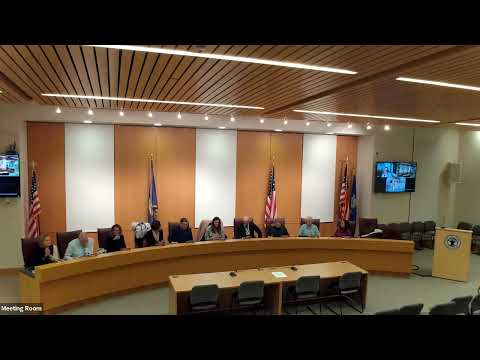
The New Canaan Town Council opened an extended discussion on proposed changes to its rules Wednesday and agreed to send the draft back to the Bylaws and Ordinances Committee for further review and legal input.
The draft, prepared and circulated in advance, includes numerous changes and new provisions. Councilors debated the scope and wording of several items, but took no final vote and asked staff and the committee to prepare an annotated redline and rationale for each proposed change.
Among the most contested proposals was a change to committee duties that would require committee chairs not only to attend or watch department public meetings but also to debrief department heads monthly. Tom (Town Council member) and others argued that changing the phrase from “or debrief” to “and debrief” would impose unnecessary, routine meetings on every chair. Tom said the change “is actually meaningful” because it would impose an additional requirement on committee chairs; other members said existing meeting attendance or review of department meetings should be sufficient.
Councilors also debated a new Charter Review Committee that would take responsibility for determining whether to form a Charter Review Commission. Supporters said a focused committee could shepherd a heavy lift that occurs only occasionally; opponents argued the task fits within the existing Bylaws and Ordinances Committee and that creating a separate standing committee could add bureaucracy and duplicate work. The town attorney advised that either structure is within council discretion and that statutory requirements for a charter revision process would still apply.
Other notable issues raised by councilors included: - Renaming a committee currently labeled “Affordable Housing Committee” to avoid confusion with an existing outside organization of the same name. - Clarifying the process for a council member to raise questions about a pending matter: the draft asks councilors to inform the committee chair 24 hours before a meeting and asks the secretary to distribute pertinent information “to the extent practicable.” Members asked that language be flexible to avoid overly formal notice requirements for ad hoc questions. - Public-comment rules: the draft would state that “each speaker shall be granted equal time” and that the vice chair or secretary “shall request that prepared statements be presented to the council for the record.” Several councilors proposed softening that language to make submission of written or prepared statements voluntary or to invite (rather than require) submission so that speakers are not deterred. - Guidance on council members’ use of their title in public media: a proposal to limit use of the council title prompted debate. One councilor argued restricting the use of a title in public comment raises free-speech concerns and suggested a compromise—if a member identifies themselves by title they should include a disclaimer that their views are personal and not the council’s. - Library liaison language and the town’s MOU with the library: councilors discussed whether council-appointed library representatives had meaningful duties, whether their role created potential fiduciary conflicts, and whether MOU obligations remain in force while the library’s line-of-credit or other obligations are outstanding. The council asked the town attorney to review the MOU language and report back. - Budget transparency: a proposed provision would require “fair notice” when the council considers reductions to an appropriation recommended by the Board of Finance; some councilors said the charter already authorizes such action and warned against restating charter powers in council rules, while others said clearer notice language would aid transparency. - Housekeeping items: committee-size ranges (the draft uses “3 to 5” but some existing committees have fewer members), use of gendered terms (e.g., “councilmen”), capitalization and consistency for titles, and remote-attendance language that should conform to state law on electronic participation.
Council chair and members asked staff to prepare a clean redline that pairs each proposed wording change with a short rationale and the original rule text. The council agreed to forward the revision to the Bylaws and Ordinances Committee for more detailed drafting and legal review; a final vote was deferred to a later meeting.