Get Full Government Meeting Transcripts, Videos, & Alerts Forever!
Get email alerts on the Resentencing Isrb topic
No spam. Unsubscribe anytime.
House committee backs transfer-to‑ISRB path for some resentencing cases after divided debate
Summary
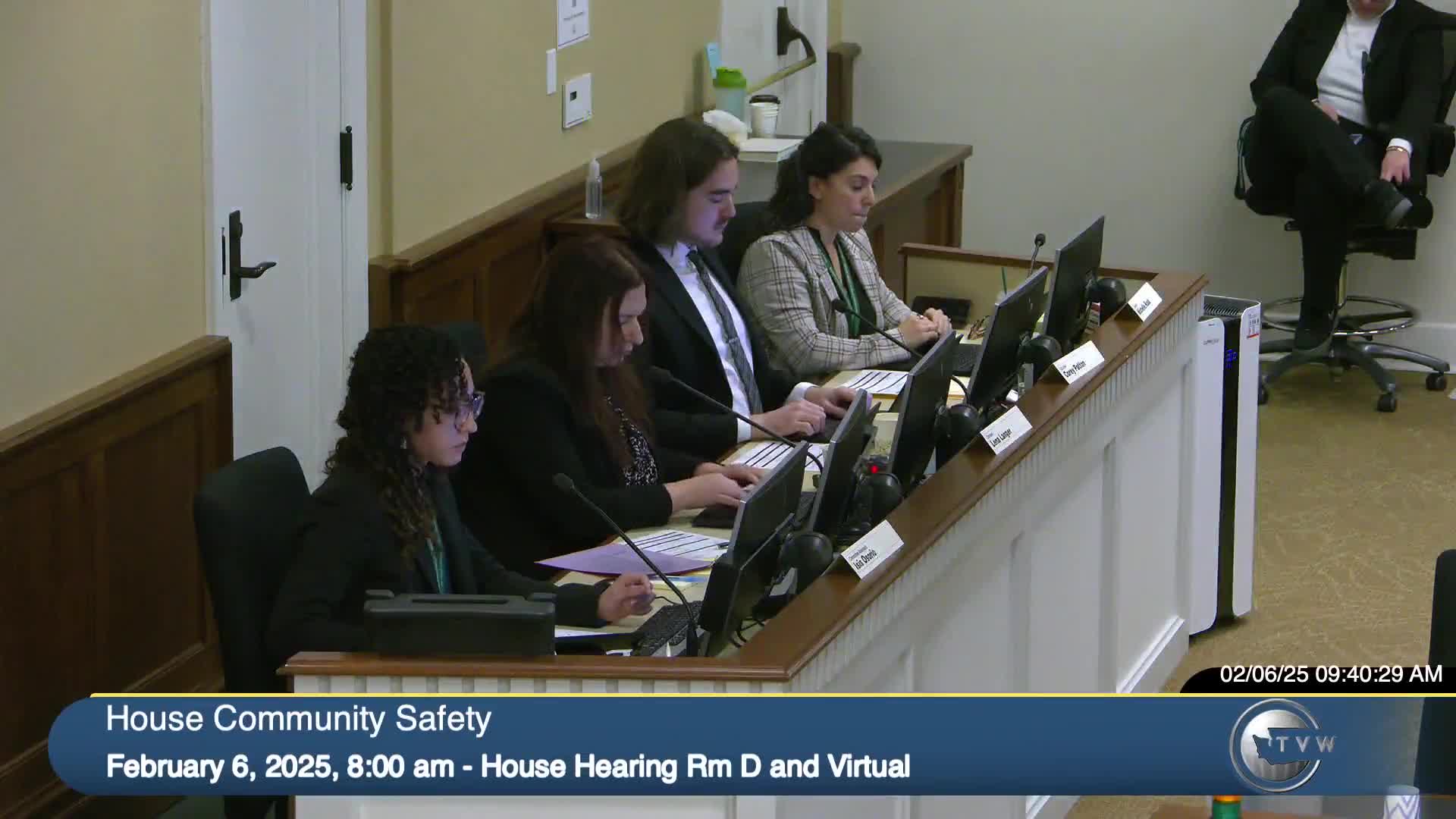
The House Community Safety Committee on Feb. 6, 2025, voted to report out substitute legislation that replaces a judicial resentencing process with a procedure to transfer eligible felony cases to the Indeterminate Sentence Review Board (ISRB) for possible early release consideration.
The House Community Safety Committee on Feb. 6, 2025, voted to report out substitute legislation that replaces a judicial resentencing process with a procedure to transfer eligible felony cases to the Indeterminate Sentence Review Board (ISRB) for possible early release consideration.
The substitute language, adopted as the committee advanced House Bill 11 25 (substitute) and House Bill 12 74 (substitute), removes a judge’s ability to resentence de novo and instead requires a court that finds a petitioner meets statutory eligibility and proof standards to transfer the case to the ISRB for a board review and potential early-release decision.
Committee supporters said the ISRB’s multi‑member structure, routine use of evidence‑based risk assessments and access to DOC programming make it better suited than individual judges to evaluate rehabilitation and public‑safety risk. Representative Davis argued, “If the state's going to engage in retroactive re sentencing policy, then the appropriate mechanism is through the ISRB.” Representative Simmons, sponsor of one substitute, said the substitute “encourages and provides support for victims to attend these hearings” and noted the bills include community‑custody requirements and other procedural protections.
Key provisions described to the committee include: eligibility tied to the offense and minimum years served (examples in the text include thresholds of 15, 20 or 25 years depending on the underlying offense); notification of victims and survivors; an ISRB hearing scheduled after statutorily specified timeframes following a court transfer (the committee heard timings such as no earlier than 18 months after transfer in one striker and 180 days in another context); required DOC assessments and individualized reentry planning prepared 12 months before a potential release; and a default community‑custody term of five years following any granted modification or release as described in the substitutes. Committee briefers and sponsors also said the ISRB would be required to give victims’ and survivors’ statements significant weight and to convene listening sessions to improve victim involvement.
Opponents said the bills would lessen victims’ rights, remove judicial safeguards and, in some drafts discussed during committee debate, remove the right to appointed counsel for certain petitioners. Representative Davis told the committee judges lack the institutional tools and regular exposure to these cases necessary to assess risk consistently, saying, “Judges are not qualified to run a parole board.” Other members pressed that some forms of intimate‑partner offenses or crimes originally charged as aggravated murder should be exempt from early‑review unless victims consented.
The committee considered and rejected at least one striker that would have replaced the judicial‑review path with a transfer to the ISRB while also removing appointed counsel for some petitioners and adding other eligibility restrictions. After debate and recorded votes, the committee reported substitute House Bill 11 25 to the floor with a due‑pass recommendation (5 ayes, 4 nays) and reported substitute House Bill 12 74 with a due‑pass recommendation (5 ayes, 4 nays). Members who voted aye on the final HB11 25 report included Representative Goodman, Representative Simmons, Representative Faribhar, Representative Fosse and Representative Obras; members who voted nay included Representative Graham, Representative Griffey, Representative Burnett and Representative Davis.
Committee discussion emphasized the bills’ tradeoffs: sponsors framed the measures as a narrowly structured “second look” for aging or long‑term incarcerated people with reentry plans and supervision; critics warned the changes would undermine victims’ expectations and the determinate sentencing promises embedded in plea agreements. Committee members also differed on whether the legislature should expand the ISRB’s role or retain judicial resentencing as the mechanism for any retroactive sentence modifications.
The committee chair said further adjustments and floor‑level negotiation were expected as the bills move forward.
Votes at committee: Substitute House Bill 11 25 — reported out with a due‑pass recommendation, roll call 5 ayes, 4 nays. Substitute House Bill 12 74 — reported out with a due‑pass recommendation, roll call 5 ayes, 4 nays.
Next steps: Both substitute bills were reported out of committee for consideration by the full House; committee members signaled additional floor amendments and engagement with victim‑advocacy groups and corrections stakeholders would follow.