Get Full Government Meeting Transcripts, Videos, & Alerts Forever!
Get email alerts on the Construction topic
No spam. Unsubscribe anytime.
New Canaan building committee gets Feb. 5 transformer date, approves $31,504 elevator call phone
Summary
Committee heard a construction progress report that named Feb. 5 as the expected transformer swap date, discussed weather and technician scheduling risks, reviewed photos of interior finishes and systems, and approved a $31,504 charge for elevator landing emergency phones.
The New Canaan Building Committee received a construction update and approved a $31,504 expenditure for emergency call phones at elevator landings, the committee said at its meeting.
The update centered on a delivery and service date from Eversource. Ty, project manager for the construction team, said, “we did get a date from Eversource for February 5,” and that the utility plans to deliver the transformer early if possible and perform the service connection and transformer swap on Feb. 5.
That date matters because the contractor and builders cannot complete interior finishes or close ceilings until permanent power is in place. Ty told the committee the team expects to begin system start-up and commissioning “about a month” after permanent power is established, and warned weather could push the schedule: a snowstorm on the scheduled day would delay work and cause multiweek rescheduling for specialized start-up technicians.
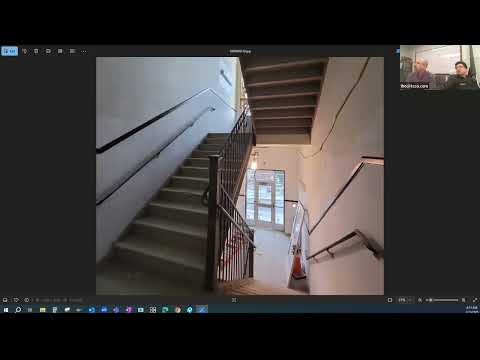
Scott, the site superintendent, walked the committee through interior photos showing substantial progress: doors, chair rails, painted walls, windows and trims, conference and training rooms, lobby finishes, garage doors, sally-port hardware, and the one- and two-person holding cells where bunks and sliding doors were being installed. Scott identified the transformer delivery and energizing as the project’s primary schedule risk, saying the repeated need to de-energize and re-energize spaces “takes time” and keeps crews from finishing ceilings and other work.
Committee members asked about move timing and operating milestones. The project team said their target is to vacate the temporary Locust Street space by June 30; the 9-1-1/dispatch move is penciled in for June 3 but remains contingent on final systems testing. “We penciled them in for June 3,” a committee member said; staff emphasized that the 9-1-1 move is a critical dependency for the larger occupancy plan.
On budget and change orders, the committee approved the single formal motion on the agenda. Tom moved “to approve $31,504” for blue emergency phones on elevator landings; Penny seconded, and the motion passed on a voice vote. The committee did not record individual roll-call votes in the transcript.
Committee discussion and reports also showed multiple change items moved from pending to approved during the period covered by the cost report. Items specifically cited in the meeting included a staff component for contaminated soil remediation that shifted from pending to approved, a water meter vault approval, finished revisions for PLAM (02/1967) moved from pending to approved, and revisions adding vision kits to interior office doors. An attic walkway upgrade of $2,500 was reported as funded from contingency. Financial updates referenced two contingency figures reported by staff during the meeting: “377,000 left in our contingency” (project contingency reported in the change-order summary) and an owner-side contingency of “883,000” reported elsewhere in the budget review. Staff also said the project had “dropped about $3,033,000 dollars in contingency” since the prior period as adjustments and reserves were recorded.
Gene, the budget lead, summarized the financial position by noting the bulk of changes were reclassifications from pending to approved and that the owner’s contingency balance had declined but remained available for outstanding items. Gene said, “overall, financially, I think we’re in a very good shape,” as the committee reviewed the allowance and contingency reports.
Committee members pressed on logistics and details: where attic stock would be stored, the quantity of spare materials to retain, finish selections for exterior masonry and column covers, and minor options such as additional electrical work in the dispatch area (an ASI-level electrical allowance of about $25,000 was discussed but remained under evaluation). Paul asked about two garage door colors; that aesthetic question was noted for later follow-up.
The project team listed near-term exterior work that will remain for spring: plantings, final paving and topcoat, and striping. The committee asked staff to present a short list of remaining spring items at the next meeting.
Votes at a glance: the committee approved the $31,504 elevator landing emergency/blue phones by motion and voice vote. Other cost-report items were reported as moved from pending to approved in the period; the meeting transcript does not show separate roll-call votes for each individual change-order approval.