Get Full Government Meeting Transcripts, Videos, & Alerts Forever!
Get email alerts on the Wetlands Driveway Development topic
No spam. Unsubscribe anytime.
Developer proposes shared 18‑foot driveway and wetland mitigation for 82 Brookwood Lane subdivision
Summary
The Inland Wetlands Commission opened a public hearing Jan. 20 on an application by 82 Brookwood Hills LLC to widen an existing shared driveway through wetlands to 18 feet for a proposed subdivision, while offering wetland restoration and stormwater improvements.
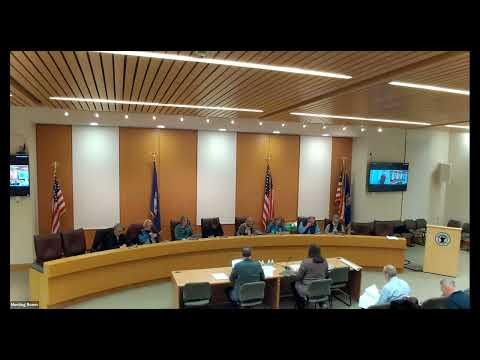
The Inland Wetlands Commission opened a public hearing Jan. 20 on an application by 82 Brookwood Hills LLC for subdivision work at 82 Brookwood Lane that would widen an existing shared driveway and make wetland restoration and stormwater‑management changes.
The applicant, represented by attorney Amy Zabotakis of Ruchi Law Group and wetlands consultant William (Bill) Kenny of William Kenny Associates, described a plan to expand the existing shared driveway from 14 to 18 feet at the request of the fire marshal to serve multiple new lots. Zabotakis said the subdivision layout has been submitted to the Planning & Zoning Commission and that, while the application shows potential house locations, no individual house construction is proposed now and any lot with wetlands will require separate applications before this commission.
Kenny, a professional wetland scientist and soil scientist, told commissioners the property contains multiple wetland community types, some highly altered by earlier fills and piping. He said the proposal would expand some wetlands and restore more than 14,000 square feet of wetland area in the northern portion of the parcel by removing historic landscape fill and invasive Japanese knotweed. Kenny summarized engineering measures including subsurface infiltration chambers, two biofiltration basins and a dry hydrant to be installed to improve stormwater quality and supply water for firefighting.
Commissioners pressed for more detail on alternatives, particularly options that might avoid widening the driveway through wetlands by using access from Brookwood Lane for some lots. Commissioner Angela Jamieson and staff asked the applicant to analyze alternatives that could reduce wetland impacts, including restoring or abandoning older driveways, and to provide a refined accounting of temporary versus permanent wetland disturbance. Kenny said initial plans estimated about 4,800 square feet of alteration (much of it temporary) but that recent refinements reduced that number and that mitigation would exceed impacts by more than 3:1 once updated figures are submitted.
Engineer Leonard D'Andrea (D'Andrea Surveying & Engineering) explained the stormwater strategy: staged catch basins feeding a series of subsurface infiltration units, small biofiltration cells and a micro‑pool detention unit, with 57 infiltration units and multiple catch basins shown on the plan. He said the project also offsets volume increases by removing existing impervious surfaces elsewhere on the property and by using near‑source infiltration for roadway runoff.
Commissioners and staff asked for more detail on the pipe networks and historic piping on the site, the locations and quantities of trees affected by the driveway widening, and documentation of the fire marshal’s requirements that drive the 18‑foot width. Kathleen Holland, wetlands staff, asked for an accessible, consolidated response to her review comments and for the applicant to supply any updates in advance of the next meeting.
The commission did not vote on the application. Chair Angela Jamieson said the hearing would continue and proposed devoting about 90 minutes to the item; she asked the applicant to provide revised impact numbers, the alternatives analysis requested by commissioners, tree counts, and sanitary/septic/driveway details for the next meeting. The public hearing was adjourned to the commission’s February meeting to allow further submissions and additional comment from intervenors.
Key follow up requested by the commission included a more explicit alternatives analysis showing whether lots could be served from Brookwood Lane without a long shared roadway through wetlands, an updated calculation of temporary versus permanent wetland impact, a tree removal inventory, and engineering logs for existing pipes and the sanitary/septic approvals cited by the applicant.
Ending: The public hearing remains open; commission staff and applicants agreed to provide revised plans, an updated impact tally and more detailed stormwater and sanitary documentation before the next hearing date (tentatively Feb. 24).