Get Full Government Meeting Transcripts, Videos, & Alerts Forever!
Get email alerts on the Public Health Budget topic
No spam. Unsubscribe anytime.
Health department presents mostly steady budget; opioid settlement, youth grant used to fund local nonprofits
Summary
Town health and human services staff presented a budget with a 0.04% decrease driven by staffing and grant changes, and described how opioid settlement and Youth Services Bureau funds will be allocated to local nonprofits and programs.
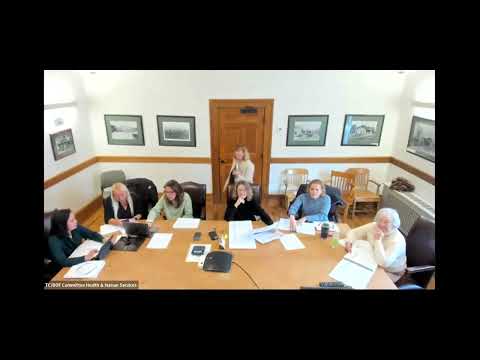
At a joint meeting of the Board of Finance, Health and Human Services and the NAZ liaison committee, health department staff presented a fiscal-year budget showing a slight overall decrease of 0.04% and described how opioid settlement funds and a state Youth Services Bureau grant will be used to support local nonprofits and programs.
The budget changes matter because they preserve current service levels while shifting some costs from town dollars to grant funding and insurance billing. Staff described specific allocations from opioid settlement funds, changes to a Silver Hill assessment program as it begins billing insurance, and a request to replenish the town’s general assistance fund.
Jen, a health department staff member, told the committee that “none of the requests were made any smaller” and that program funding would be reallocated to be “more efficiently used” through a smaller set of subgrants. She said the town will direct opioid settlement money to three local providers: $10,000 to Kids in Crisis, $8,000 to New Haven Cares and $25,000 to the assessment program at Silver Hill. Jen also described the Youth Services Bureau (YSB) grant as a state program and said the department selected three organizations to receive YSB funds rather than dispersing small amounts more broadly.
Committee members pressed staff for detail on the Silver Hill allocation. Jen said Silver Hill’s request dropped because the program is now billing some insurance plans: “They are now able to bill certain insurance companies,” she said, and that some clients may still choose private pay or out-of-network providers to avoid an insurance diagnosis being recorded. The committee discussed the effect of that insurance billing on the town’s subsidy and staff described the change as an estimate based on Silver Hill’s anticipated insurance reimbursement.
The department also discussed the town’s general assistance fund. Jen said the town historically set aside $22,000 but the department’s spending has outpaced that stockpile: the department recorded $34,000 in assistance in 2023 and $30,000 in 2024. Year-to-date figures were cited as about $18,000 (later updated verbally to about $20,000). To restore the fund toward typical annual usage (which staff described as roughly $35,000), the department is requesting an additional $15,000 from the town.
On staffing and personnel costs, presenters said the retirement of the medical director produced roughly $20,000 in savings and a salary-study alignment placed the new medical director at the local market rate. The department plans to move a public-health nurse from grant funding into the town payroll after the grant ends on June 30; that shift was described as reducing the health budget by about $18,000 because the nurse will be scheduled at 10.5 hours per week. Staff also said a small part-time line was retained in case demand grows and an additional part-time hire is needed for administrative tasks tied to state programs.
Several federal and state grants were discussed. Staff noted a $45,000 workforce development grant already deposited with town finance, and an ongoing public-health preparedness grant of approximately $11,300. The workforce-development and preparedness grants were described as one-time or limited-duration funding streams rather than permanent operating revenue.
Revenue-side proposals included modest increases tied to permitting and fees. Jen said plan-review revenue exceeded expectations last year and the department proposes a conservative estimate of $70,000 for next year’s plan-review revenue. The department also proposed an 8.37% increase in restaurant fees tied to fee changes enacted July 1, and said OpenGov, the town’s permitting software, has accelerated permit turnarounds and improved reporting.
Committee members raised program and outreach items. Members asked whether Narcan training and kit distribution could be offered more widely rather than only to private groups; staff said prior opioid funds had already purchased Narcan kits that had been distributed to community groups and restaurants and that expanding public trainings was feasible. Staff also described planned partnerships with Catholic Charities and Laurel House to host monthly in-person office hours starting in March for services such as budgeting, family loan programs and employment assistance.
There were no formal votes recorded on the budget at the meeting. Presenters closed by reiterating that most programs would continue and that staff would return with updates if program needs or grant terms changed.
Looking ahead, staff said they will monitor grant expirations (including the opioid settlement distribution timeline) and program demand, and that the department will not ask the town to replace small preparedness grants if federal funding ends; instead staff said they would continue preparedness activities at lower cost if necessary.