Get Full Government Meeting Transcripts, Videos, & Alerts Forever!
Get email alerts on the Education Dei topic
No spam. Unsubscribe anytime.
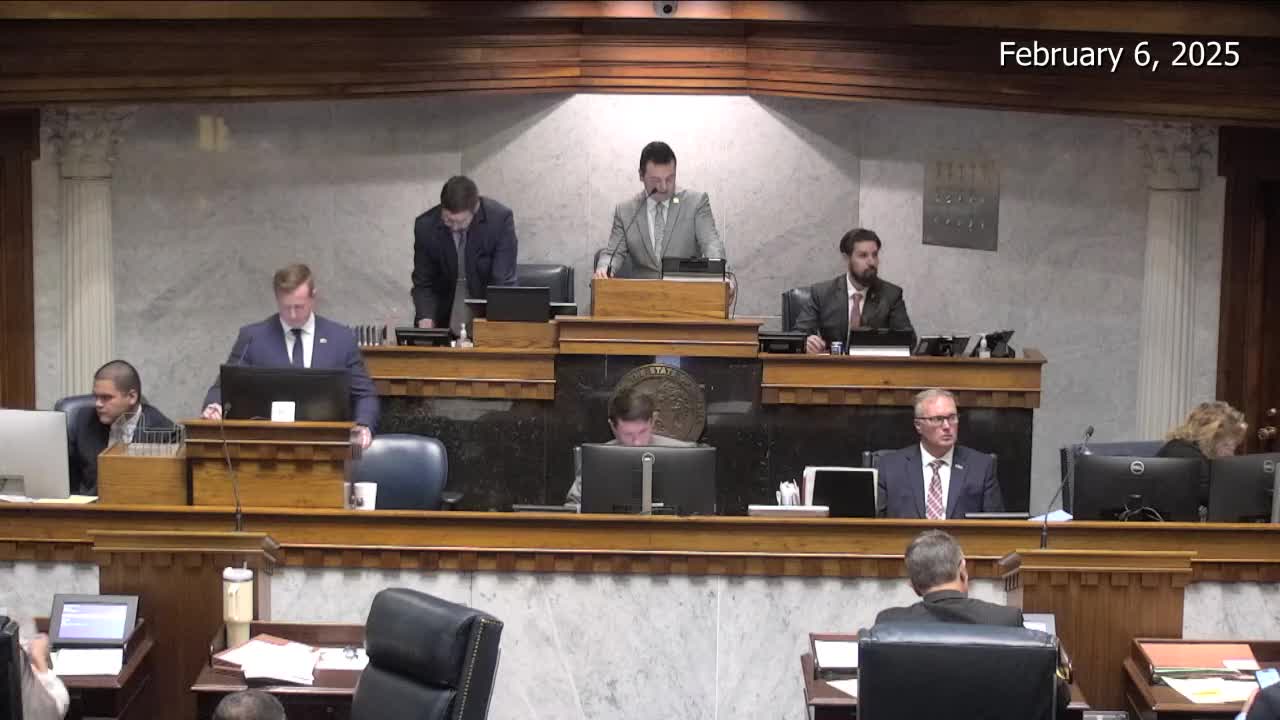
Senate passes bill limiting DEI offices and requiring schools to post related materials after hours of debate
Summary
The Indiana Senate passed Senate Bill 289 after a marathon floor debate, approving a measure that bans certain state-sponsored DEI practices and requires schools and state agencies to post related training and curricular materials online.
The Indiana Senate passed Senate Bill 289 on a contested floor vote, 34 to 13, after more than three hours of debate on whether the measure protects merit and free speech or undermines efforts to address historic disparities.
Senator Byrne brought the bill to the floor in third reading, describing it as a measure to ensure "government should treat all citizens equally." The bill’s text prohibits agencies that receive state funding from promoting several listed concepts the sponsor described as the core of what he called an ideological "DEI" movement, and requires public schools to make curriculum or staff training materials on nondiscrimination, equity, diversity, inclusion or bias available online.
Supporters said the bill prevents state-funded offices from requiring employees or students to affirm ideological statements. "Government should treat everyone equally," Senator Byrne said during his presentation. He and other supporters said the law protects employees and students from being compelled to adopt beliefs they do not hold and increases transparency about training and curriculum used in public education and state agencies.
Opponents said the measure would chill classroom discussion and hamper programs designed to expand opportunity. "Senate bill 2 89 seeks to restrict discussions on race, gender, and identity in our classrooms," Senator Lakeisha Jackson said, calling the bill "an attempt to rewrite history." Other critics said the proposal would discourage universities and state agencies from offering programs, scholarships or student services that intentionally recruit or support underrepresented groups.
Several senators asked whether the bill unintentionally conflicts with existing state statutes and memorial scholarships. Multiple senators pointed to the Arlene Rogers student-teaching scholarship and the William Crawford minority-teacher scholarship as examples; the bill’s sponsor said the text does not repeal statutes but opponents warned the administrative effects could limit how scholarships are delivered by state institutions.
A separate procedural dispute arose late in debate after a senator challenged a ruling of the presiding officer and appealed to the chamber. Senator Yoder told colleagues that while debate was underway he saw a campaign social-media post from the presiding officer describing the bill as a victory; he called that timing inappropriate while the officer was presiding. The appeal of the chair’s ruling was put to the Senate and sustained by a roll call (38 ayes, 9 nays) before the final bill vote.
During floor remarks, senators with experience providing or receiving DEI training spoke on both sides. "I've provided DEI services," said Senator Taylor, who described private-sector experience with such programs. Senator Ford described an instance where she left a health care office after hearing derogatory comments and said, "I did not feel safe there," to underline supporters’ point that inclusion can affect whether people access services.
The Senate’s final roll call on Senate Bill 289 was 34 ayes to 13 nays. The clerk recorded the bill as passed and the secretary was directed to notify the House. The bill’s sponsor identified several Senate co-authors during floor debate.
What happens next: The bill will move to the Indiana House for consideration. Opponents signaled plans to press concerns about the bill’s interaction with existing statutes on scholarships and with university programs; supporters said transparency provisions will let the public see what training and curricular materials are in use.
Votes at a glance
- Senate Bill 289, "Non-discrimination in Employment and Education" — Passed 34–13 on final roll call; sustained appeal of the chair earlier, 38–9. The bill requires public posting of DEI-related training and curriculum materials for schools and limits creation of DEI offices or duties in agencies that use state funds. Vote record: tally counts provided in the transcript; individual roll-call names were not recorded in the public text.