Get Full Government Meeting Transcripts, Videos, & Alerts Forever!
Get email alerts on the State Housing Legislation topic
No spam. Unsubscribe anytime.
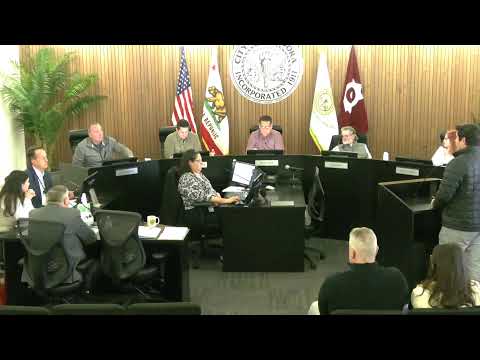
Glendora planning staff summarizes new state housing laws affecting entitlements, ADUs and fees
Summary
City attorney Judy briefed the Planning Commission on a slate of recently enacted state housing bills that change permit timelines, notice periods, ministerial approvals for small housing projects and penalties for noncompliant housing elements.
Judy, the city attorney for Glendora, told the Planning Commission that a set of new state laws will change how the city handles certain housing entitlements, accessory dwelling units (ADUs), notice requirements and potential penalties for housing-element noncompliance.
The update covered multiple bills that affect local land use review and permit processing. Judy said the measures include automatic extensions for some entitlements, longer notice periods for Planning Commission hearings, expanded ministerial approval paths for small housing projects, new protections and permit requirements for unpermitted ADUs, a shortened approval timeline for certain ministerial approvals, and increased penalties for jurisdictions that fail to adopt substantially compliant housing elements.
Why it matters: Many of the bills reduce discretionary review or create stricter timelines and penalties for local governments, which could require Glendora to adjust its application procedures and staffing to stay in compliance.
Key points presented by the city attorney
• AB 2729 — Judy said the bill “provides an automatic 18‑month extension” for the life of certain housing entitlements issued before Jan. 1, 2024, that would otherwise expire before Dec. 31, 2025; entitlements already extended in 2024 are not eligible for an additional extension.
• AB 2904 — Notices to property owners for Planning Commission hearings on zoning changes must now be mailed and delivered at least 20 days before a hearing (previously 10 days for planning commissions); Judy noted this requirement applies specifically to planning commissions, not city council hearings.
• SB 684 — The bill clarifies ministerial streamlining (the “SP 684” streamlining path) for small subdivision/parcel-map projects of up to 10 housing units, clarifies that ADUs do not count toward the 10‑unit cap, and expands eligibility to some lots zoned for multifamily housing.
• AB 2533 — Expands protections for certain unpermitted ADUs built before Jan. 1, 2020 (previous cutoff was 2018). Judy explained the law requires local agencies to allow owners to pursue permits to legalize ADUs without imposing penalties in most cases, allows confidential third‑party code inspections, and limits when impact or connection fees may be applied.
• SB 450 (changes to SB 9 implementation) — The bill removes the prior limit that allowed denial when more than 25% of exterior structural walls were demolished; under the change, local agencies must process SB 9 ministerially even if the project includes substantial demolition. It also establishes a 60‑day timeline to approve or deny such ministerial projects; if no action is taken, the application is deemed approved.
• SB 937 — Prohibits charging certain public improvement impact fees for designated residential development projects until after the first certificate of occupancy is issued, and sets rules about when fees may be withheld or collected; utility connection fees can still be charged if they reflect actual provider costs.
• Density bonus-related bills (AB 2694, AB 3116 and related changes) — Judy described technical changes that broaden eligible definitions (for example, adding residential care facilities for the elderly to density‑bonus definitions) and add clarifications for student and shared‑housing developments.
• AB 2117 — Extends the time counted for challenging a local agency decision by excluding periods during which related proceedings are pending.
• SB 1037 — Establishes additional enforcement tools and civil penalties against jurisdictions that fail to adopt or implement substantially compliant housing elements; penalties described by Judy include monthly fines ranging from $10,000 to $50,000 per violation and possible suspension of certain permitting authorities when a high statutory standard of misconduct is met.
Commissioner questions and staff outlook
Commissioners asked whether the bills would cause immediate operational difficulties for the city. Judy said the city will need to update procedures and provide staff training but described the current year as “relatively light” compared with prior years of housing legislation. Commissioner Kos noted that many laws reduce local discretion to expedite housing approvals; Judy said legislative intent for several measures emphasizes streamlining and encouraging more housing supply.
The city attorney closed the update by inviting commissioners to request further detail on any of the bills for future meetings.