Get Full Government Meeting Transcripts, Videos, & Alerts Forever!
Get email alerts on the School Construction Zoning topic
No spam. Unsubscribe anytime.
Committee advances bill to exempt school district construction from some local zoning rules in limited, temporary form
Summary
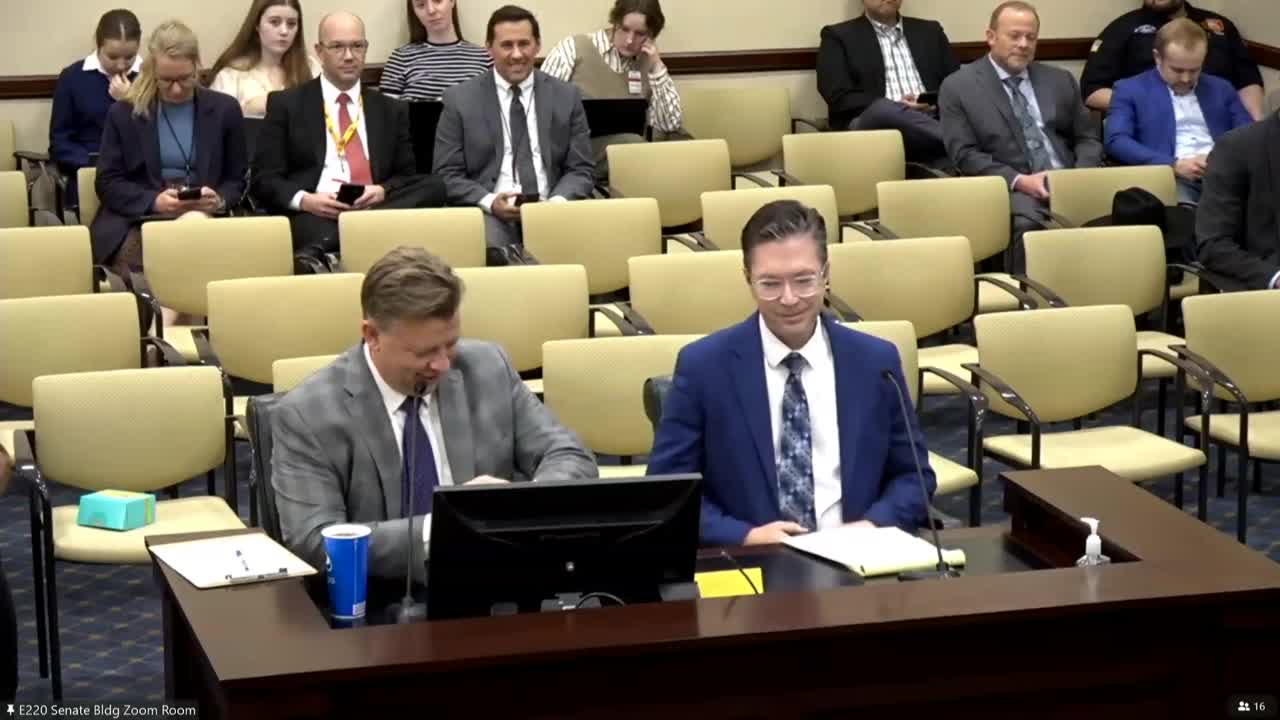
The Senate Government Operations Standing Committee voted to recommend a first substitute of Senate Bill 211 after sponsors said the measure is needed to address recent zoning demands that could delay Salt Lake City School District construction projects.
Senator Weiler presented Senate Bill 211, describing the measure as a response to what he called an abrupt change by Salt Lake City in how the city applied setback and zoning requirements to school district construction. "To the shock and astonishment of the district...Salt Lake City...has started imposing some setback and zoning requirements...that are impossible for the school district to comply with when they're building one high school before they tear down the other high school," Senator Weiler said.
Alan Kersley, business administrator for the Salt Lake City School District, told the committee that current Utah Code language specifically mentions charter schools in one subsection and does not explicitly reference school districts in the same way. "Utah code 10 98 3 0 5 2 b states a municipality may set the charter school to standards within each zone...The rest of the code in that section...if it's referring to school district, actually spells out school district. This one only mentions charter school in there," Kersley said.
Kersley and Isaac Gastel, executive director of auxiliary services for the Salt Lake City School District, said the bill is intended to restore prior practice and allow the district to proceed with rebuilding West High School and Highland High School. Kersley said the sponsor planned a first substitute to limit the exemption to cities of the first class and that he (the sponsor) committed to adding a sunset provision of roughly two years on the floor if the bill advanced.
Justin Lee, deputy director of the Utah League of Cities and Towns, opposed changing the law by statewide legislation for what the League described as a single local dispute. "Salt Lake City is not the only first class city this would apply in...we just think it's a bit overkill for one situation and would ask you to oppose the bill," Lee said. He recommended continued negotiation between the district and the city rather than statewide legislative action.
Committee members debated whether the committee should pass the bill or defer to the full Senate for broader consideration. The chair moved and the committee adopted a motion to replace the bill with the first substitute (which limits application to first-class cities), and the sponsor said he would draft a two-year sunset amendment for the floor. The committee then voted unanimously to recommend the first substitute to the full Senate.