Get Full Government Meeting Transcripts, Videos, & Alerts Forever!
Get email alerts on the Childcare Policy topic
No spam. Unsubscribe anytime.
Commission tables zoning text amendment on short-term child care after public hearing
Summary
After a public hearing and staff presentation on proposed zoning language for short-term child care in commercial districts, the Planning Commission voted to table the text amendment so staff can research other jurisdictions and ensure compliance with state law.
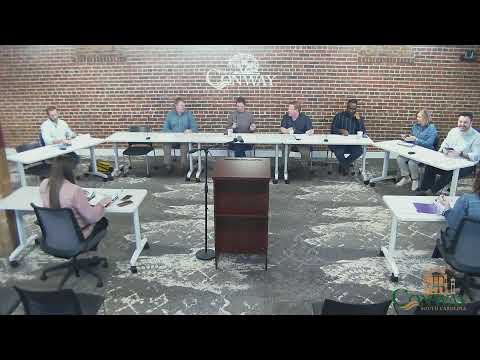
The Planning Commission opened a public hearing on proposed text amendments to Article 2 (definitions) and Article 5 (specific use regulations) related to short-term child care and then voted to table the amendment at staff’s request so staff can examine how other jurisdictions regulate the model and ensure compliance with state law.
Planning staff explained the amendment would address a model of child care that provides care for the same children for less than four hours a day or fewer than two days a week — for example, short-term care for parents who need a few hours to run errands or attend appointments. Staff reviewed state licensing categories and noted certain providers can be legally exempt from licensing when operating for less than four hours a day or fewer than two days a week, or when operating in connection with a shopping center with parents nearby and immediately available. Staff said the city cannot be less restrictive than state law and that, if adopted, the UDO should require proof of any claimed exemption from the South Carolina Department of Social Services (DSS).
Staff told the commission there is a significant shortage of childcare in the region and that zoning changes could improve access if crafted to preserve quality and compliance. "We do not want to adopt amendments that would dilute the quality of child care or provide opportunities for providers to not comply with licensing requirements if they are not considered legally exempt," planning staff said. Staff recommended holding the public hearing to get input but then asked the commission to table the amendment while staff researched practices in other cities and towns.
Commissioners asked whether a provider can obtain formal proof of exemption; staff said state law requires applying for an exemption and that DSS provides documentation verifying exemption status. After public comment and further discussion, the commission voted to table the proposed text amendment at staff's request. No change to the UDO was adopted at the meeting.