Get Full Government Meeting Transcripts, Videos, & Alerts Forever!
Get email alerts on the Division Of Occupational And Professional Licenses (DOPL) topic
No spam. Unsubscribe anytime.
DOPL briefs JFAC on audit, cash balances and inspector pay request; seeks tools to manage fee reserves
Summary
The Division of Occupational and Professional Licenses (DOPL) told the committee it oversees roughly 45 boards and about 200,000 licensees, faces audit findings on excess board cash balances, requests inspector pay adjustments and vehicle replacements, and emphasized its licensing system rollout and reliance on dedicated funds.
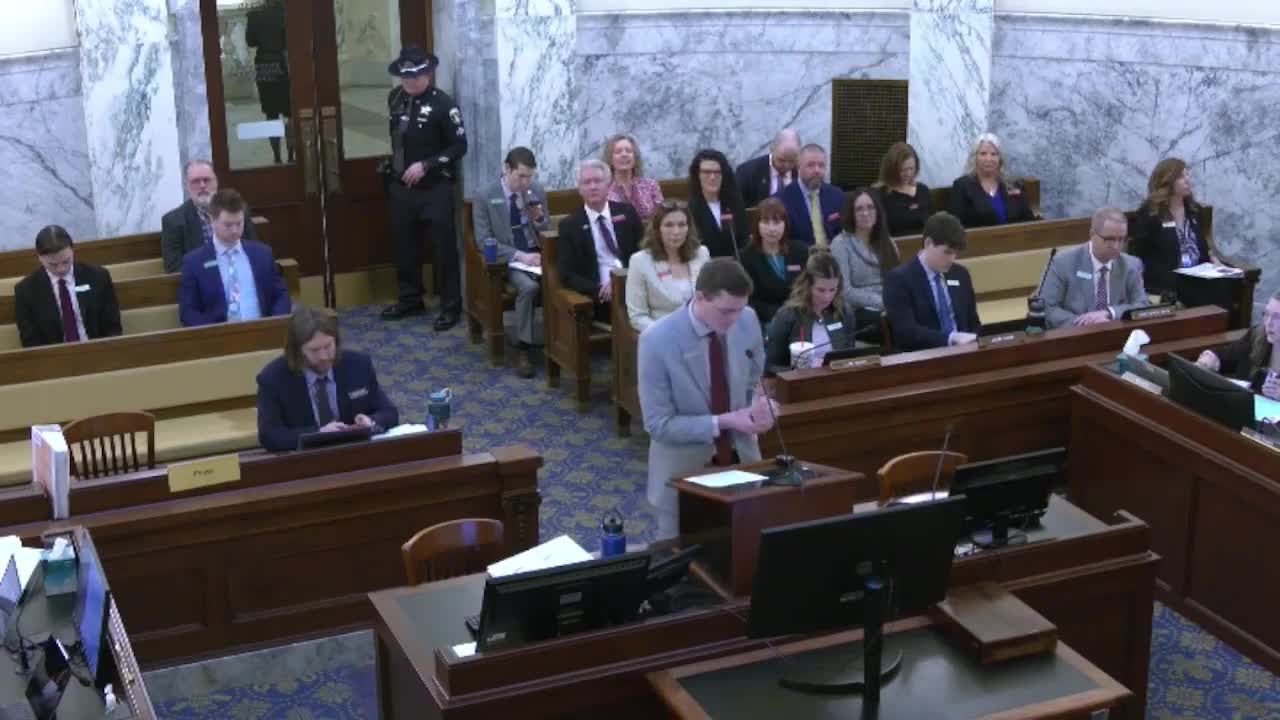
DOPL officials and legislative auditors told the Joint Finance‑Appropriations Committee on Thursday that the division is managing a large set of board cash balances, working to correct prior audit findings and seeking targeted funding to address turnover among field inspectors.
Kellen McGurkin, a budget and policy analyst for the Legislative Services Office, told the committee DOPL now houses about 45 boards and commissions (down from 49 at creation) and oversees roughly 200,000 licensees. He said the agency’s FY2025 appropriation included an FTP cap of about 267.2 and reported personnel costs and concentrated spending on personnel. The agency’s fund analysis showed receipts and transfers of about $83 million in a recent year; McGurkin said that lumped together a $50 million transfer from prior board cash balances and about $30 million in new licensing revenues.
Auditor April Renfro summarized open findings from the November 2024 audit, saying the primary remaining open issue concerns excess cash balances for some boards. The audit uses a reasonableness range based on rolling five‑year averages — cash levels below 30% or above 125% of reasonable reserves warrant attention — and the division has been reporting plans and analyses to reduce balances. Renfro and committee members said reducing excess balances typically requires time so that fee changes take effect across renewal cycles.
Russ Baron, DOPL administrator, described workforce and market challenges for field inspectors who perform building, plumbing, HVAC, elevator and other safety inspections. Baron said turnover in those inspector roles has been high — from 12% to as much as 67% in programs and years — and vacancies often take months to fill, particularly in rural areas. To address that, DOPL requested FY2026 ongoing dedicated funds of $222,000 to increase inspector pay (an average 95¢ per hour across 92 FTP) and requested one‑time vehicle replacements totaling $900,500 with a detailed vehicle breakdown (16 Ford F‑150s at $648,000; 5 Ford Escapes at $165,000; 1 F‑250 at $44,500; 1 Ford Explorer at $43,000). The division also requested $146,401 one‑time for recommended hardware and said it expects to continue to seek a temporary transfer exemption from the 10% limitation between bureaus to align funding during the consolidation period.
Baron and analysts emphasized that DOPL is funded entirely with dedicated and federal funds — no general fund dollars — and that the division has been implementing a new licensing system to centralize licensing activity. Baron said the system’s phased rollouts began with a July release and a November release; staff report improved customer service and some same‑day licensing determinations when applicants provide complete documentation.
Committee auditors and members asked for more granular analysis of which boards have the highest and lowest cash balances and whether an upward trend in overall balances is due to fee timing or real structural overcollection. Several legislators asked DOPL to supply the board‑level plans and the December report referenced in the audit; the administrator said he will provide that material to the committee.
DOPL asked members to consider an additional 2.5% adjustment for inspectors on top of the CEC approved earlier in the meeting; the director said the additional request would raise starting inspector pay from about $27.50 to $28.60 and add a 2.5% compression adjustment. Legislators indicated interest in continued work and asked for the division’s plan and data showing where balances are growing.