Get Full Government Meeting Transcripts, Videos, & Alerts Forever!
Get email alerts on the State Pardons And Jurisdiction topic
No spam. Unsubscribe anytime.
House adopts resolution saying federal pardon for Dr. Anthony Fauci would not bar state charges
Summary
On Feb. 3, 2025, the Idaho House adopted House Concurrent Resolution 5, a nonbinding statement that a federal pardon for Dr. Anthony Fauci would not extend to potential state prosecution. The measure drew sharply divided debate about federalism and the practice of naming an uncharged individual on the House floor and passed on a recorded vote.
The Idaho House of Representatives on Feb. 3 passed House Concurrent Resolution 5, a resolution stating that a federal pardon issued to Dr. Anthony Fauci would not prevent potential state prosecutions, the chamber announced after a recorded vote that the clerk reported as 56 ayes and 14 nays.
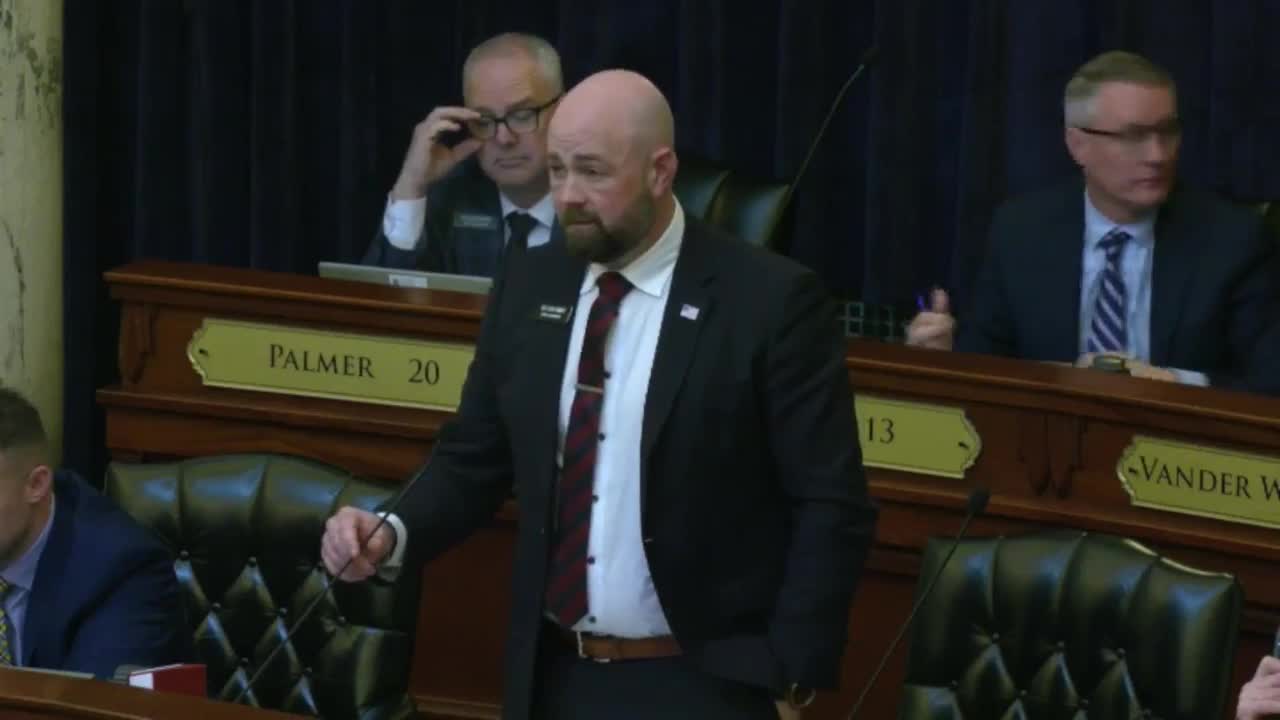
Representative from District 14, who presented the resolution, said the measure’s "main purpose is actually just saying that that federal pardon may give the doctor Anthony Fauci the pardon for those federal crimes, but it doesn't allude to any state crimes that would potentially can be committed or charged with under state jurisdiction or state law." He argued the resolution was a reminder that federal pardons do not, as a matter of law, affect state criminal jurisdiction.
The resolution's sponsor framed the measure as responding to public frustration over events during the COVID-19 pandemic. During his remarks he criticized federal public-health decisions and accused Dr. Fauci of silencing alternative viewpoints; those statements were offered as the sponsor’s characterization of events and attributed to him on the floor. The sponsor closed by asking members for "your green light" to approve the resolution.
Opponents objected to singling out a named individual who has not been charged in Idaho. The Representative from District 18 told colleagues that "the president does not have the power to confer immunity from state crimes, period," and said the House did not need to restate that legal principle. She added she was "really uncomfortable about this body getting in the business of singling out individuals by name, for persecution, essentially, and going down the path of picking people out and saying, we're coming out to get you." Another member warned it was "very dangerous territory" for the legislature to pursue.
After debate the House voted to approve the concurrent resolution. The clerk recorded the roll and the Speaker announced that House Concurrent Resolution 5 had passed the House; the House then approved the title and the resolution will be transmitted to the Senate.
The resolution is a nonbinding statement of the House; it does not itself create state charges or direct prosecution. Supporters presented it as a clarification of federal-state limits on pardons; opponents said it was unnecessary and risked unfairly targeting an individual who had not been charged in state court.