Get Full Government Meeting Transcripts, Videos, & Alerts Forever!
Get email alerts on the Minimum Wage topic
No spam. Unsubscribe anytime.
Commerce committee hears bills to limit CPI wage increases and narrow paid sick-leave rules; committee advanced two other bills in executive session
Summary
The Missouri House Committee on Commerce held a public hearing on two bills that would exempt some workers and businesses from parts of the new minimum-wage and paid sick-leave law adopted by voters in Proposition A, while earlier in the meeting the committee voted to advance House Bill 939 and House Bill 68 in executive session.
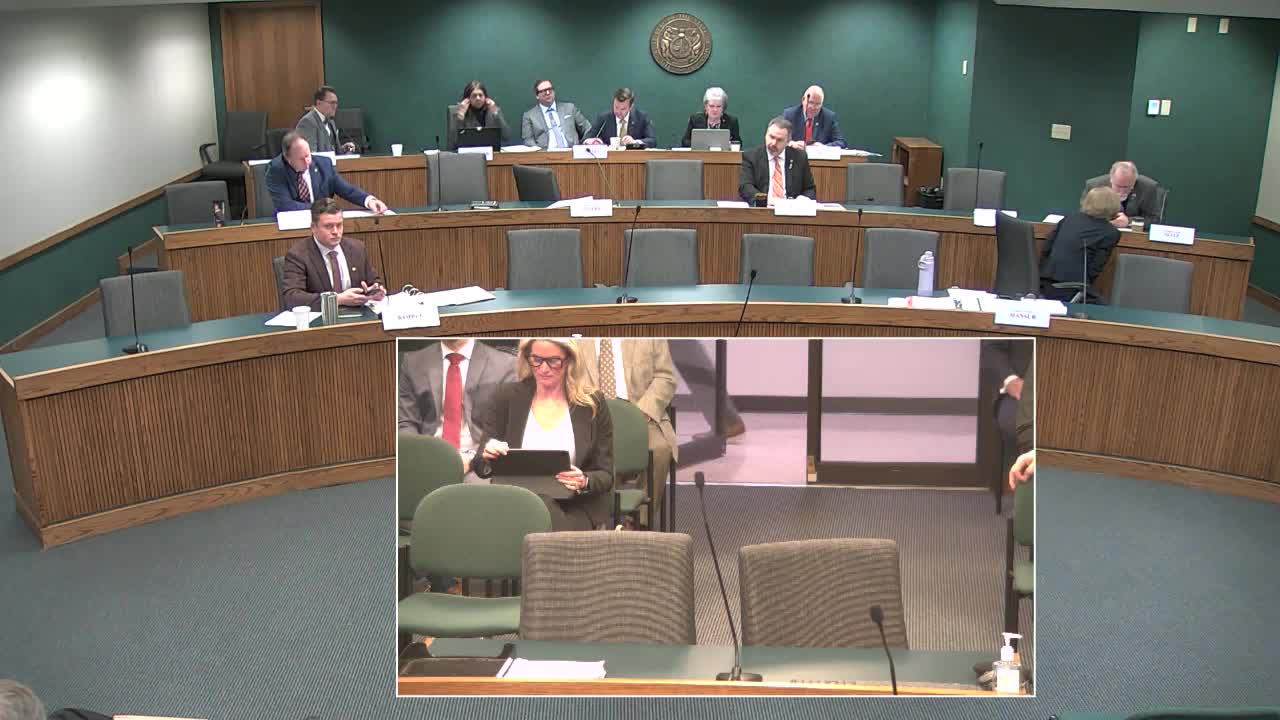
The Missouri House Committee on Commerce opened a public hearing on House Bill 758 and House Bill 958 on Oct. 12, 2025, hearing testimony from the two bill sponsors and business and labor advocates about whether parts of Proposition A should be narrowed or delayed.
Representative Carolyn Caton, sponsor of House Bill 758, told the committee the bill has four components including exempting workers under a specified age from the state minimum-wage increase and removing future automatic CPI-based increases. "Higher wages are a key component to higher inflation," Caton said, arguing that tying automatic increases to the consumer price index would perpetuate a wage/price feedback loop.
Nut graf: The hearing focused on two related aims—whether to create targeted exemptions or implementation delays for small or seasonal employers and younger workers, and whether the ballot measure’s paid-sick-leave and CPI-index provisions should be modified by the legislature. Supporters of the bills said the changes would protect small businesses and preserve jobs; opponents and worker-advocates said narrowing the voter-approved protections would harm low-income workers who rely on steady wage gains and paid leave.
Business witnesses and trade groups pressed the committee for changes to the ballot language. Buddy Law, chief executive officer of the Missouri Restaurant Association, proposed several committee-substitute fixes: raising employee-size or gross-sales thresholds for mandatory sick-leave coverage (he suggested 100 employees or $10,000,000 per location), eliminating carryover of large sick-leave balances, adding a right-to-cure for employers on compliance errors, and delaying implementation timelines. "Removing the carryover…is the real issue for operators," Law said, calling portions of Proposition A "cumbersome" and urging more time before the law takes effect.
Representatives of statewide business groups including Associated Industries of Missouri and the Missouri Chamber of Commerce also testified in favor of House Bill 758’s repeal of the automatic CPI increase and urged changes to the paid-leave mandate. Matthew Smith of Associated Industries said his group’s outreach found a majority of participating businesses supported removing the automatic inflation adjustment and many supported raising the compliance threshold for paid sick leave.
Labor and advocacy witnesses spoke in opposition. Ron Baron, registered lobbyist for Jobs with Justice Voter Action, said his group opposed the bills and warned against what he described as efforts to roll back voter-approved protections. "If any of these minimum wage bills you bring before the committee, I'm probably going to come in here and say that Jobs with Justice Voter Action is against the bills," Baron said during public comment.
Committee discussion repeatedly returned to two design questions: how to treat younger and seasonal workers who commonly hold entry-level jobs; and where to draw employer-size or sales thresholds for exemptions. Representative Miller, sponsor of House Bill 958, framed his bill as balancing employer and employee interests by allowing certain exceptions for workers under 21 and for very small employers. "Poor performing employees are expensive," Miller said, arguing the bill would let employers respond to performance and attendance problems.
Several committee members asked for more data and said they wanted to work toward a committee substitute (an HCS) that blends elements from multiple bills. Chair Casteel told members the committee expected to form a substitute and continue negotiations offline; multiple presenters agreed to provide written data to bill handlers.
Votes at a glance
- House Bill 939: The committee advanced HB 939 on a motion to "do pass" in executive session. The clerk recorded the motion and the chair announced: "House Bill 939 passes with a 6–3 vote." (Roll-call names were partially audible on the record; the transcript clearly records Representative Casteel and Vice Chair Wilson voting "aye" and Representative Butts voting "no." The committee announced the measure passed 6–3.)
- House Bill 68: The committee advanced HB 68 on a motion to "do pass" in executive session. Roll call in the transcript shows the following votes: Castile (aye), Vice Chair Wilson (aye), Representative Butts (no), Representative Greg (aye), Representative Kimball (no), Representative Mansour (no), Representative Miller (aye), Representative Peters (aye), Representative Seitz (no). The chair announced: "House Bill 68 passes with a vote of 5 to 4."
What happened next: The committee ended the public-hearing record after additional testimony from industry and business groups, and the chair said members would continue work on a committee substitute that could incorporate changes proposed at the hearing. No formal committee vote was taken on House Bill 758 or House Bill 958 during the public hearing.
Why it matters: Proposition A raised Missouri’s minimum wage and imposed a paid-sick-leave requirement and an automatic CPI adjustment; the bills heard would narrow or delay parts of that voter-approved measure for specified ages, industries, or employer sizes. Any committee substitute or floor bill would require further committee and chamber action before changing the statute.
The committee adjourned with plans to craft a substitute and to collect additional written material requested from witnesses and stakeholders.