Get Full Government Meeting Transcripts, Videos, & Alerts Forever!
Get email alerts on the Nuclear Cwip topic
No spam. Unsubscribe anytime.
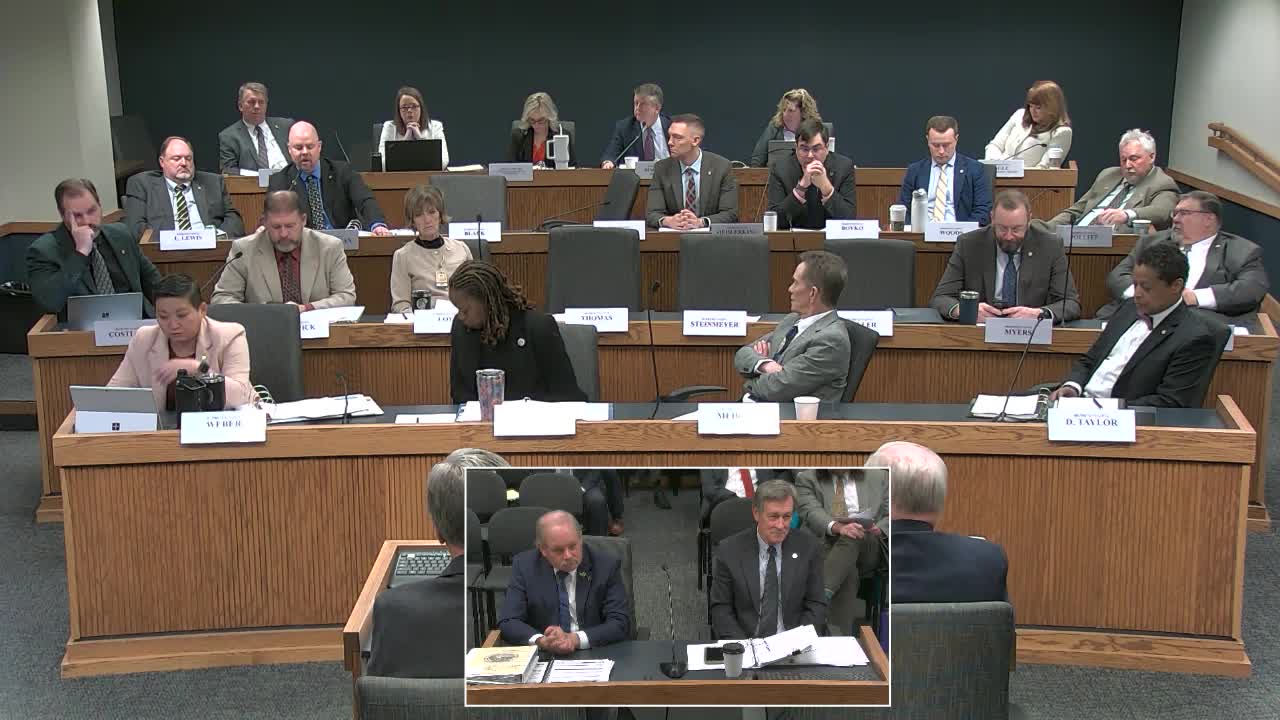
Missouri utilities committee hears bill to allow CWIP for small modular nuclear reactors
Summary
At a hearing of the Missouri House Committee on Utilities, lawmakers and witnesses debated legislation that would let investor‑owned utilities recover construction costs during building of small modular nuclear reactors (SMRs).
At a hearing of the Missouri House Committee on Utilities, lawmakers and witnesses debated legislation that would let investor‑owned utilities recover construction costs during building of small modular nuclear reactors (SMRs). Sponsors said the measure would help the state secure baseload, carbon‑free power and attract large electricity users; critics said the proposal would expose residential and vulnerable customers to higher costs if projects encounter delays or overruns.
Representative John Black, R‑Marshfield (District 129), identified the measure as the Missouri Nuclear Clean Power Act and said it would allow "CWIP"—construction work in progress—costs to be passed on during construction for "really small modular reactors" of 600 megawatts or less. "This bill allows CWIP to be passed on for really small modular reactors, this emerging technology. The bill says 600 megawatts or less," Black said.
Why it matters: Backers argue the change would make Missouri competitive with neighboring states that already permit CWIP, lower long‑term costs by reducing financing carry charges and support fast‑growing electric demand from data centers and manufacturers. Opponents counter that CWIP shifts upfront financing risk and return to ratepayers, can raise bills if plants are delayed or canceled, and requires robust clawback and oversight provisions.
Supporters and technical witnesses said multiple forces are increasing near‑term power needs. Representative Willard Haley, R‑50, told the committee that demand from data centers is expected to grow rapidly and that Missouri needs reliable, continuous sources of power. "I just encourage you, to consider what we might need for our future demand," Haley said. Warren Wood, an engineer and utility industry witness who said he previously worked at General Electric’s nuclear design facility, described the economics and supply risks that make SMRs and nuclear generation compelling to some planners. "Nuclear power is not a matter of if, it's a matter of when," Wood said, adding that SMRs and certain designs now under development may become more attractive as carbon rules and fuel‑price risks increase.
Opponents focused on consumer protections, oversight and cost risk. John Kaufman, testifying for the Consumers Council of Missouri, said the group’s "concern is just about the construction work in progress part of the legislation, primarily," and urged stronger clawback language and protections for vulnerable customers. Ed Smith of the Sierra Club said SMRs are not yet proven at scale and that allowing CWIP now risks credit downgrades and cost overruns. "These bills for nuclear equip are not needed right now," Smith said. Jay Hardenbrook of AARP said his organization remains "opposed to construction work in progress" and urged caution because many ratepayers have limited savings.
Municipal utilities and industrial consumers offered mixed perspectives. Fred Dreiling of City Utilities of Springfield said municipal utilities already use construction‑in‑progress accounting and that local utilities support an option that allows diversification of baseload resources. Doug Galloway, representing Ford Motor Company, said he had planned to testify against the bill but praised sponsors’ statements about adding CWIP with a robust clawback; he urged the committee to align definitions with federal SMR definitions. Melissa Vatarat of the Missouri Coalition for the Environment opposed the bills citing long‑term radioactive waste and storage concerns.
Committee discussion centered on three technical issues raised repeatedly in testimony: (1) the SMR size cap—sponsors proposed 600 megawatts but some witnesses recommended adopting the federal 300‑megawatt SMR definition for consistency; (2) clawback language—sponsors said they plan to add a clawback to protect customers if a project is not completed, and witnesses pressed for clear triggers and refund mechanics; and (3) oversight by the Missouri Public Service Commission (PSC) and the role of integrated resource plans (IRPs) in approving long‑term generation additions.
Sponsors said they had not yet inserted a clawback in the version before the committee because they expect other pending bills to include such a provision and did not want to create competing language; Representative Black said if the bill proceeds he will add a clawback consistent with the companion measure. Witnesses and several lawmakers asked the committee to clarify whether a clawback would be triggered by schedule slippage, cost overruns or project cancellation, and how refunds would account for the time value of money.
No formal vote occurred at the hearing. Committee members asked multiple technical questions of sponsors and witnesses about AFUDC/AFUDC‑equivalent accounting, PSC review timing, IRP requirements, the likely time horizon for SMR deployment, and whether new plants built elsewhere would raise Missouri customers’ costs through transmission charges.
The bill remains in committee; sponsors and the PSC indicated they expect to refine definitions and clawback triggers in future language. The hearing record includes pro‑ and con‑testimony from utilities, consumer advocates, environmental groups and industrial power users; the committee indicated it will continue to consider amendments and related resource‑planning language.
Ending: The committee concluded the hearing after hearing multiple rounds of testimony and questions; sponsors said they will return with amended language that includes consumer protections and alignment with related measures.