Get Full Government Meeting Transcripts, Videos, & Alerts Forever!
Get email alerts on the Adult Education topic
No spam. Unsubscribe anytime.
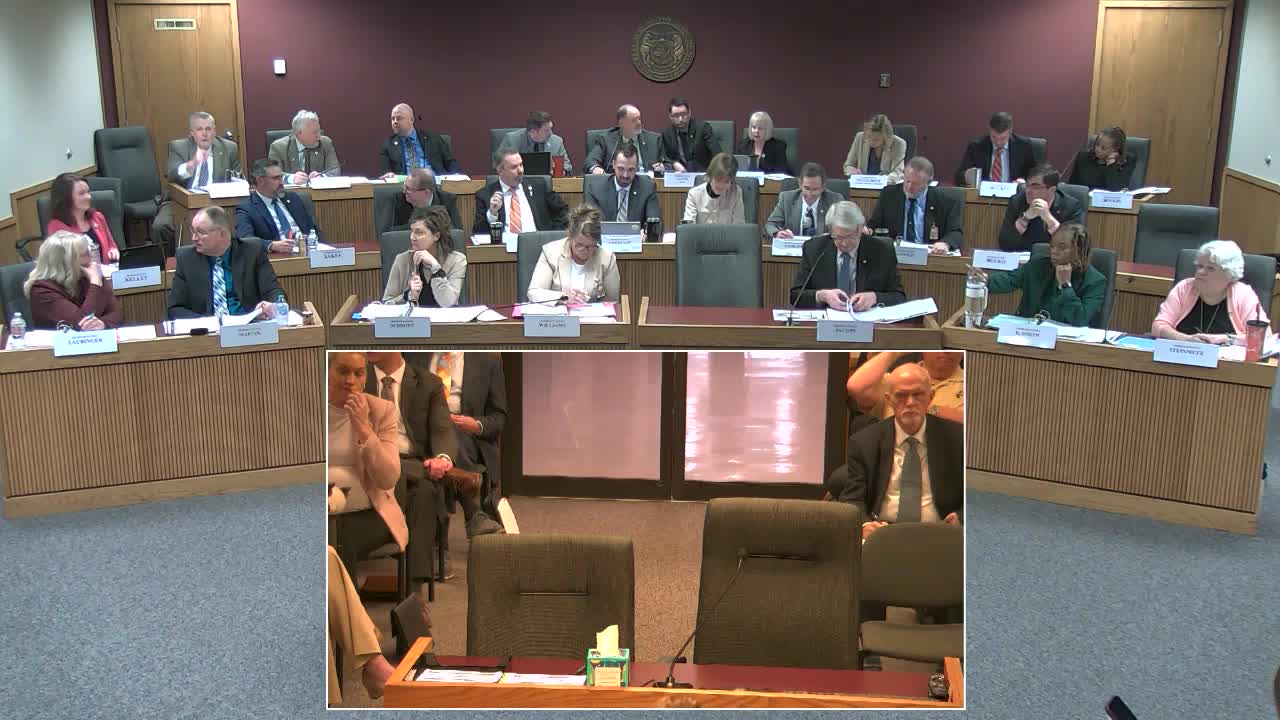
Committee hears testimony on HB 32 to lower minimum age for adult high‑school enrollment from 21 to 18
Summary
Representative Bishop Davidson introduced House Bill 32 to allow 18‑ to 20‑year‑olds to enroll in state-authorized adult high-school programs; testimony highlighted program outcomes, program funding sources, and concerns about district funding and student dropout counting.
Representative Bishop Davidson, sponsor of House Bill 32, told the committee the bill would lower the age at which an individual may enroll in a state-authorized adult high-school program from 21 to 18. He described the adult high‑school model as a program launched in 2017 offering a full high‑school experience (certified teachers, labs, childcare, night classes) aimed at adults for whom GED/HiSET is not a good fit.
David Winton of Goodwill (representing Goodwill organizations in eastern and southwestern Missouri and Kansas City) testified in support, describing program outcomes from multiple sites. He said the adult high‑school network has produced roughly 1,200 graduates in four years at the time of testimony, that students complete remediation and credit inventories to receive a standard diploma, and that graduates see meaningful labor-market results (higher wages and full-time employment with benefits). Winton and the sponsor said students and teachers have benefited; the schools often serve low‑income adults and populations including people aging out of foster care.
Funding and operational details discussed on the record: Representative Bishop Davidson and a witness explained the adult high‑school network does not draw on the K–12 foundation formula; instead, funding described in testimony includes an item in the Department of Social Services family-support budget that mixes federal TANF (Temporary Assistance for Needy Families), SNAP Employment & Training (SNAP E&T) (described as a 50/50 match), and a small amount of general revenue. Childcare supports were described as funded via a childcare block-grant line in the Department of Elementary and Secondary Education budget. Witnesses stressed the program is subject to appropriation and that adult high schools were intentionally set up not to compete with K–12 regular districts.
Committee members raised concerns about possible unintended consequences if 18‑ to 20‑year‑olds leave traditional high schools to enroll in adult high schools—specifically dropout-rate counting and impact on district funding. Sponsor and witnesses said adult high‑school students are treated administratively as transfers and that program statutes prohibit adult high schools from receiving foundation formula funding. The sponsor said the statute includes prioritization of low‑income students and that workforce integration (connections to community colleges, employers and credentialing) is a core goal.
Multiple committee members and witnesses urged continued monitoring of enrollment, class sizes and capacity; witnesses said many programs already have waitlists and prioritize based on need.
Ending: Committee members thanked the sponsor and witnesses; the panel took testimony and did not record a committee vote on HB 32 during the hearing.