Get Full Government Meeting Transcripts, Videos, & Alerts Forever!
Get email alerts on the Hemp Beverage Regulation topic
No spam. Unsubscribe anytime.
Committee adopts substitute for bill regulating low‑dose hemp‑derived beverages; vote 12‑5
Summary
The House Committee on Crime and Public Safety adopted a committee substitute to House Bill 593 that would regulate low‑dose hemp‑derived beverage products with a three‑tier, alcohol‑style system and assign product‑testing authority to the Department of Health and Senior Services.
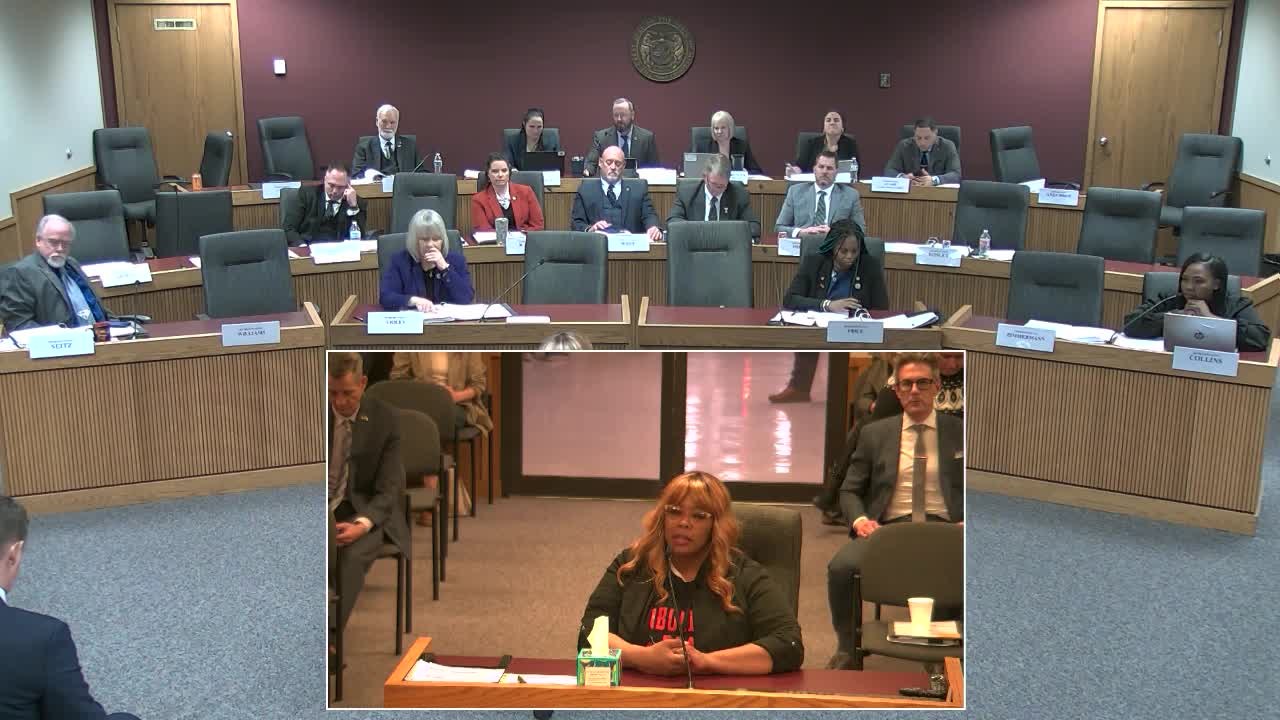
The House Committee on Crime and Public Safety voted to adopt a House Committee substitute for House Bill 593 and moved the substitute "do pass" to the floor, adopting regulatory language that would treat low‑dose hemp‑derived consumable beverage products differently from other hemp products.
Under the substitute described in committee, the proposal would exempt "low‑dose" hemp‑derived beverage products (manufactured beverages containing no more than 5 milligrams of naturally derived delta‑9 THC) from the stricter limitations that apply to higher‑dose or synthetically derived THC products. The substitute would create an alcohol‑style, three‑tier system for manufacture, distribution and retail; require age gating and licensing; assign product testing oversight to the Department of Health and Senior Services; permit randomized inspections and testing of finished products; and prohibit operation of a vehicle, aircraft or watercraft while under the influence of such products. The substitute would also impose incremental taxes (including a 2% tax) on retail sales, with revenue directed toward veterans programs, drug‑abuse prevention and first‑responder programs, according to the committee summary presented on the floor.
Committee members debated the scope of the substitute. Some members and witnesses argued that beverages should be regulated separately and that putting them under a three‑tier system would provide clarity and consumer protections. Others warned the bill carved out only beverages and left other low‑dose edible and vapor products in an unclear regulatory position, potentially disadvantaging small businesses that already operate under the federal farm‑bill framework.
Representative Jones (committee member) said she supported forwarding the substitute to get more review and stakeholder input: "I am going to be a yes on this to get more eyes on it," she said. Representative Collins and other members expressed concern about potential monopolization, federal legal questions and the cost of compliance for small operators. Representative Bosley asked why the Department of Health and Senior Services would handle testing rather than the Division of Alcohol and Tobacco; the committee chair said DHSS handles cannabis testing under current state arrangements and that the sponsor was willing to consider technical amendments on the floor.
After debate, the committee adopted the House Committee substitute and then voted the substitute "do pass". The roll call recorded 12 ayes and 5 no votes; the clerk announced the substitute as adopted and the bill reported out of committee.
Committee members said the substitute would be open to amendments on the floor and reiterated a willingness to work on details such as labeling, licensing fees and whether the regulatory structure should apply beyond beverages.