Get Full Government Meeting Transcripts, Videos, & Alerts Forever!
Get email alerts on the Septic Systems topic
No spam. Unsubscribe anytime.
Committee hears bill to require soil morphology tests and professional engineers for septic approvals
Summary
House Bill 200 would allow soil morphology (soil analysis) in place of percolation tests for septic systems and specify that a professional engineer perform the analysis; local public health authorities testified in favor and the state public advocate urged follow‑up from state agencies.
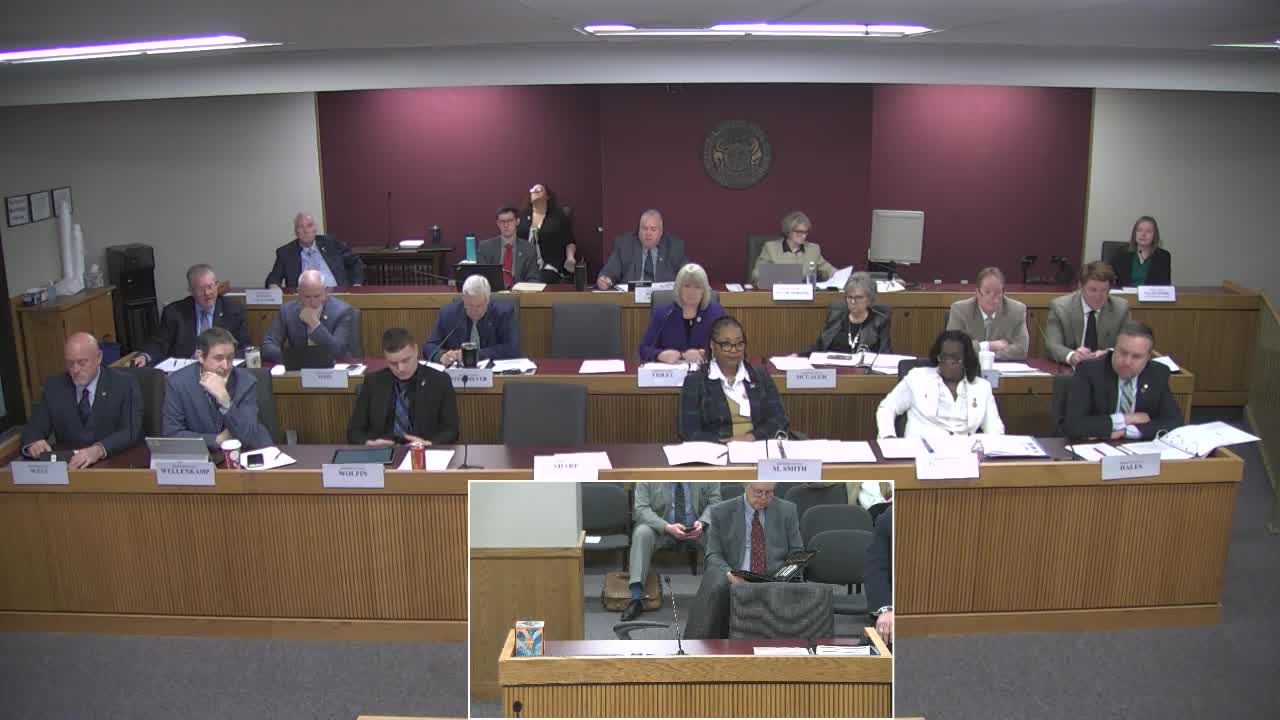
Representative Bill Faulkner introduced House Bill 200 to the Missouri House Committee on Local Government, saying the measure would permit detailed soil morphology testing for on‑site septic systems and require that a professional engineer perform soil analyses for certain installations.
Why it matters: Representative Faulkner and multiple witnesses told the committee that percolation tests provide limited information about seasonal water tables and long‑term soil behavior; an in‑ground soil morphology test performed by a professional engineer can better identify subsurface conditions and reduce the risk that a newly installed septic system will fail when groundwater levels change.
The Missouri Center of Public Health Excellence testified in favor. Sarah Schlamar said local public health authorities currently perform or coordinate both types of tests in practice and that “we always do the soil morphology test anyways” because of liability and performance concerns. She said counties and municipal health authorities maintain registries of qualified engineers and that adopting the measure statewide would reduce administrative friction.
Representative Faulkner and witnesses discussed fees and administration. Faulkner said permit fees typically go to local health departments and that the bill is not intended to create a large new cost for property owners; witnesses described current permit costs as modest and said the fee changes were intended to make the service revenue-neutral for local public health authorities.
The State Public Advocate also testified in favor but asked for clarification about which state agency would maintain any new mandatory registration and urged the committee to solicit technical comments from the Missouri Department of Natural Resources and the Department of Health and Senior Services.
The committee closed the hearing after receiving testimony and several members’ questions; no committee vote was recorded at the hearing.
Ending: The bill will return to committee for further consideration and any agency input the committee requests.