Get Full Government Meeting Transcripts, Videos, & Alerts Forever!
Get email alerts on the Child Protection Sexual Abuse topic
No spam. Unsubscribe anytime.
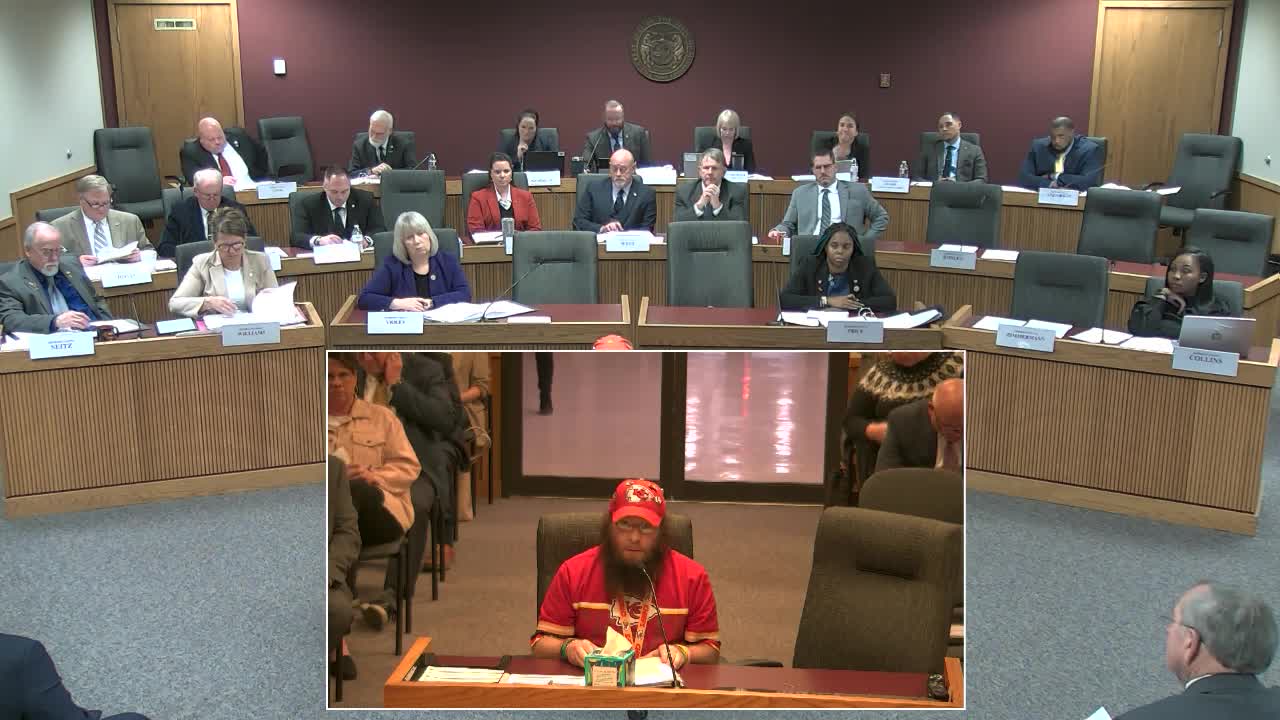
Committee hears bill to expand protections for minors and increase penalties in sex‑abuse and trafficking cases
Summary
Representative Jeff Coleman presented House Bill 615, a package that would expand age thresholds and hearsay exceptions to aid prosecution of child sexual abuse and trafficking and would increase penalties in related offenses.
Representative Jeff Coleman introduced House Bill 615, which he described as a measure to strengthen criminal‑justice protections for minors and vulnerable people in sexual‑abuse and trafficking cases and to enhance prosecutorial tools.
Coleman told the committee that the bill would raise certain age thresholds—extending protections beyond the current cutoff at 14—and allow statements taken at resource centers (audio or video) to be used when minors would otherwise be required to testify in court. He described increased penalties for patronizing prostitution, proposed restitution authority for victims, and changes to the way restitution and funds are distributed for human‑trafficking response.
"This bill is extremely important because our kids don't need to face the people that just hurt them," Coleman said, explaining that the bill would let some victims give recorded statements for trial so they would not have to face alleged offenders in court proceedings that sometimes take years to resolve.
An elected prosecuting attorney from Johnson County, speaking for the Missouri Association of Prosecuting Attorneys, said the association supported HB 615 and urged the committee to expand the statute so protections extend to people under 18 and to vulnerable persons. The prosecutor described practical hurdles in using victim statements without clear statutory authority and urged the changes to allow restitution awards that courts have otherwise refused in the absence of explicit statutory authority.
Advocates also testified in favor. Matt Thompson of the Missouri Network Against Child Abuse said the bill's hearsay provisions "would improve the current process and provide protections for all minors, not just minors below the age of 14." Former state official David Klarich and Arnie C. ACDinos (State Public Advocate) also spoke in support, as did representatives of victim‑service networks.
During questioning, members asked how the Human Trafficking and Exploitation Fund would operate. Coleman said existing statutory language sets up the fund and that fund distributions would split funds for victim services and for law‑enforcement training and related work; he offered to clarify statutory language if committee members desired. Representatives also discussed how the bill interacts with existing programs, court‑reporter rules and the federal Sixth Amendment's confrontation clause; a public advocate raised constitutional questions about recorded testimony versus the accused's right to confront witnesses.
Several witnesses urged stronger penalties for repeat offenders and said victims need reliable restitution, while others called for careful drafting to avoid unintended constitutional problems. The committee received testimony from prosecutors, victim‑advocacy groups, law‑enforcement representatives and the public. The hearing concluded without a recorded committee vote in the provided transcript.