Get Full Government Meeting Transcripts, Videos, & Alerts Forever!
Get email alerts on the Mn Legislature Organization topic
No spam. Unsubscribe anytime.
Minnesota DFL, Republicans announce power‑sharing deal to organize House; Brad Tabke to be seated
Summary
DFL leaders and House Republicans reached a negotiated power‑sharing agreement that allows the Minnesota House to organize, seats Brad Tabke, names a Republican speaker for two years under constraints, and sets committee co‑chairing and a 68‑vote threshold for creating a vacancy.
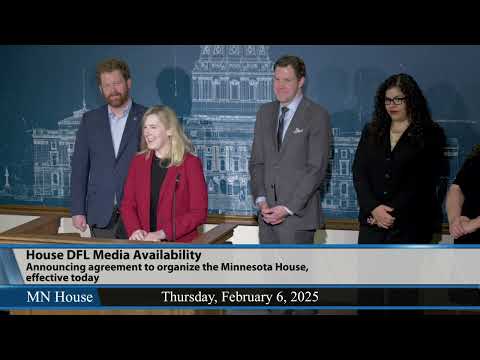
DFL leaders and House Republicans announced a negotiated power‑sharing agreement Friday that will allow the Minnesota House of Representatives to organize, seat Brad Tabke of Shakopee and install the Republican leader as speaker for two years under specified constraints.
The agreement, announced in St. Paul, requires bipartisan co‑chairs and equal party representation on most committees, leaves the oversight committee with a Republican chair and Republican majority, and raises the threshold to create a vacancy or "call the question" to 68 votes. DFL leaders said the Minnesota Supreme Court's January 24 ruling on quorum helped prompt the deal.
The agreement ends a nearly four‑week standoff in which DFL members had denied quorum to prevent what they called an effort to oust a duly elected member. "Brad Tabke won on election night, he won in a recount, and he won in court. This agreement upholds the will of the voters as expressed in a free and fair election," said Melissa Hortman, outgoing speaker of the Minnesota House, who announced the deal and described its terms. Hortman said Democrats secured the seating of Tabke and other protections for the closely divided chamber.
Jamie Long, DFL floor leader, said the arrangement ensures bipartisan review before bills reach the floor. "No bill is going to get to the floor once we're back in a tie unless there's bipartisan support because there's a co‑chaired rules committee," Long said. He added the agreement requires bipartisan votes for bills coming out of committee and shared decision‑making on administrative and nonpartisan functions.
Negotiators described the final structure as 28 gavels total, with 26 to be shared between the parties and two to remain in Republican hands. Under the agreement, each caucus will make its own appointments to boards and commissions; if the parties cannot agree on an odd‑number appointment, no appointment will be made. The speaker is constrained to take up bills on the calendar set by the co‑chaired rules committee, and signed conference committee reports must be considered on the floor.
Leaders said the arrangement also preserves each caucus's ability to excuse its own members and to approve remote participation for floor and committee matters. The parties negotiated limits on unilateral subpoena power for the oversight committee and placed a 68‑vote requirement on actions that would create a vacancy or compel attendance in ways the parties agreed would prevent a single party from seizing control.
Republican Paul Torkelson was named as the Ways and Means chair in the accord; negotiators said he and DFL co‑chair Zach Stephenson have committed to work together on the budget. Leaders told reporters they expect the co‑chairs to prioritize completing a balanced state budget within the regular session. Officials noted the state economic forecast is delayed and that the state budget forecast will arrive in March, with the governor's budget expected about March 19.
Hortman and Long said the Minnesota Supreme Court decision on quorum and related legal developments made earnest negotiations possible. Hortman said DFL members withheld quorum to protect the will of voters in Shakopee and across the state and that the decision to do so was taken after legal research and consideration of risks. She also thanked members of both parties on the negotiating teams by name.
While leaders described the agreement as creating a framework for bipartisan governing, they also acknowledged lingering tensions. Long said he expects the first hours on the House floor to be procedural and "boring," with the immediate next steps being the election of the presiding officer and implementation of the power‑sharing protocols.
The agreement announced Friday is a negotiated political accord rather than an enacted statute or court order. Leaders said it will be posted publicly soon and that implementation will begin immediately as the chamber proceeds to organize and start committee work.