Get Full Government Meeting Transcripts, Videos, & Alerts Forever!
Get email alerts on the Diplomatic Qa G20 Gaza Panama Usaid topic
No spam. Unsubscribe anytime.
Rubio addresses G20 absence, Gaza resettlement questions, Panama Canal confusion and USAID staff orders
Summary
In a reporter Q&A, U.S. Secretary of State Marco Rubio said he will skip a G20 foreign ministers meeting to focus on other priorities, described Gaza as uninhabitable until cleared of unexploded munitions, addressed Panama Canal confusion and explained USAID staff guidance.
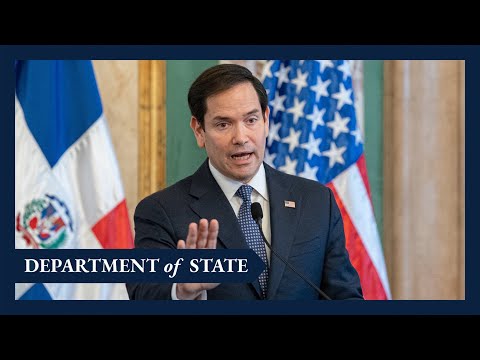
During a question-and-answer session, U.S. Secretary of State Marco Rubio addressed several diplomatic and operational issues raised by reporters, including attendance at a G20 meeting, plans for Gaza, confusion about a Panama Canal transit statement, and guidance for USAID staff.
On the G20, Rubio said he would not attend the foreign-ministers meeting in South Africa, adding that he prefers to focus on counterterrorism, energy security and direct meetings with leaders. "I imagine there will be representation of some sort, but I'm just not attending it because instead I'll be hopefully traveling to parts of the world and meeting with leaders," he said.
On Gaza, Rubio described the area as severely damaged and said unexploded munitions and weapons caches make it uninhabitable until cleared. He said populations would have to be moved "in the interim" while decontamination and clearance work is done and encouraged other countries to step forward to assist with post-conflict reconstruction and clearance.
On Panama, reporters asked about a State Department statement that Panama had agreed to waive fees for U.S. government vessels transiting the canal; Panama's authorities denied that account. Rubio said discussions with Panama "had strong first steps" but emphasized Panama's domestic processes and laws. He also cited a U.S. treaty obligation to protect the Panama Canal in a time of conflict and said the United States finds it "absurd" to pay fees to transit a zone it is obligated to protect, while saying the matter should be resolved amicably.
On USAID personnel, Rubio said staff deployed abroad received guidance that they would be placed on leave of absence (not fired) and that the 30-day period allows time for relocation assistance if requested. He said exceptions and specially designated programs will be identified and that the objective is to "identify programs that work and continue them and to identify programs that are not aligned with our national interest and ... address them." Rubio also said U.S. support and contracts for Haiti are active where granted by waivers.
Rubio spoke directly to reporters including Simon Lewis (Reuters) and Michael Crowley (The New York Times) during the exchange; he stressed records of U.S. logistical support to Haiti and urged other countries to contribute to reconstruction and clearance efforts.