Get Full Government Meeting Transcripts, Videos, & Alerts Forever!
Get email alerts on the Drug And Security Cooperation topic
No spam. Unsubscribe anytime.
Dominican Republic appoints drug czar as U.S. and Santo Domingo formalize closer security cooperation
Summary
During a state visit, Dominican leaders announced a new drug czar and a memorandum to place a U.S. Customs and Border Protection agent with Dominican police; U.S. Secretary of State Marco Rubio said Washington will issue waivers to restore successful counterdrug programs.
The Dominican Republic on its own initiative has named a senior naval officer to lead a new national anti-drug effort while the United States moved to formalize operational cooperation, Dominican and U.S. officials said at a joint press conference.
President of the Dominican Republic (name not specified in transcript) said he "has decided to appoint vice admiral Kordero Joa as our drug czar in charge of leading our joint efforts with The United States to stop the expansion of this substance." The president described the appointment as part of a broader security plan that includes biometric identification, legal changes, and strengthened armed forces.
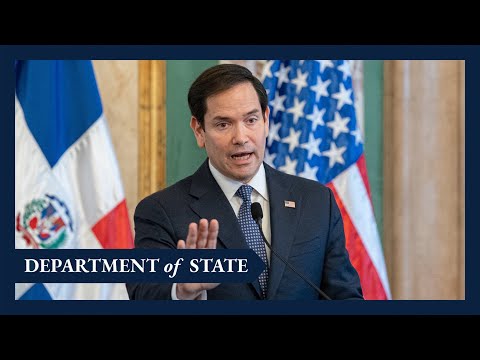
Marco Rubio, U.S. secretary of state, said the United States has signed a memorandum of understanding to "formalize the presence of a CBP agent, customs and border patrol from The United States to work together with the national police to improve our efforts." Rubio also said Washington would issue waivers to allow U.S. foreign-aid programs that were previously frozen to continue, and that the United States will "look to expand upon those programs by making available new technologies" to help stop drug flows.
Rubio credited recent Dominican seizures and extradition cooperation, saying the country has achieved "historic numbers of seizures of drugs destined for the streets of The United States" and noting the Dominican Republic ranks "number 2 in the whole hemisphere" on extradition cooperation as reported in his remarks.
Officials described the measures as operational and programmatic: a host-country appointment to lead domestic anti-drug strategy; bilateral technical cooperation through the CBP placement; and U.S. waivers intended to resume assistance and provide technologies.
No formal timetable or legislative action for the Dominican appointment or for specific technology transfers was specified in the press remarks. The memorandum of understanding establishing a CBP presence was announced as concluded, but the U.S. secretary of state said details on technology access and program expansions "will be discussed" with Dominican authorities.
The two governments emphasized continued cooperation on extraditions and investigations; Rubio said the United States will seek to build on programs that have worked while reassessing those that do not align with U.S. national interests.
Looking ahead, both sides said they will continue talks to operationalize the CBP arrangement and to identify which U.S. programs will continue under the waivers and what additional technologies might be provided.