Get Full Government Meeting Transcripts, Videos, & Alerts Forever!
Get email alerts on the Signs Illuminated topic
No spam. Unsubscribe anytime.
Ordinance committee separates internally illuminated signs from general sign rules, adds dark‑sky language
Summary
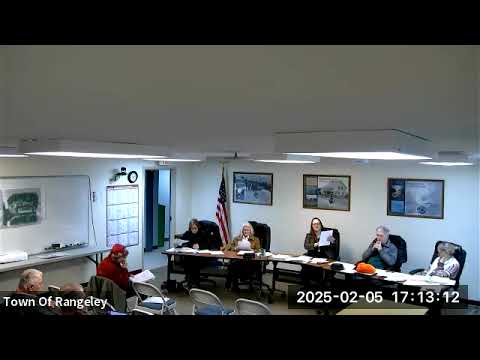
At a Feb. 5 ordinance committee meeting, Rangeley committee members voted to draft a separate section of the town sign ordinance for internally illuminated signs and to add dark‑sky shielding language for externally illuminated signs.
At a Feb. 5 ordinance committee meeting, Rangeley committee members voted to draft a separate section of the town sign ordinance for internally illuminated signs and to add dark‑sky shielding language for externally illuminated signs.
The change stems from a motion by Scott, committee member, to relabel the current general provision (38‑10‑6.3) to specify “externally illuminated signs,” move an existing external‑lighting provision into that subdivision, and create a new section for internally illuminated signs. Scott said separating the two would avoid repeated revisits to external‑lighting rules and allow the committee to focus on internally illuminated, electronic displays. "If we did nothing else at this point, internally illuminated signs would still be disallowed," Scott said, arguing the separate section would clarify the ordinance's scope.
Why it matters: the committee’s decision narrows the piece of code voters and town officials will review, clarifies which technical standards apply to which type of sign, and sets up a separate, up‑or‑down decision for internally illuminated signage that could appear on a future warrant. Committee members repeatedly emphasized balancing business interests and community character, including preventing a Main Street that "looks like a Vegas Strip."
Key actions and language A motion to change the existing general provision to specify externally illuminated signs, move the relevant external standard into that subdivision, and create a new subsection for internally illuminated signs was made by Scott and seconded; the motion was subsequently amended to include dark‑sky language requiring fully shielded, downward‑directed fixtures and prohibiting fixtures mounted to the bottom of a sign frame or placed to require upward lighting. Linda, who contributed suggested dark‑sky wording, proposed the insertion: "externally lighted signs must be fully shielded and directed downward so as to illuminate only target areas. No light beam shall be seen between any space between the sign and the framing. Fixtures mounted to the bottom of the sign frame or placed in the ground requiring upward lighting are prohibited." The committee approved the amended motion and later voted unanimously to make internally illuminated signs a standalone section (referred to in the meeting as 38‑10‑7), so that that entire subsection can be accepted or rejected on its own.
Technical standards and enforcement discussion Committee members discussed technical measures for internally illuminated signs (measured in nits) versus externally illuminated signs (measured in lumens/lux). Participants noted available measurement methods and enforcement options: a committee member reported that "lux meters" are commercially available (prices discussed in the meeting ranged roughly from about $15 up to $200 for simple meters; a more robust meter was cited at about $200) and that a measured luminance value can be converted to nits by dividing luminance by pi. The panel debated proposed numeric limits: one draft paragraph used "100 nits" as a threshold, and members questioned language in the draft that referenced a "full white display," calling that phrase problematic because displays are rarely full white in practice.
Definitions and scope The committee reviewed existing definitions of changeable or electronic signs in 38‑10‑2 (definitions) and noted that older, translucent plastic ‘‘shell’’ signs (the older gas‑station style) are currently disallowed under the ordinance; members agreed they need to clarify definitions to distinguish (a) non‑changeable translucent cover signs, (b) changeable electronic message boards, and (c) high‑resolution LED displays that behave more like a TV screen. Several participants urged using clear, enforceable definitions and referenced examples from other resort towns (Laconia was repeatedly cited) as starting points.
Process and next steps Committee members discussed whether internally illuminated signage should be permitted townwide, allowed only in specific commercial districts, or prohibited except for specified public uses (town offices, schools, theater). Legal constraints on how warrant articles are presented were raised: the group was advised that state statute governs how ordinances are amended and that separate warrant items may be needed so voters can approve or reject the internally illuminated subsection independently of other edits. The committee did not finalize numeric limits; instead it asked staff and members to compile model language (including Laconia's ordinance and two public submissions referred to in the meeting) and to return with a draft for further editing.
Votes at the meeting - Approval of minutes (January): motion and second recorded; committee approved (tally not specified in the transcript). - Motion by Scott to relabel the general provision for external illumination, move the external standard into that subsection, and add a new subsection for internally illuminated signs: moved, seconded, amended to include dark‑sky shielding language; outcome recorded as approved (tally not specified). - Motion (amendment) to add dark‑sky shielding and prohibit upward ground‑mounted fixtures: moved and seconded; approved as part of the amended motion. - Motion to make internally illuminated signs a separate warrantable section (referred to in the meeting as 38‑10‑7): moved by Scott, seconded by Val; "All those in favor? That is unanimous," the chair said—outcome: approved unanimously. - Motion to adjourn: approved (tally not specified).
What the committee left open Committee members deferred final numeric standards (the meeting discussed 100 nits as a candidate but did not adopt a final limit), whether to allow internally illuminated signs only in specified districts or by exception, and the exact numbering of the new subsection. Members also requested a legal review of how best to structure amendments so externally and internally lit provisions can be advanced or voted on separately. The group scheduled a next meeting for Feb. 19 at 5 p.m.
Quotes "If we did nothing else at this point, internally illuminated signs would still be disallowed," Scott, committee member, said when arguing for a separate subsection. "Externally lighted signs must be fully shielded and directed downward so as to illuminate only target areas," Linda, committee member (contributor of suggested dark‑sky language), recommended when proposing specific shielding language. "We want to be supportive of businesses... but we also want to be supportive of the folks who don't want our Main Street to look like a Vegas Strip," a committee member said during public discussion of scope and exemptions.
Ending The committee directed staff and volunteers to assemble a working draft that incorporates dark‑sky shielding language and vetted model ordinance text (including Laconia's language and public submissions) for review at the next ordinance committee meeting, scheduled for Feb. 19 at 5 p.m. The committee expects further refinements on numeric limits, definitional clarity, and potential district‑based exemptions before any warrant language is finalized.