Get Full Government Meeting Transcripts, Videos, & Alerts Forever!
Kenmore planning commission presses for clarity on 'missing middle' housing, ADUs; draft code due Feb. 18
Summary
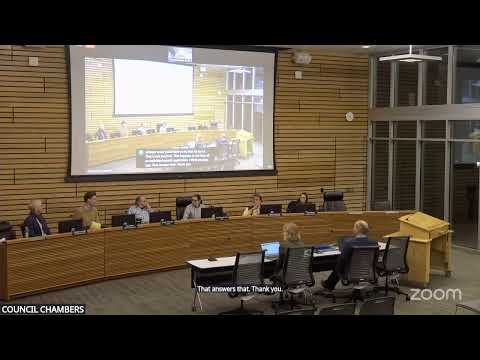
The Kenmore Planning Commission continued a citywide discussion Feb. 4 on draft rules for “missing middle” housing — focusing on definitions, ADU taxation and utility treatment, and design trade‑offs such as setbacks, impervious surface and height.
The Kenmore Planning Commission continued a citywide discussion Feb. 4 on draft rules for “missing middle” housing — housing types such as stacked flats, multiplexes and ADUs intended to add gentle density within single-family areas — focusing on definitions, tax and utility treatment, and trade-offs between lot footprint, height and neighborhood compatibility.
Commissioners said they want clearer definitions and policy direction before finalizing code language. Commissioner Van der Linde said the key question is when an accessory dwelling unit (ADU) stops being an ADU and becomes, effectively, a separate primary dwelling: “I think you’ve put your finger on the issue here, which is at some point, does an ADU no longer [be] an ADU?”
Why this matters: the commission is revising zoning and development standards that will affect what homeowners and developers can build in single-family neighborhoods across Kenmore, including setbacks, maximum impervious surface, parking and whether incentives (for example, relaxed setbacks or increased height) should be allowed in exchange for smaller footprints or other public benefits.
Most of the discussion centered on practical implications rather than a single policy outcome. Commissioners pressed staff on: how ADUs are assessed and taxed; whether ADUs can be condoized or subdivided and what that means for utility meters, parking and tree-protection rules; whether code should favor building up (height) instead of out (larger footprints)…
Already have an account? Log in
Subscribe to keep reading
Unlock the rest of this article — and every article on Citizen Portal.
- Unlimited articles
- AI-powered breakdowns of topics, speakers, decisions, and budgets
- Instant alerts when your location has a new meeting
- Follow topics and more locations
- 1,000 AI Insights / month, plus AI Chat