Get Full Government Meeting Transcripts, Videos, & Alerts Forever!
Get email alerts on the Alcohol Policy topic
No spam. Unsubscribe anytime.
City council urges state to create alcohol-harms alleviation fund; supporters say revenue could fund treatment
Summary
The council unanimously approved a resolution urging the New Mexico Legislature to create an alcohol-harms alleviation fund. Supporters said the fund would finance prevention, treatment and recovery services and estimated potential state revenues if enacted.
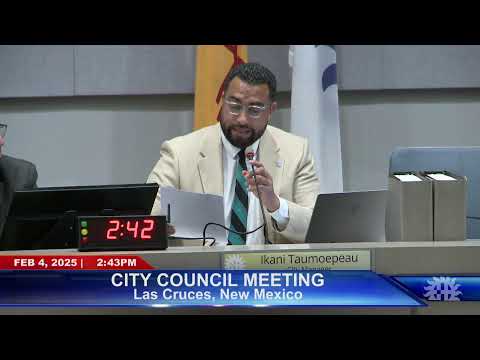
The Las Cruces City Council voted unanimously Feb. 4 to urge the New Mexico Legislature to create an alcohol-harms alleviation fund to pay for prevention, harm-reduction, treatment and recovery services.
Sergio Saenz, a city policy analyst, presented the resolution and told the council New Mexico bears more than $2 billion annually in costs tied to alcohol-related harms, a figure he described as "more than $1,000 for every resident." He said the proposed fund would create a dedicated revenue stream for programs and services and for people harmed by others' alcohol-related behavior.
Speakers who supported the resolution included Kai Miller, a licensed therapist and substance-abuse counselor, who said New Mexico has among the highest alcohol-related death rates nationally and argued the state's current approach is not funding treatment and prevention adequately. "The price of alcohol today will determine what our communities look like in the years to come," Miller said, urging the council to back the resolution so the city could press the Legislature to act.
Matthew Ladman, a district legislative aide for Representative Ferrari, said sponsors are working on proposals and that possible revenue sources could include an excise tax (unchanged since 1993) or a sales-tax mechanism; he said those options could "bring as much as $200,000,000 into the state" for treatment, tribal programs and local DWI funds but cautioned that bills are still being drafted.
Council discussion noted the resolution expresses general support for the idea, not a specific legislative text. One councilor said they were reluctant to back measures without seeing actual draft legislation; councilors and staff clarified the resolution is intended as a policy position to encourage state lawmakers to consider the approach.
The motion to approve the resolution passed on a roll call with all council members voting yes.
Why it matters: Supporters said a dedicated fund would shift costs toward services that address root causes, treatment capacity and aftercare, rather than leaving the costs borne indirectly by taxpayers and public safety systems.
What was unclear or unresolved: The council and presenters emphasized that the resolution does not adopt a specific tax mechanism. Previous bills (HB179 and SB147) were mentioned as having been vetoed by the governor in a prior session. If the Legislature advances new legislation, the revenue source, allocation rules and oversight would be determined in statute and appropriations.
Ending: The council's vote sends a policy signal to state lawmakers; backers said they hope legislative sponsors will file a bill this session so the funding concept can be considered in detail.