Get Full Government Meeting Transcripts, Videos, & Alerts Forever!
Get email alerts on the Wildfire Fuels Management topic
No spam. Unsubscribe anytime.
BLM outlines fuels-management, prescribed-burning and firefighting resources for Mohave County
Summary
Bureau of Land Management officials detailed wildfire suppression responsibilities, staffing, fuels projects and recent treatment results for the Colorado River District, including work near Pine Lake and a 2021 wildfire where fuel breaks aided suppression.
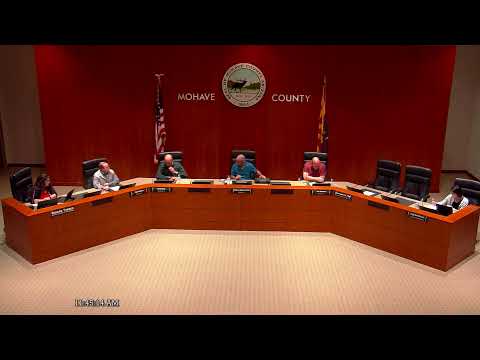
The Bureau of Land Management’s Colorado River District told the Mohave County Board of Supervisors on Feb. 6 that it manages about 5,000,000 acres in western Arizona and is expanding its fuels-management programs to reduce wildfire risk around mountain communities.
Wade Reeves, fire management officer for the BLM Colorado River District, said the district staffs 33 career or career-seasonal fire positions, five Type 6 wildland engines and several fuels-management positions, and that the office shares aviation and helicopter resources with neighboring BLM districts. "We had 85 wildfires [in 2024] ... 6,546 acres burned on lands that we were responsible for," Reeves said.
The presentation explained two main fuels-management goals: reduce fire risk to the wildland-urban interface and perform ecosystem restoration. Reeves described thinning, mastication, pile burning and prescribed fire as the primary tools and said crews maintain more than eight miles of fuel breaks in the North Wallapine/Hualapai mountain area and conduct pile-burning and prescribed burns on a recurring schedule. He said the district has used fuels treatments to improve ingress and egress, maintain communication-site clearances and create helispots for remote insertions.
Bill Boyette, fuels management specialist, described the Flag Fire of April 2021 near Pine Lake and said previously constructed fuel breaks enabled firefighters to stop a wide flaming front from entering the community: "The fuel break really aided suppression resources that night, holding the fire from going into the community of Pine Lake," Boyette said.
Reeves outlined operational limits and challenges: aviation contracts are more available early in the season and often shift north later in summer; staffing is not 24/7 because crews work regular schedules; and recruitment and retention have become harder in recent years. He also said the district’s work depends on funding cycles and warned that recent federal administration changes had temporarily frozen some funding and could affect near-term treatments.
Questions from commissioners touched on whether lawsuits or public opposition had hindered projects (Reeves said they had not experienced legal challenges locally), invasive species after fires (he identified red brome as a major invasive driver in low-elevation desert areas), and how BLM coordinates controlled burns and public notification (Reeves said the agency issues press releases and is continually seeking better outreach).
Reeves and Boyette also described unique capabilities in the district: two fire boats used on the Lower Colorado River, partnership on a shared Type 3 helicopter, and cooperation with state and local agencies including Mohave County Parks, local fire departments and the Arizona Department of Forestry and Fire Management. Reeves noted a community wildfire defense grant awarded to the North Hualapai Mountains and said Arizona Department of Forestry and Fire Management will manage that funding.
The presentation closed with thanks from commissioners and staff. No formal board action was taken during the presentation.