Get Full Government Meeting Transcripts, Videos, & Alerts Forever!
Get email alerts on the Planning Bylaws topic
No spam. Unsubscribe anytime.
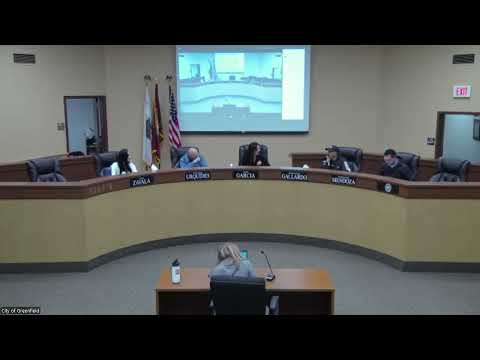
Greenfield Planning Commission begins bylaws review, seeks clarity on residency, public comment and rules of order
Summary
At its Feb. 4 meeting, the Greenfield City Planning Commission reviewed proposed bylaw revisions and reached preliminary consensus on membership residency language, public comment time limits and which parliamentary rules to follow; formal revisions will be drafted and returned for commissioner and City Council approval.
The Greenfield City Planning Commission on Feb. 4 began a detailed review of its bylaws, directing staff to draft changes on membership residency, public comment limits and rules of order for return at a subsequent meeting.
Commissioners spent most of the session clarifying how commissioners are appointed, who can serve, and the procedures that govern meetings. Staff told the commission that any revisions the commission wants incorporated into a draft will be returned to the commission the following month and then go to the City Council for final approval.
Why it matters: the bylaws define who may sit on the commission, how meetings are run and how public input is handled. Changes could affect future appointments, the scope of public participation and the commission’s day-to-day operations.
Key takeaways from the discussion:
- Appointment language: Commissioners expressed concern that the current text saying members are “appointed by the mayor” does not reflect actual practice. The commission asked staff to remove or reword that phrase and to clarify that appointments follow the city’s advice-and-consent process through City Council. Any bylaw change will still require City Council approval.
- Residency of members: The bylaws currently allow one member to be a resident of an unincorporated area “within 1 mile” of the city limits. Commissioners discussed changing that phrase to refer instead to the city’s “sphere of influence,” which staff said better reflects areas that the city may annex over time. Commissioners expressed competing concerns about outsiders influencing city decisions versus including long‑standing local residents who live just outside the city boundary.
- Public comment time limit: The commission agreed to set the public comment time limit at three minutes to match City Council practice, with flexibility to shorten or extend time limits by agenda depending on the number of speakers.
- Rules of order: Staff recommended replacing a reference to Robert’s Rules of Order with Rosenberg’s Rules of Order, a shorter, locally used guide for public bodies; commissioners signaled support for that change.
- Testimony, identification and interpreters: Commissioners asked staff to clarify a provision that “requests” speakers provide name and address for the record. The commission agreed the bylaws should request but not require those details. Commissioners also discussed a prohibition on staff or commissioners acting as interpreters; staff said the restriction appears to be a local preference rather than a legal requirement and can be left to discretion (for major hearings the city could provide a professional interpreter). Staff indicated they would present revised wording.
- Complaints about staff/commissioners: A bylaw draft proposed that the chair not permit complaints about staff or commissioners during a public hearing. Staff advised this provision could conflict with public comment protections and recommended removing or rewording it; commissioners signaled they did not want to restrict lawful criticism during public testimony, though they acknowledged the commission can stop disruptive behavior.
- Voting, recusals and abstentions: Commissioners reviewed voting rules detailed in the draft bylaws, including requirements for a quorum and how recusals are handled. The draft states an action generally requires a majority (three of five) and explains the “rule of necessity” for situations with multiple recusals. Commissioners questioned language that treats certain abstentions as affirmative votes and asked staff to clarify when that applies (the draft distinguishes conflict‑of‑interest recusals from non‑conflict abstentions).
Next steps: Staff will prepare a draft of the proposed bylaw edits reflecting the commission’s direction, which the commission will review at its next meeting. Any changes the commission adopts in draft form will then be forwarded to the City Council for final approval.