Safe Passage program expands to morning and afternoon coverage; officials report fewer nearby incidents at pilot sites

2240270 · February 5, 2025

Loading...

AI-Generated Content: All content on this page was generated by AI to highlight key points from the meeting. For complete details and context, we recommend watching the full video. so we can fix them.

Summary

The mayor’s Office of Children and Family Success described Safe Passage expansions in 2024–25. Community-based partners work morning and afternoon shifts at multiple school hubs; early data show decreases in reported violent incidents within a half-mile during safe-passage hours and reduced calls for service in some neighborhoods.

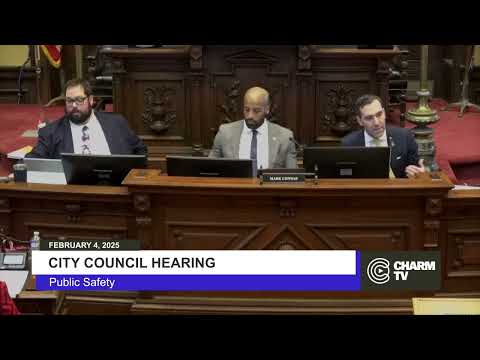
Doctor Brooks, executive director of the Mayor’s Office of Children and Family Success (MOCFS), updated the Public Safety Committee that Safe Passage — a community‑based program to protect students traveling to and from school — expanded service hours and locations during the 2024–25 school year and reports early reductions in nearby incidents at covered sites.

Origins and scope: Safe Passage began as a spring 2023 pilot focused on bus hubs and was expanded with city partners for the 2024–25 school year. Brooks said community-based organizations (CBOs) staff designated walking and bus‑hub locations, usually with four to six staff members per location wearing orange vests labeled “Safe Passage.” The program operates at multiple schools including Patterson, Northern Campus (Reginald F. Lewis), Digital Harbor, Carver, Frederick Douglass (Northwestern High School), Edmondson, Mervo, Ben Franklin and Walter P. Carter, with some sites covered in both morning and afternoon hours.

Funding and partners: The program is supported through Family League funding and coordinated with Baltimore City Public Schools, Baltimore Police Department school police, MOCFS and other agencies. Chief Shorter (school police) and Deputy Commissioner staff emphasized that cooperation among school police, BPD and CBOs is central to the model.

Data and early outcomes: MOCFS presented incident counts measured within a half‑mile radius during safe‑passage hours (described in the presentation as 2–4 p.m. for afternoon coverage) and said several pilot locations show year‑over‑year decreases in reported violent incidents, including robbery, shootings and sexual assault categories in those neighborhoods. Chief Shorter noted a decrease in calls for service near the Digital Harbor campus compared with prior reporting periods and described stronger relational ties between students and Safe Passage workers.

Operations and reporting: CBO partners submit monthly reports and incident reports; MOCFS said it also conducts quarterly convenings with CBOs, school leaders and law-enforcement partners to review glows and grows and adjust coverage. MOCFS and CBOs also conducted joint site walks, pre-launch family meetings, and faculty briefings at new schools (for example, Walter P. Carter) to ensure school staff and families understood the program and reporting expectations.

Challenges and requests: Officials noted growth areas: improving rapid communication channels among CBOs, school police and BPD, standardizing incident reporting, and determining sustainable funding beyond one‑time sources. Councilmembers asked for a per‑school cost breakdown to support budget planning; MOCFS agreed to provide a cost-per-school estimate and noted costs vary by school footprint and hours of coverage.

Examples in practice: MOCFS and partners cited an Ace-area shooting outside a campus where school police, BPD and the CBO coordinated lockdown procedures and follow-up family referrals. CBOs also reported noncriminal interventions — such as partnering with a local business to limit inside-grouping — that reduced management complaints and quelled disruptive behavior.

Speakers quoted in this article are identified from the hearing transcript. The committee did not adopt any ordinance or funding appropriation during the hearing.